



Your First Defence: The Right Bag
Before you protect what is inside, secure the container. While many backpacks are labelled 'water-resistant', this often only protects against light drizzles. For daily commutes in heavy rain, a truly waterproof bag is a worthy investment. These are made
from materials that repel water and often feature sealed seams and waterproof zippers. A more budget-friendly alternative is a waterproof rain cover for your existing backpack. For an extra layer of security, especially for laptops and documents, consider lining your bag's main compartment with a large, heavy-duty plastic bag before packing.
Securing Your Electronics From Moisture
Water and electronics are sworn enemies, and damage isn't just from direct splashes; high humidity can cause internal condensation and corrosion. The simplest trick is to use zip-lock bags for smaller items like your phone, power bank, and chargers. For laptops and tablets, dedicated waterproof sleeves or pouches provide superior, sealed protection. An often-overlooked hero of the monsoon is the humble silica gel packet. Scatter a few of these inside your electronics bag and compartments to absorb ambient moisture, which is crucial in humid conditions where condensation can form even inside a sealed bag.
If Your Gadgets Get Wet
Accidents happen. If an electronic device gets wet, time is of the essence. First, immediately turn it off and do not attempt to charge it. If possible, remove the battery. Wipe the exterior with a dry cloth and open any ports or covers to allow air to circulate. You can place the device in a dry, well-ventilated area for at least a day to let it air out. Resist the urge to use a hairdryer, as the intense heat can damage internal components. If the device was submerged, it's safest to take it to a certified technician for inspection before attempting to power it on again.
Choosing the Right Monsoon Footwear
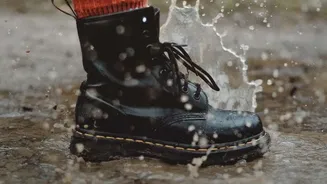
The first rule of monsoon footwear is to avoid materials that absorb water and take days to dry. Leather, suede, and canvas are poor choices for rainy days as they are prone to water damage, staining, and mould. Opt for shoes made from rubber, PVC, or synthetic materials that naturally repel water and are easy to clean. Floaters, sandals, and classic rain boots are excellent choices that keep your feet relatively dry and are simple to maintain after a walk through muddy puddles. Having at least two pairs of monsoon-appropriate shoes is a good strategy, allowing one pair to dry completely while you wear the other.
The Art of Cleaning and Drying Shoes
Returning with wet, muddy shoes is an unavoidable part of the season. The key is to clean and dry them properly to prevent lasting damage and odours. As soon as you get home, wipe off any mud with a damp cloth or soft brush before it has a chance to set. To dry them, stuff the shoes tightly with old newspaper, which is excellent at absorbing internal moisture. Replace the damp newspaper every few hours until the shoes are dry. Always dry footwear at room temperature, ideally near a fan but away from direct heat or sunlight, as high heat can cause materials like leather to crack and adhesives to weaken. Removing insoles to dry separately also speeds up the process.
Preventing Odour and Mould
Damp shoes are a perfect breeding ground for mould and foul odours. Once your shoes are completely dry, you can sprinkle some baking soda or talcum powder inside and leave it overnight to absorb any lingering moisture and neutralize smells. For storage, avoid packing shoes away in plastic bags or sealed boxes, which trap moisture. Instead, keep them in a cool, dry, and well-ventilated area. Placing camphor balls, cloves, or silica gel packets where you store your shoes can also help combat the dampness and keep pests at bay.