


A Sudden, Shocking Decline
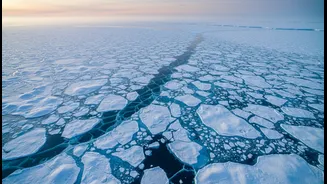
For years, the story of polar ice was a tale of two very different poles. While the Arctic experienced a clear and rapid decline, Antarctic sea ice was a puzzle. It held stable, and even expanded in some years. But since 2016, that picture has dramatically
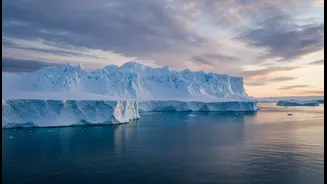
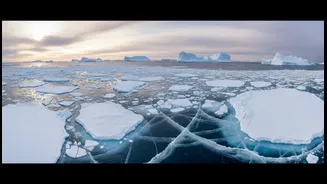
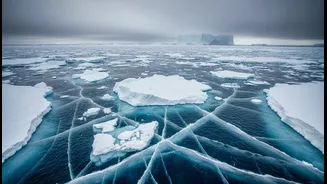
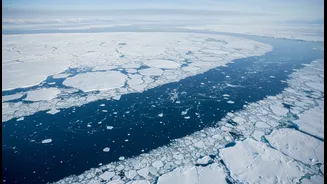
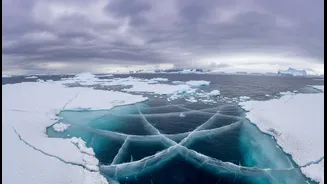
changed. Scientists have observed a sudden and steep drop in the amount of sea ice surrounding the continent. In 2023, Antarctica was missing an area of sea ice roughly the size of Greenland. This is not a gradual slide but a rapid shift, pushing the system into a new, low-ice state that has persisted, raising fears that a critical tipping point has been crossed.
A 'Triple Whammy' of Causes
Researchers are now piecing together why this shift happened so abruptly. Recent studies point to a 'triple whammy' of interacting forces. First, stronger winds, intensified by climate change, have churned the Southern Ocean. This churning has pulled up warmer, saltier water that was once trapped in the ocean depths. This deep ocean heat, stored for decades, is now melting the ice from below. Second, this process creates a vicious feedback loop: as ice melts, the darker ocean surface absorbs more sunlight instead of reflecting it, further warming the water and making it harder for new ice to form. Finally, in some regions like West Antarctica, increased cloud cover has trapped even more heat, adding to the melt from above.
From Climate Buffer to Climate Amplifier
The loss of Antarctica’s sea ice is more than just a regional problem; it’s a global one. The continent’s vast white surface acts like a giant mirror, reflecting the sun's heat back into space and helping to regulate the planet's temperature. As this mirror shrinks, Earth absorbs more heat, accelerating global warming. Scientists now worry that Antarctica is shifting from a buffer against climate change to an amplifier of it. This change destabilises the global system of ocean currents that regulates climate by transporting heat and carbon around the world.
The Ripple Effect on Global Systems
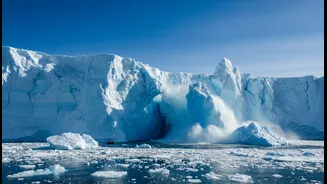
What happens in Antarctica does not stay in Antarctica. The sea ice acts as a protective barrier for the massive land-based ice shelves. As the sea ice disappears, these shelves are more exposed to wave damage and warmer water, increasing the risk of collapse. The Thwaites Glacier, often called the 'Doomsday Glacier', is a key concern; its collapse alone could raise global sea levels by over two feet. The melting of Antarctic ice is already contributing 100-200 billion tons of water to the oceans annually, a rate that is increasing. This has direct consequences for coastal communities around the world, including those in India, through rising sea levels. Furthermore, some studies suggest that changes at the South Pole can influence weather patterns as far away as the tropics, potentially affecting phenomena like El Niño and, by extension, weather systems globally.
An Uncertain Future
While there was a slight rebound in summer sea ice in early 2026, scientists caution that this does not signal a recovery. The system has been fundamentally altered. The heat now released from the deep ocean will make it very difficult for the sea ice to return to its previous state. The scientific consensus is that the continent has entered a new, more volatile era. The alarming changes being tracked by satellites and robotic floats are a clear signal that a previously stable part of the Earth's climate system is now actively changing, with consequences that will be felt for centuries to come.