



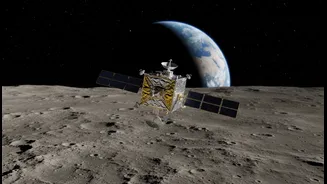


A Small Satellite with a Big Job
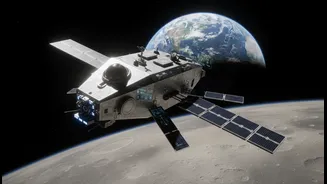
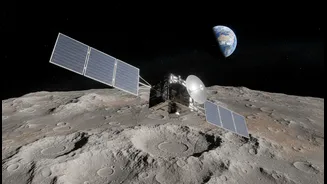
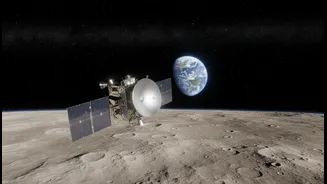
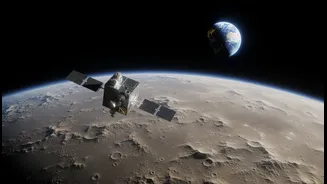
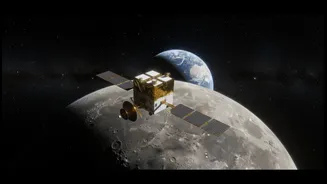
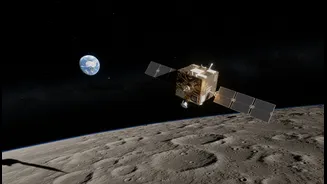
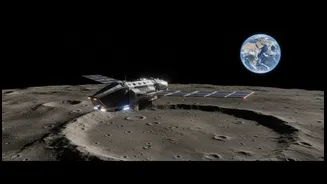
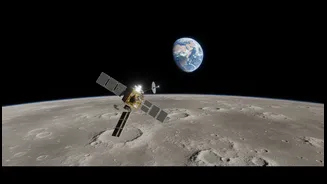
Launched in June 2022, the Cislunar Autonomous Positioning System Technology Operations and Navigation Experiment, or CAPSTONE, is a 12U CubeSat with a crucial mission. Its primary task was to be the first spacecraft to enter and operate in a near-rectilinear
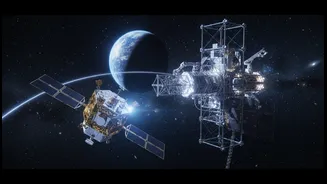
halo orbit (NRHO) around the Moon. This highly elliptical orbit is at a precise balance point between the gravities of Earth and the Moon, offering long-term stability with minimal fuel required for maintenance. This is the same orbit planned for the Gateway, the lunar outpost that will support NASA's long-term Artemis missions. Essentially, CAPSTONE was sent ahead to make sure this complex, theoretical flight path was a safe and reliable place to build a future space station.
What CAPSTONE Has Already Proven
The mission has been a resounding success, achieving all its primary and extended objectives before NASA concluded its activities in June 2026. The biggest gain is the validation of the NRHO itself. CAPSTONE proved that the power and propulsion requirements predicted by NASA's models were accurate, significantly reducing logistical uncertainty for the Gateway program. The mission also successfully demonstrated an innovative navigation system, the Cislunar Autonomous Positioning System (CAPS). This technology allows a spacecraft to determine its position by communicating with another orbiter—in this case, NASA's Lunar Reconnaissance Orbiter (LRO)—without relying exclusively on tracking from Earth. This capability is a massive step forward for enabling autonomous operations in deep space, freeing up valuable ground-based antenna time for science data.
Valuable Lessons from In-Flight Challenges
Beyond its planned objectives, CAPSTONE also provided invaluable engineering insights by overcoming unexpected issues. Early in its journey, the spacecraft experienced communication dropouts and a propulsion system problem that sent it tumbling through space. The successful recovery by the mission team, a collaboration between Advanced Space and Terran Orbital, offered critical operational experience in fault management and spacecraft recovery in deep space. Furthermore, the mission's extended phase demonstrated that an existing spacecraft could be transformed into a flexible testbed. New software was uploaded post-launch to test technologies like autonomous maneuver planning and Delay/Disruption Tolerant Networking (DTN), which is a system designed to handle the frequent signal interruptions common in deep space.
What's Next for the Pathfinder?
Though NASA has concluded its official involvement, the work is not entirely over. The headline's question of "what still needs checking" has largely been answered, as CAPSTONE met all its goals. However, the spacecraft itself remains in orbit and will continue to be operated by its owner, Advanced Space, as a technology testbed. The data collected over nearly four years continues to be analyzed to refine models and inform operations for upcoming Artemis missions. The ongoing operation of CAPSTONE provides a unique opportunity to continue testing software updates and gather long-term data on spacecraft performance in the cislunar environment, offering risk reduction for future commercial and government missions at no extra launch cost.