







A Symphony of Summer Flavours
This isn't just a recipe; it's a celebration of three ingredients that were made for each other. The star is, of course, the mango—sweet, luscious, and bursting with sunshine. Its rich fruitiness is beautifully balanced by the creamy, mellow flavour of chilled
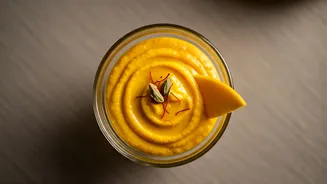
coconut milk, which adds body and a subtle tropical note without overpowering the mango. The final touch, a pinch of saffron (Kesar), is what elevates this from a simple smoothie to a dessert fit for royalty. The saffron imparts its unmistakable aroma, a beautiful golden-orange hue, and a delicate, earthy complexity that deepens the overall flavour profile. Together, they create a sensory experience that is cooling, fragrant, and deeply satisfying—the very essence of a perfect Indian summer.
Choosing Your Golden Ingredients
The success of this simple dish hinges on the quality of your ingredients. For the mangoes, choose a variety that is sweet, fragrant, and non-fibrous. Alphonso (Hapus) is the gold standard for its unparalleled flavour and creamy texture, but other excellent choices include Kesar, Dasheri, or even Banganapalli when perfectly ripe. The key is to use mangoes at their peak sweetness, which will minimise or even eliminate the need for extra sugar. For the coconut milk, opt for a full-fat version to achieve the creamiest, most decadent result. Chilling the can in the refrigerator for a few hours beforehand is crucial, as it makes the final dessert instantly refreshing. Finally, invest in good quality saffron strands. While expensive, a tiny amount goes a long way. The deep red colour and strong aroma are signs of a high-quality product that will lend your dessert its signature elegance.
The Recipe: Step-by-Step Guide
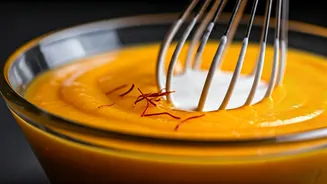
This no-cook recipe is all about assembly. The magic lies in the proportions and the preparation. **Ingredients:** - 2 large, ripe sweet mangoes (approx. 500g of flesh) - 200 ml chilled, full-fat coconut milk - A generous pinch of high-quality saffron strands (about 15-20 strands) - 1 tablespoon warm water or milk (for blooming the saffron) - 1 to 2 tablespoons of sugar or honey (optional, to taste) - A pinch of green cardamom powder (optional) **Instructions:** 1. **Bloom the Saffron:** Gently crush the saffron strands and soak them in 1 tablespoon of warm water or milk. Set aside for 10-15 minutes. This process, known as blooming, helps release the saffron's full colour and aroma. 2. **Prepare the Mango Puree:** Peel the mangoes, discard the seed, and chop the flesh into chunks. Place the chunks in a blender and blend until you have a completely smooth, silky puree. 3. **Combine the Ingredients:** Pour the chilled coconut milk into a medium-sized bowl. Add the prepared mango puree. Now, add the bloomed saffron along with its soaking liquid. If you're using it, add the cardamom powder now. 4. **Whisk to Perfection:** Using a wire whisk, gently combine the ingredients until they are fully incorporated and the mixture is a uniform, beautiful pale-orange colour. Avoid over-mixing or using a blender at this stage, as it can thin the mixture. Taste and add sugar or honey only if your mangoes aren't sweet enough. 5. **Chill and Serve:** For the best experience, cover the bowl and chill the mixture in the refrigerator for at least 30 minutes to an hour. This allows the flavours to meld together beautifully.
Pro-Tips and Serving Suggestions
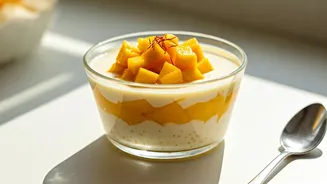
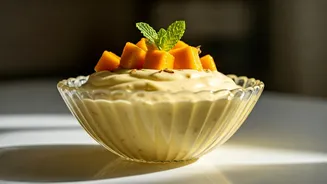
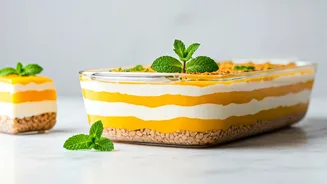
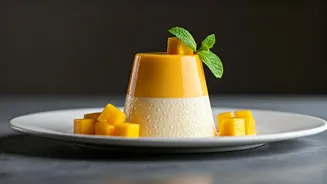
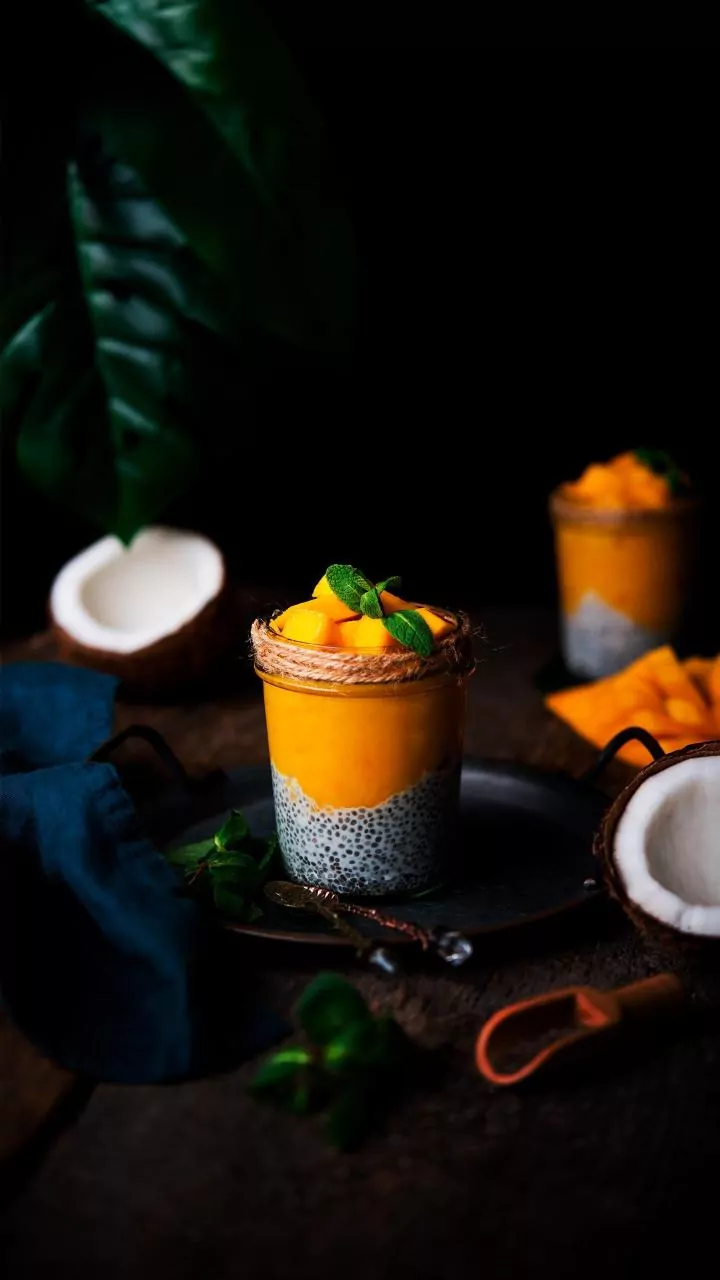
A few small adjustments can take this dessert to the next level. For an even thicker, pudding-like consistency, use only the thick cream from the top of the chilled coconut milk can. If your mangoes are slightly fibrous, be sure to strain the puree through a fine-mesh sieve before mixing it with the coconut milk. This guarantees a silky-smooth final product. When it comes to serving, the possibilities are endless. Pour it into small, elegant glasses and serve as a sophisticated dessert after a meal. Garnish with chopped pistachios, slivered almonds, or a few dried rose petals for a pop of colour and texture. For a more traditional feel, serve it in a bowl like a luxurious Aamras. You can even pour the mixture into kulfi moulds and freeze it for a decadent mango-coconut kulfi. It’s a versatile base that invites creativity.