


A Star Unlike Any Other
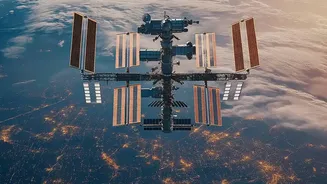
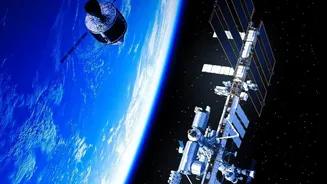
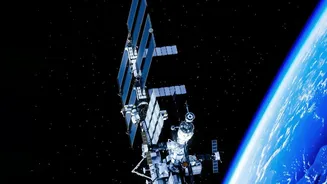
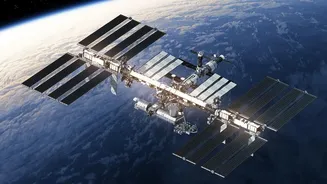
Before you start your search, it helps to know what you’re looking for. The International Space Station (ISS) appears as a very bright, steady, white point of light moving silently and swiftly across the sky. Unlike an airplane, it doesn't have flashing
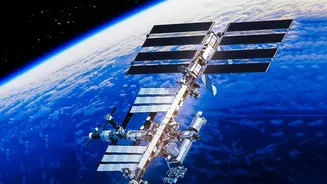
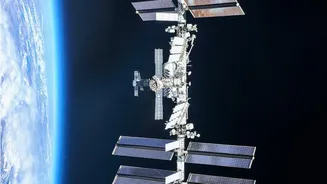
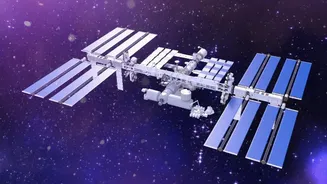
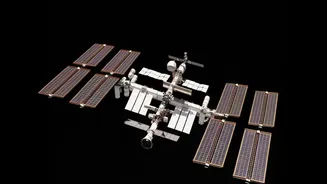
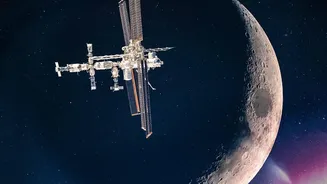
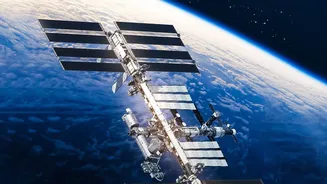
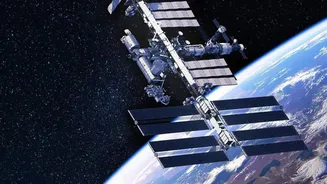
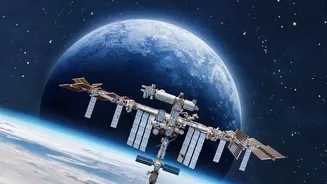
red and green lights. It moves much faster than a typical plane, often crossing from one horizon to the other in just a few minutes. The reason we can see it is that its massive solar arrays, spanning the area of a football field, reflect sunlight. This makes it one of the brightest objects in the night sky, often outshining every star and planet except for the Moon. You don't need a telescope or binoculars; the ISS is easily visible to the naked eye, even from light-polluted cities.
The Best Time to Look Up
You can't see the station just any time. The magic moment for spotting the ISS is during the twilight hours—roughly the first hour or so after sunset or the last hour before sunrise. This is the perfect window when the sky is dark enough for the station to be visible, but the ISS itself, orbiting about 400 kilometres above Earth, is still high enough to be bathed in sunlight. If you look in the middle of the night, the station will be in Earth's shadow and invisible. Similarly, during broad daylight, the sky is too bright to see it. These dawn and dusk viewing opportunities can happen multiple times a week, or sometimes just once a month, depending on the station's orbital path over your specific location.
Your Phone is Your Guide
This is where technology makes things incredibly simple. A host of free and easy-to-use smartphone apps take the guesswork out of ISS spotting. These apps use your phone's GPS to know your location and then cross-reference it with the space station's real-time orbital data. The result? You get precise predictions for when the ISS will be visible from your backyard, including the exact time it will appear, the direction to look, how high it will travel across the sky, and how long the pass will last. Many of these apps can also send you a notification minutes before a viewing opportunity, so you never miss a chance.
Top Apps for Tracking the ISS
While many excellent apps exist, a few are consistently recommended by sky-watchers. NASA's official Spot The Station app is a fantastic, straightforward choice available for both iOS and Android. It provides accurate sighting times and includes an augmented reality (AR) view that uses your camera to show you the station's exact path across the sky. Another highly-rated option is ISS Detector, which not only tracks the ISS but can be expanded to track other satellites and comets. Apps like Heavens-Above and SkyView Lite are also popular, offering detailed sky charts and notifications to help you prepare for a sighting.
A Quick Guide to Your First Sighting
Ready to give it a try? First, download one of the recommended apps and grant it location permissions. Check the app for the next good sighting opportunity—look for passes with a high maximum elevation, as this means the station will travel higher and more visibly across your sky. A few minutes before the scheduled time, go outside to a spot with a clear view of the horizon. Let your eyes adjust to the dark. The app will tell you which direction to face (e.g., 'appears in the West-Southwest'). Watch that part of the sky, and soon you'll see a bright, non-blinking star steadily gliding into view. Follow its path until it disappears over the opposite horizon or fades into Earth's shadow.