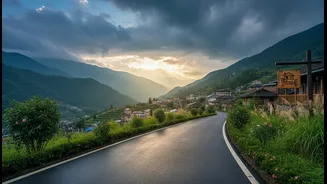







The Monsoon Dream vs. The Reality
The idea of sipping hot tea while watching clouds drift past a secluded mountain balcony is deeply romantic. Many travellers chase this vision, booking stays in far-flung locations hoping for solitude and dramatic weather. However, the monsoon season,
especially in hilly terrain, brings significant risks. Heavy rains can trigger landslides, wash out roads, and lead to flash floods. In remote areas, this can mean being stranded for days without access to essential services or a safe way out. The very isolation that seems appealing can quickly become a serious travel hazard, turning a dream holiday into a logistical nightmare. Recent monsoons in states like Himachal Pradesh have highlighted these dangers, with frequent road closures disrupting travel and leaving tourists stranded.
Why Reliable Transport is Non-Negotiable
Choosing a destination with robust and reliable transportation isn't about sacrificing adventure; it's about ensuring your trip is memorable for the right reasons. Good connectivity means multiple ways in and out—well-maintained national highways, nearby railway stations, or accessible airports. This provides a crucial safety net. If one route is blocked, others are often available. It also means better access to emergency services, supplies, and medical facilities should the need arise. Well-managed hill stations are generally safer because local authorities are better equipped to handle weather-related incidents, from clearing road debris to issuing timely travel advisories. Prioritising this practical aspect allows you to relax and enjoy the monsoon's beauty with peace of mind.
Spotlight: Shimla, Himachal Pradesh
Shimla is a classic example of a hill station that combines monsoon charm with excellent connectivity. While the larger Himachal region can be prone to landslides, Shimla's status as a state capital ensures that transport links are a priority. It is accessible via the famous Kalka-Shimla Railway, a UNESCO World Heritage Site that offers a scenic and reliable way to travel. The road from Chandigarh is a major artery that is typically well-maintained. While travellers should always check conditions during heavy rain, Shimla's infrastructure offers a degree of reliability that many smaller, more remote destinations lack. This makes it a dependable choice for experiencing the Himalayan monsoon.
Spotlight: Mahabaleshwar, Maharashtra
For those in Western India, Mahabaleshwar is a prime monsoon destination that is easy to reach. Located a few hours' drive from both Mumbai and Pune, it is connected by well-paved roads, including the Mumbai-Pune Expressway for a significant part of the journey. Regular state-run and private buses offer a constant and affordable transport option. This accessibility makes it a favourite for weekend trips. During the rains, the plateau transforms into a lush landscape of gushing waterfalls and misty viewpoints. Because it's a well-established and popular town, the roads are generally kept clear, and it doesn't face the same level of landslide risk as some steeper Himalayan regions.
Spotlight: Munnar, Kerala
Down south, Munnar's rolling tea gardens become exceptionally vibrant during the monsoon. While it is a high-rainfall area and caution is advised, its main access roads from major cities like Kochi and Coimbatore are crucial commercial routes that are generally maintained. Unlike truly remote outposts, Munnar is a significant hub for tea production and tourism, meaning connectivity is vital. Travellers planning a monsoon trip should still be wary of smaller, internal roads which can become slippery or blocked. However, reaching the town itself is usually feasible. The reward is seeing the tea plantations and waterfalls like Attukad in their full, glorious state, with fewer crowds than in the peak winter season.
Spotlight: Darjeeling, West Bengal
Darjeeling in the monsoon can be a breathtaking experience, with mist enveloping the colonial architecture and verdant tea estates. However, it is also a region where heavy rains can cause landslides, particularly on the main highway, NH-10. Despite this, Darjeeling remains a relatively accessible option due to multiple approach routes and the proximity of Bagdogra Airport and New Jalpaiguri railway station in the plains below. Local drivers are experienced in navigating the roads during the rains, and while delays are possible, complete isolation is less common than in more remote areas. The famous Darjeeling Himalayan Railway also operates 'Joy Rides', offering a safe and scenic way to experience the monsoon atmosphere.