



A Sudden, Unforeseen Deluge
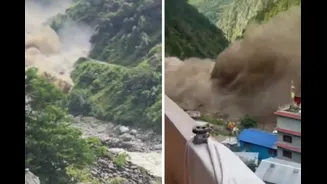
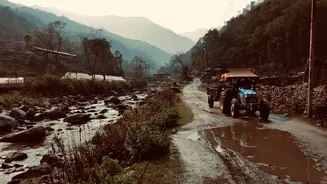
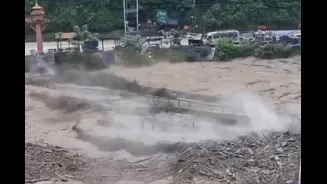
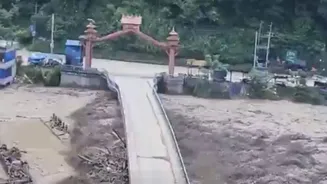
On the morning of August 26, 2026, a sudden, violent torrent of water and debris surged down the Bhote Koshi river valley near Nepal's border with Tibet. With little to no warning, the flood swept away homes, bridges, and hydropower projects, causing
widespread devastation. The disaster was particularly baffling because there was no significant rainfall in the area at the time. Instead, the catastrophe was what experts call a 'cascading hazard,' an event that begins with one type of disaster and triggers another, with the consequences multiplying down the valley. In this case, the chain reaction started with the very mountains themselves.
The Deadly Chain Reaction: Ice and Rock
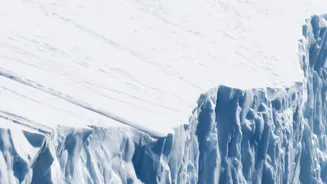
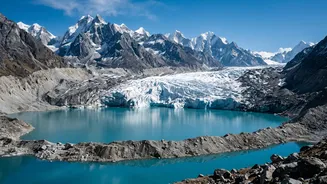
High in the Himalayas, a massive section of a glacier, estimated to be 2,000 feet wide, appears to have broken off. This phenomenon, known as an ice avalanche, sent an enormous mass of ice and rock plummeting from an altitude of around 17,000 feet. The force of this collapse, falling over a vertical kilometre, was immense. The impact didn't just move snow; it generated enough energy to pulverize the falling ice into a mixture of water and debris. This initial avalanche then crashed into the Lhende Khola, a tributary of the Bhote Koshi river. This torrent of debris temporarily blocked the river, creating a natural dam. When this unstable dam inevitably failed, it released the pent-up water and debris in a sudden, catastrophic surge downstream.
More Than Just Water
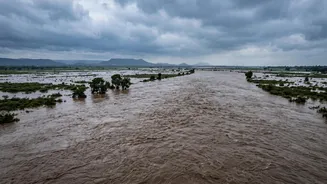
What makes these events so destructive is that the flood is not just water. It is a thick, fast-moving slurry of mud, silt, ice, and enormous boulders. This debris flow is far heavier and more destructive than a rain-fed flood. The mass scours the riverbed and banks as it travels, picking up even more material and growing in destructive power. It can obliterate buildings and bridges that might have withstood a simple water flood. Once the flow stops, the sediment settles into a dense, concrete-like mass that makes rescue efforts incredibly difficult.
A Familiar Threat: GLOFs and Avalanches
This type of event is a terrifying feature of life in the high mountains. While the August 2026 disaster appears to have been initiated by a direct ice-rock avalanche, it shares characteristics with a related phenomenon known as a Glacial Lake Outburst Flood (GLOF). A GLOF occurs when a lake formed by melting glacial water, often dammed by unstable rock and debris (a moraine), suddenly bursts. An avalanche or landslide crashing into such a lake is a common trigger for a GLOF. These events are becoming more frequent as climate change accelerates glacial melt across the Himalayas. The warming temperatures create more and larger glacial lakes, increasing the potential for these 'water bombs' to go off.
A Warning for the Entire Region
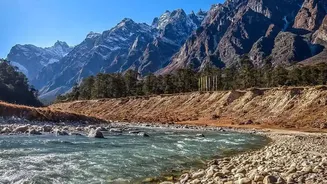
The Himalayas are a hotspot for these complex, cascading disasters. Nepal's fragile topography, steep slopes, and the immense geological forces at play make it uniquely vulnerable. Events like the 2012 Seti River flood, which was also caused by a massive rock and ice avalanche creating a debris flow, serve as a stark reminder of the persistent danger. That event, which killed 72 people, happened without a glacial lake being involved, much like the most recent disaster. Experts warn that as long as the high peaks are subject to erosion and the effects of a warming climate, such events are inevitable. The key challenge is to improve monitoring and cross-border early warning systems to give downstream communities, from Nepal to India, a fighting chance to escape.