




A Cosmic Survivor
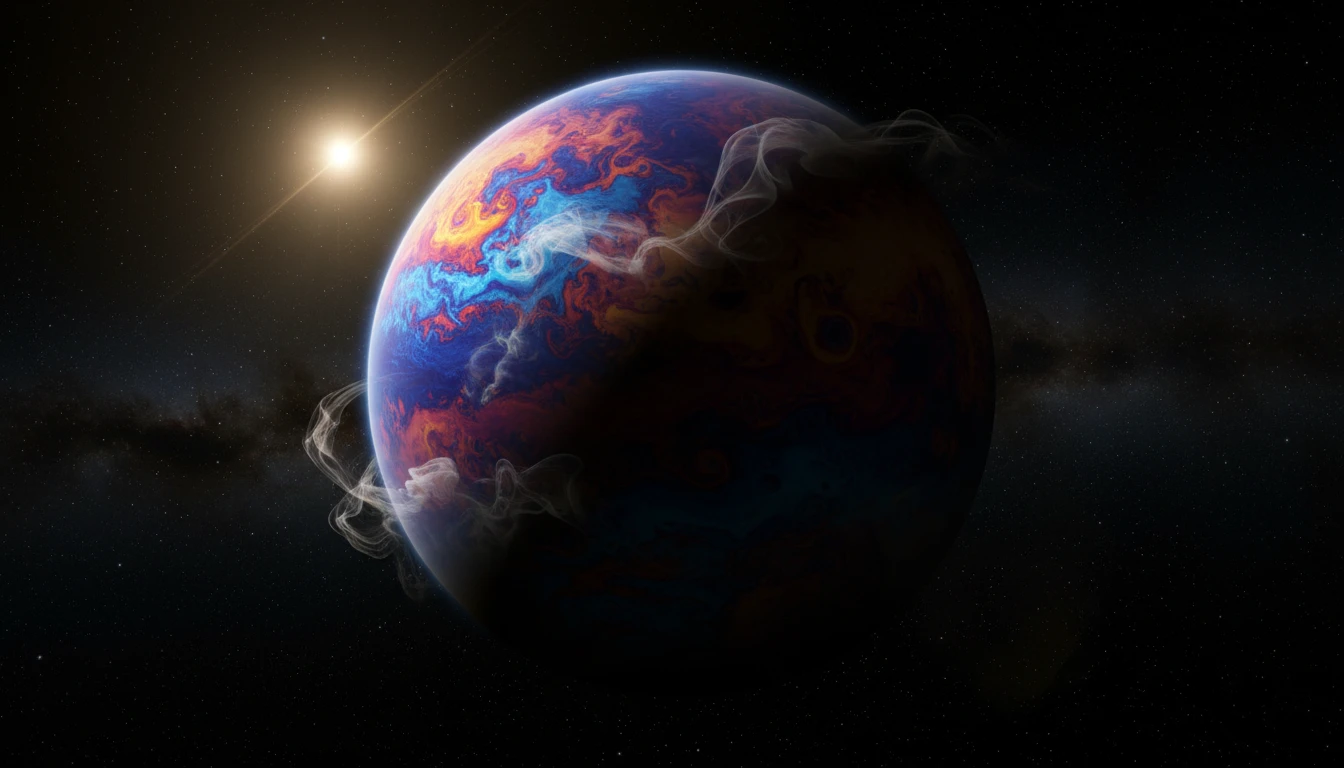
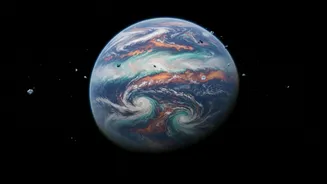
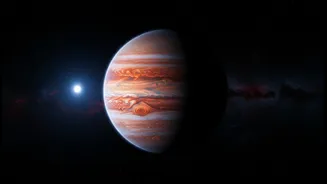
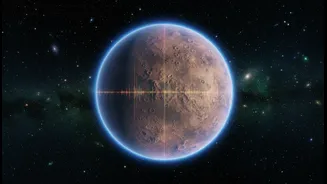
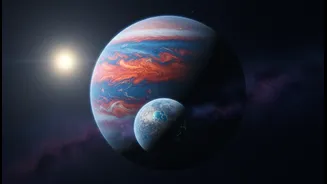
Astronomers have confirmed the existence of a Jupiter-sized planet, named WD 1856 b, in an incredibly tight orbit around a white dwarf—the tiny, collapsed core left behind after a star like our sun dies. Located about 80 light-years from Earth, this gas
giant is an astonishing seven times larger than the Earth-sized stellar remnant it circles. The discovery, first made in 2020, has been given a deeper look by the James Webb Space Telescope, revealing new details about how such a world could possibly survive. This isn't just a curiosity; it's a preview of what might happen to gas giants like Jupiter and Saturn billions of years from now.
What Is a White Dwarf?
Most stars in the universe, including our sun, will end their lives as white dwarfs. After exhausting the hydrogen fuel in its core, a star begins to swell into a red giant. This phase is incredibly destructive; our sun, for example, is expected to expand so much that it will engulf and destroy Mercury, Venus, and possibly Earth. After puffing off its outer layers, all that remains is the star's super-dense core: a white dwarf. These objects are incredibly small—often about the size of a planet—but contain a huge amount of mass. They no longer produce energy through fusion and are essentially stellar embers that slowly cool over billions of years.
The Puzzle of This Planet's Existence
Finding a planet like WD 1856 b so close to its white dwarf is a major puzzle. Given that its star would have ballooned into a red giant, any planet in such a tight orbit should have been obliterated. So how did it survive? Scientists have two main theories. The first is that the planet's orbit was originally much farther out, safely beyond the red giant's reach. After the star collapsed into a white dwarf, gravitational nudges from other objects in the system—including two other companion stars—could have pushed the giant planet inward over time. A second, more dramatic theory suggests the planet may have been a circumbinary world, orbiting two stars that eventually merged, a process that might have prevented the catastrophic expansion that would have otherwise destroyed it. Another similar discovery of a planet named Halla, orbiting a star called Baekdu, has also fueled theories about planets forming from the debris of stellar mergers.
A Glimpse Into Our Solar System's Future
The discovery of WD 1856 b is like looking through a time machine into our own solar system's distant future. In about five billion years, our sun will enter its red giant phase. While Earth's fate hangs in the balance, the gas giants like Jupiter and Saturn are expected to survive. As the sun loses mass during its final stages, its gravitational grip will weaken, causing the outer planets' orbits to expand. This system shows that it's possible for a giant planet to not only survive this violent transition but to end up in a completely new and unexpected orbit around the stellar remnant. Studying WD 1856 b's atmosphere, which contains methane and shows evidence of being much warmer than expected, gives scientists clues about the chemical and physical changes these survivor planets undergo.