



A Celestial Conjunction Explained
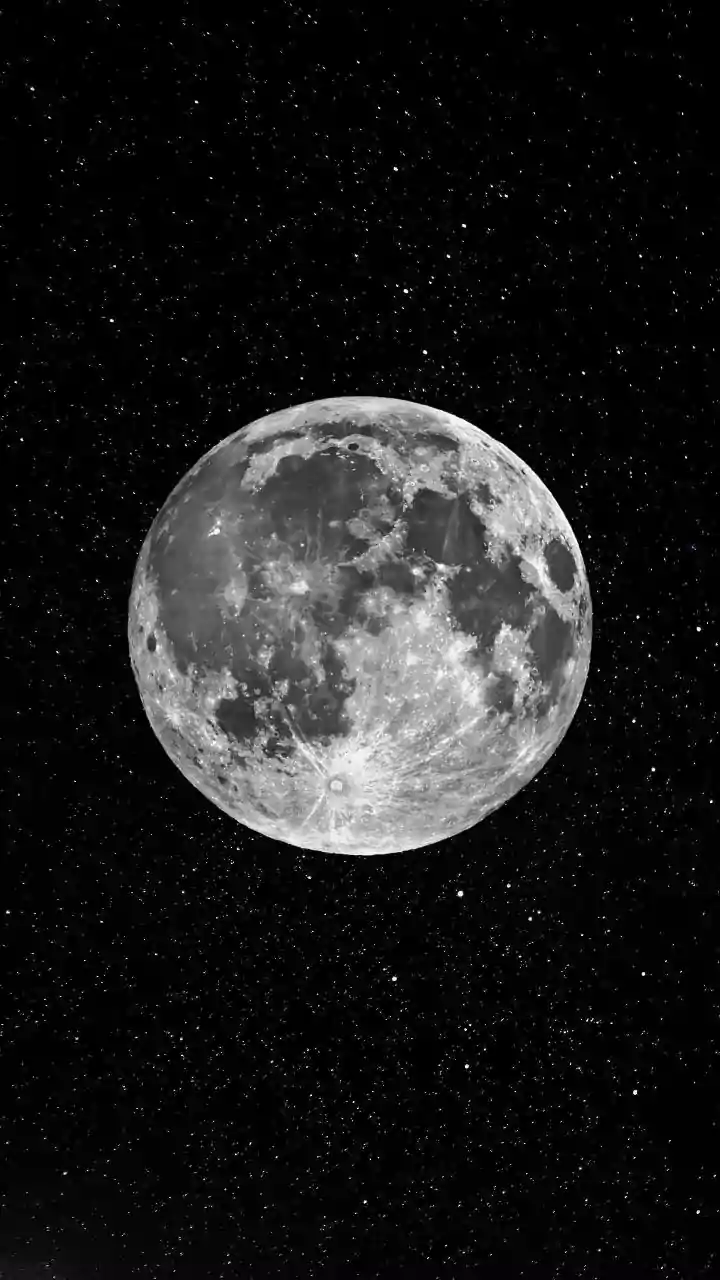
When two celestial bodies, like the Moon and Saturn, appear close to each other in our sky, it's called a conjunction. From our perspective on Earth, it looks like they are neighbours for a night or two. In reality, they remain separated by over a billion
kilometres. The event in late October 2026 is a visual line-of-sight effect. For observers in India, the Moon will appear to glide past Saturn around October 23rd and 24th. This is happening as Saturn is already well-placed for viewing after its opposition on October 4th, when Earth passed directly between it and the Sun, making the planet appear bigger and brighter all night long.
More Than Just a Pretty Picture
While a conjunction is visually appealing, a more scientifically valuable event is a lunar occultation, which happens when the Moon passes directly in front of a planet or star, hiding it from view. These events are relatively rare because the Moon's orbit is tilted, so it usually passes just above or below other planets. While a full occultation of Saturn isn't predicted for India this month, the principles of what scientists learn from them are fascinating. These alignments provide a natural cosmic experiment that can’t be replicated in a lab, offering chances for discovery for both professional and amateur astronomers.
Using the Moon as a Measuring Stick
One of the most powerful uses of a lunar occultation is its ability to provide incredibly high-resolution measurements. The Moon has no significant atmosphere, giving it a very sharp edge as it moves. When a star or planet disappears behind this edge, astronomers can time the event with extreme precision. This timing can reveal if a star thought to be single is actually a closely orbiting binary pair, something even powerful telescopes might miss. This technique has been used to discover dozens of new binary and triple star systems. It’s like using the Moon’s sharp limb as a super-high-resolution scanner moving across the sky.
Studying Saturn’s Atmosphere and Rings
During an occultation of Saturn, as the planet’s atmosphere and rings pass behind the Moon, the light from Saturn is filtered. By analysing how the light flickers or dims just before disappearing, scientists can gather data on the density, temperature, and composition of Saturn’s upper atmosphere. The rings offer an even more interesting opportunity. Timing the disappearance and reappearance of different parts of the ring system allows astronomers to map their structure with incredible detail. It helps verify data from missions like Cassini and Voyager and refine our understanding of the countless icy particles that make up the iconic rings.
Mapping Our Cosmic Neighbourhood
Occultations are also fundamental to astrometry, the science of mapping the precise positions and movements of celestial objects. By timing when a star or planet is hidden by the Moon from different locations on Earth, astronomers can refine our knowledge of the Moon's own orbit and its rugged, mountainous terrain, especially in the polar regions. These precise measurements help correct star charts, improve our understanding of Earth's own orientation in space, and even test theories of gravity by confirming the predicted paths of planets with immense accuracy.
How to See the Moon and Saturn
This October, you don’t need a fancy telescope to enjoy the show. Around October 24th and 25th, look for the bright, nearly full Moon in the evening sky. Saturn will be the steady, yellowish, star-like point of light nearby. Unlike stars, planets don't usually twinkle. While they will be close in the sky, you can use a pair of binoculars to get a better view of both. With a small telescope, you might even glimpse Saturn’s famous rings, which are currently tilted about 7-8 degrees toward us, offering a clear view. Finding a spot away from bright city lights will always give you the best experience.