



What is a White Dwarf?
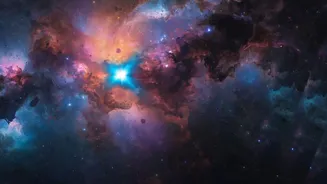
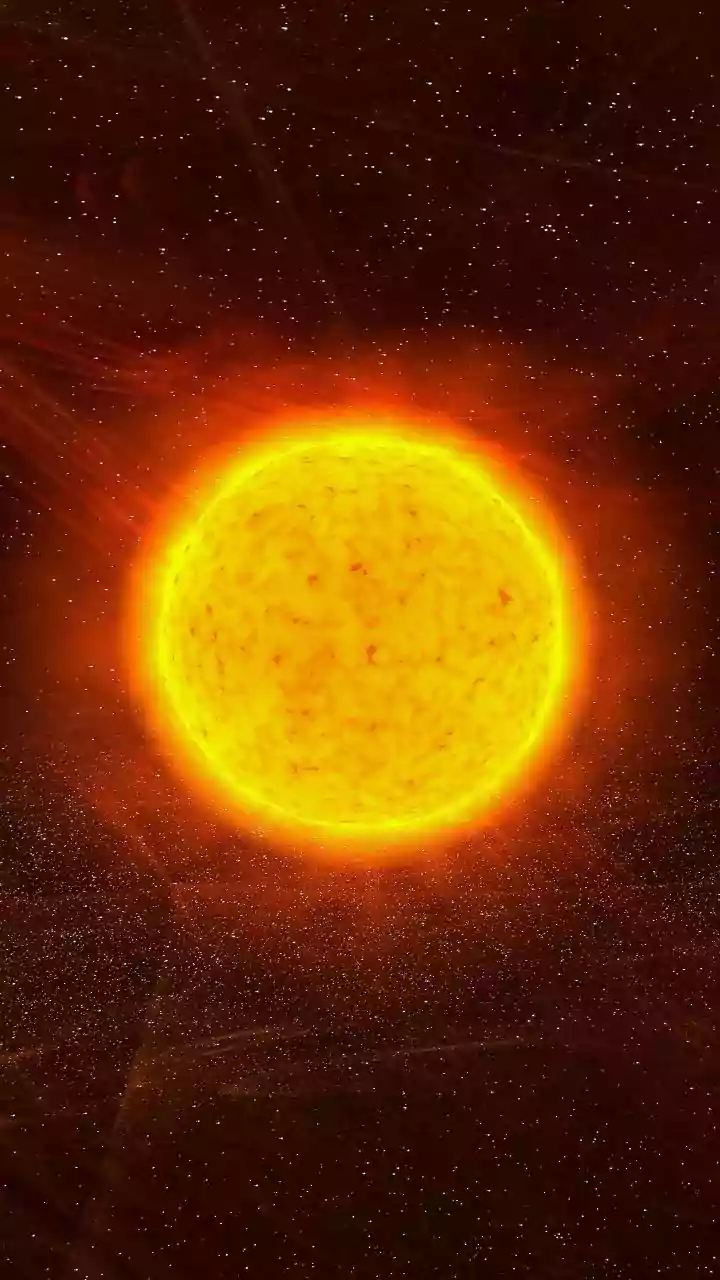
A white dwarf is the dense, collapsed core left over after a low to medium-mass star, like our Sun, runs out of fuel. When such a star exhausts the hydrogen in its core, it swells into a red giant, puffing its outer layers of gas and dust into space.
What remains is an incredibly dense, Earth-sized object with a mass comparable to the Sun. This stellar remnant no longer produces heat through nuclear fusion; instead, it glows faintly from its residual heat, slowly cooling over billions of years. Many white dwarfs are known to be 'polluted' with heavy elements, which astronomers believe comes from accreting, or pulling in, debris from shattered asteroids or other rocky bodies that survived the star's violent evolution.
The Mystery of HS 0209+0832
The white dwarf HS 0209+0832, located about 270 light-years away, has long been an astronomical puzzle. Data first collected by the Hubble Space Telescope in 1999 revealed its atmosphere contained heavy elements, suggesting it was accreting material from a nearby source. However, the chemical signature was bizarre. Re-analysing this decades-old data, a team led by the University of Warwick made a breakthrough. They identified a high abundance of the element niobium, an element not previously seen in other white dwarfs and found at levels more than 1,000 times that of our Sun. This unusual composition didn't match any known meteorite or the typical debris seen around other white dwarfs.
A 'Second-Generation' Planet
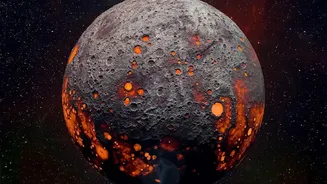
The strange chemical fingerprint led researchers to a startling conclusion: HS 0209+0832 may be feeding off a 'second-generation' planet. Unlike 'first-generation' planets like Earth, which form from the disk of material left over from a star's birth, a second-generation planet is a world that condenses from the material a star casts off as it dies. Elements like niobium are forged late in a star's life and expelled during its red giant phase. The theory is that this expelled material, likely corralled by a companion star that has since disappeared, formed a new planet-birthing disk around the white dwarf. The candidate planet, a Jupiter-sized gas giant, would have then formed from this stellar 'ash'.
How Was It Detected?
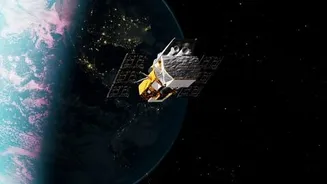
The discovery involved piecing together clues from multiple telescopes. The unusual niobium signature in Hubble's 25-year-old data was the first major clue. Further evidence came from NASA's TESS (Transiting Exoplanet Survey Satellite). TESS detected regular, periodic dips in the white dwarf's brightness. This suggests a planet is orbiting the star every 4.4 days, passing in front of it from our point of view. The planet orbits incredibly close to its star, at a distance about ten times closer than Mercury is to our Sun. This close proximity means the planet is being blasted by intense radiation, causing its atmosphere to boil away and rain down onto the white dwarf—which would explain the strange elements detected in its atmosphere.
Why This Discovery Matters
While it is still a candidate and needs to be confirmed, the discovery of a second-generation planet around a white dwarf is significant. Previously, such 'reborn' planets had only been suspected to exist around pulsars, a different type of stellar remnant. Finding one around a much more common white dwarf suggests that planet formation can be a two-act play. It opens the possibility that even after a star dies a violent death—a fate that awaits our own Sun in about five billion years—new worlds can rise from the ashes. This discovery challenges our assumptions about the end-of-life stages for stellar systems and suggests that the story of a star and its planets might be much longer and more complex than we ever imagined.