





Putting Numbers on the Weirdness
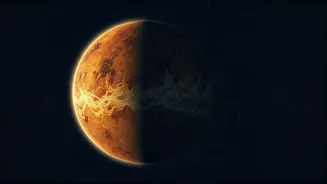
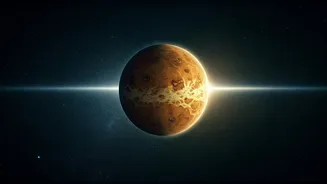
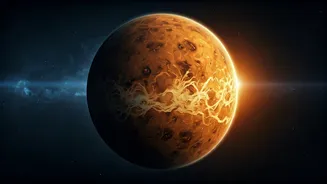
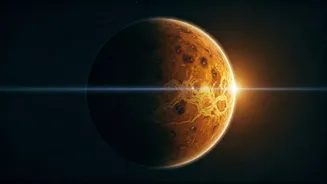
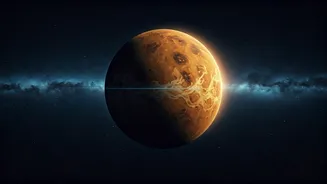
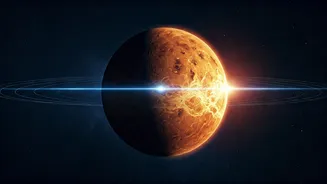
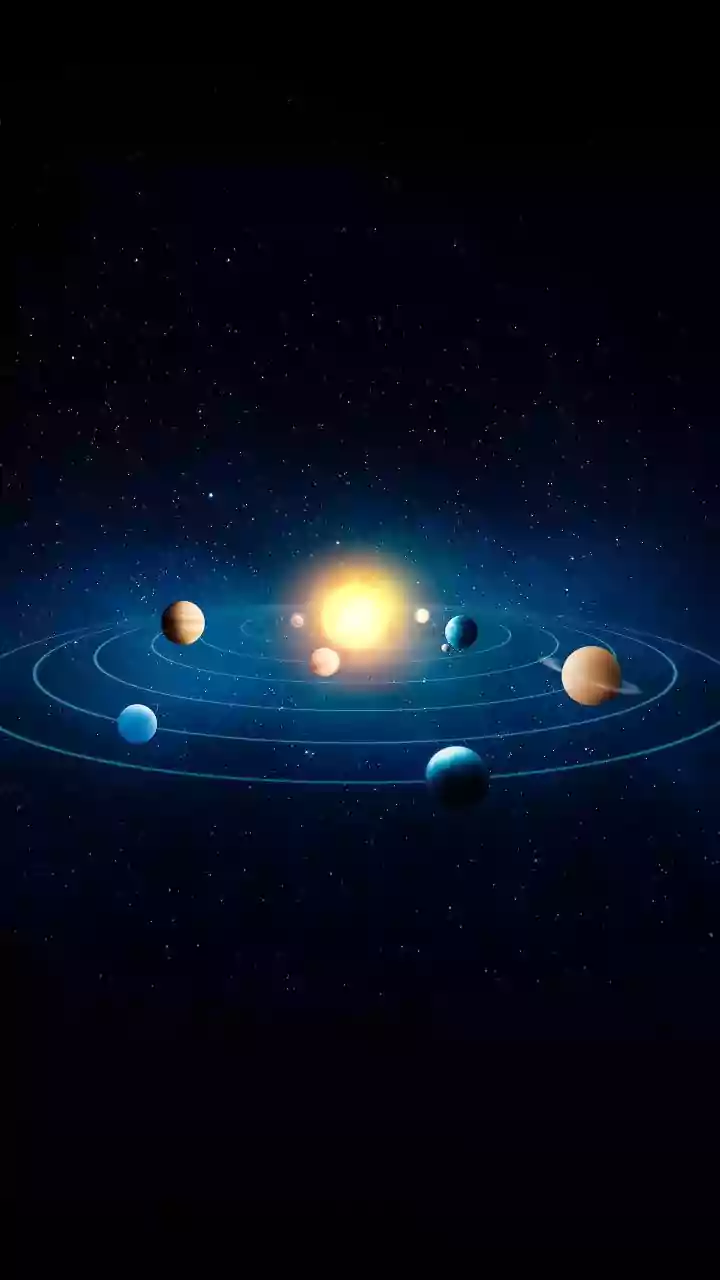
Let’s break down this cosmic paradox. A year on any planet is defined by the time it takes to complete one orbit around the sun. For Venus, this journey takes about 225 Earth days. So, a Venusian year is roughly two-thirds of an Earth year. Now for the day.
A planet’s day is the time it takes to complete one full rotation on its axis. Venus is an incredibly slow spinner. It takes a staggering 243 Earth days to rotate just once. So, there you have it: the Venusian year is 225 Earth days long, while the Venusian day of rotation is 243 Earth days long. It’s a place where you could celebrate your birthday before the planet has even finished a single spin.
Not All 'Days' Are Created Equal
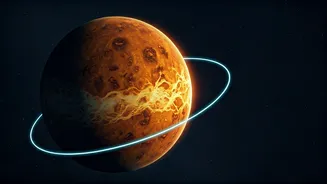
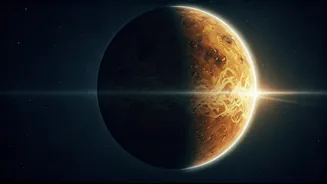
Here's where it gets even stranger. The 'day' we just discussed (243 Earth days) is a *sidereal* day—the time it takes to turn 360 degrees. But what we on Earth think of as a day is the time from one sunrise to the next, known as a *solar* day. Because Venus rotates backwards (a phenomenon called retrograde rotation), its solar day is completely different. The slow backward spin combined with its orbit around the sun means that the time between sunrises is about 117 Earth days. So, if you were standing on Venus, you’d experience roughly two 'sunrise-to-sunrise' cycles per year. You'd have nearly two months of continuous daylight, followed by two months of darkness. And to top it off, the sun would rise in the west and set in the east.
Why the Slow, Backward Spin?
Scientists don't have a single, definitive answer for why Venus is so odd, but there are two leading theories. The first is the “giant impact” hypothesis. Much like a celestial snooker shot, it’s believed that early in its history, Venus may have been struck by a massive planet-sized object. This cataclysmic collision could have been powerful enough to not just slow its rotation to a crawl but actually reverse its direction. The second theory points to Venus's incredibly thick and heavy atmosphere. Some models suggest that over billions of years, powerful atmospheric tides created by solar heating could have acted like a brake, creating so much friction against the surface that it gradually slowed the planet's spin and eventually flipped it over.
A Truly Inhospitable World
This bizarre timekeeping is just one feature of a truly hellish environment. Venus is the hottest planet in our solar system, with surface temperatures averaging around 465°C—hot enough to melt lead. Its atmosphere is about 90 times denser than Earth's, meaning the pressure on the surface is equivalent to being 900 metres underwater. This crushing pressure comes from a thick, toxic atmosphere composed mainly of carbon dioxide with clouds of sulphuric acid. The runaway greenhouse effect on Venus is a stark reminder of how planetary environments can evolve in drastically different ways. Its slow rotation may also contribute to its lack of a significant magnetic field, leaving it exposed to the harsh solar wind.