






Diwali is a time of joyous celebration, but the accompanying spike in air pollution poses real health risks. Thankfully, modern technology offers a powerful tool to help protect your loved ones and enjoy the festivities with greater peace of mind.
Diwali's Festive Air Dilemma
The
festival of lights, unfortunately, also brings a predictable cloud of smog. The widespread use of firecrackers, combined with increased traffic and specific weather patterns like cooler temperatures and lower wind speeds, traps a cocktail of harmful pollutants close to the ground. This pollution includes fine particulate matter (PM2.5 and PM10), sulphur dioxide, and nitrogen oxides. These substances can cause immediate irritation to the eyes, nose, and throat, as well as trigger persistent coughing and breathlessness. For vulnerable groups, the risks are even greater. Children, whose lungs are still developing, and the elderly, who may have weaker immune systems, are particularly susceptible to severe health impacts. Short-term exposure can exacerbate conditions like asthma and COPD, leading to a 30-40% increase in related hospital visits during the festive period. These fine particles can even penetrate the bloodstream, increasing the risk for cardiovascular events like heart attacks and strokes.
Your New Tool: The Air Quality Monitor
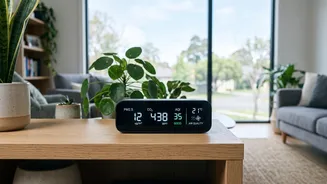
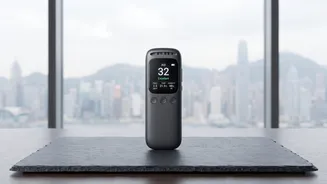
An air quality monitor is a small device that provides real-time data about the air in your immediate environment. These monitors detect and measure key pollutants, with the most important one for health being PM2.5 — microscopic particles so tiny they can lodge deep in the lungs and enter the bloodstream. Many monitors also track other pollutants like volatile organic compounds (VOCs) and carbon dioxide. The information is typically displayed on the device itself or sent to a smartphone app, giving you an instant snapshot of your air quality. To get the most accurate readings, place the monitor in the area you intend to use, such as your living room or balcony, but keep it away from direct sources of contamination like kitchen smoke or open windows that could give a skewed reading. Think of it as a personal weather station, but for air pollution.
Making Sense of the Numbers: AQI Explained
Air quality monitors typically present data using the Air Quality Index (AQI), a color-coded scale that makes complex data easy to understand. The scale runs from 0 to 500 and is divided into categories: Green (0-50, Good), Yellow (51-100, Moderate), Orange (101-150, Unhealthy for Sensitive Groups), Red (151-200, Unhealthy), Purple (201-300, Very Unhealthy), and Maroon (301+, Hazardous). An AQI value of 100 generally corresponds to the national air quality standard; anything above it is considered unhealthy for the general public. For families, the 'Orange' category is a key threshold. When the AQI is between 101 and 150, people with lung disease, older adults, and children are advised to reduce prolonged or heavy exertion outdoors.
Plan Your Gathering Strategically
With a real_time monitor, you can move from guessing to making data_driven decisions. Use it to find the 'golden hour' for your outdoor celebrations. Air quality often fluctuates throughout the day, with pollution sometimes peaking in the late evening and early morning. By checking your monitor, you might discover a window in the afternoon where the AQI is lower, making it a safer time for children to play outside or for the family to gather on the terrace. If you're planning a get_together, you can check the monitor an hour beforehand. If the readings are high (e.g., in the 'Red' zone), you have time to pivot to your 'Plan B' — moving the party indoors. This simple device empowers you to be flexible and prioritize health without cancelling your plans entirely.
Beyond Monitoring: A Full Safety Plan
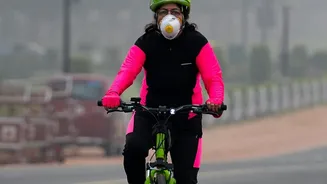
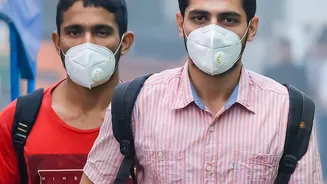
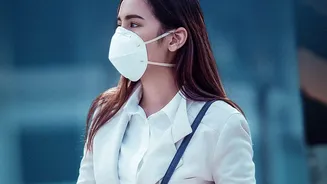
While monitoring is a crucial first step, it works best as part of a wider safety strategy. If you must go out when pollution levels are high, wearing a well_fitted N95 mask can effectively filter out harmful PM2.5 particles. Indoors, your home can be a sanctuary. Keep windows and doors closed during peak pollution hours. Consider investing in an air purifier with a HEPA filter, which is designed to trap fine particles and significantly improve indoor air quality. You can also make celebrations safer by opting for eco_friendly diyas instead of smoke_heavy candles or incense, and choosing green, low_smoke crackers if they are used at all. Staying hydrated and eating a diet rich in antioxidants can also help support your body's natural defense mechanisms.