



Our Solar System's Great Water World
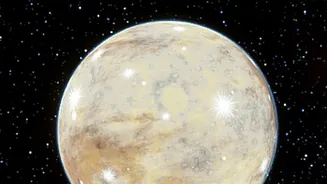
Jupiter's moon Europa has long captivated scientists. Roughly the size of Earth’s moon, its surface is a bright, crisscrossing maze of cracks on a shell of ice. But the real prize lies beneath. Evidence strongly suggests that under this frozen crust,
which may be several kilometres thick, is a global ocean of liquid saltwater containing more than twice the water of all of Earth's oceans combined. The key to this watery world is Jupiter's immense gravity, which constantly squeezes and flexes the moon. This tidal flexing is thought to generate enough heat to keep the ocean liquid and may even power hydrothermal vents on the seafloor, similar to those on Earth that teem with life. These factors—liquid water, chemical elements from the rocky seafloor, and a source of energy—are the three essential ingredients for life as we know it, making Europa one of the most compelling destinations in the search for habitable environments beyond Earth.
Meet the Europa Clipper
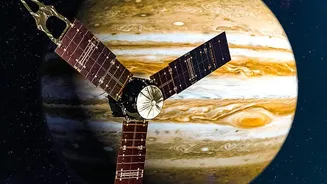
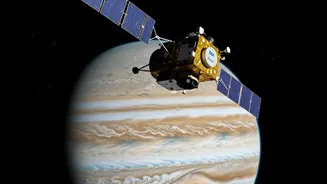
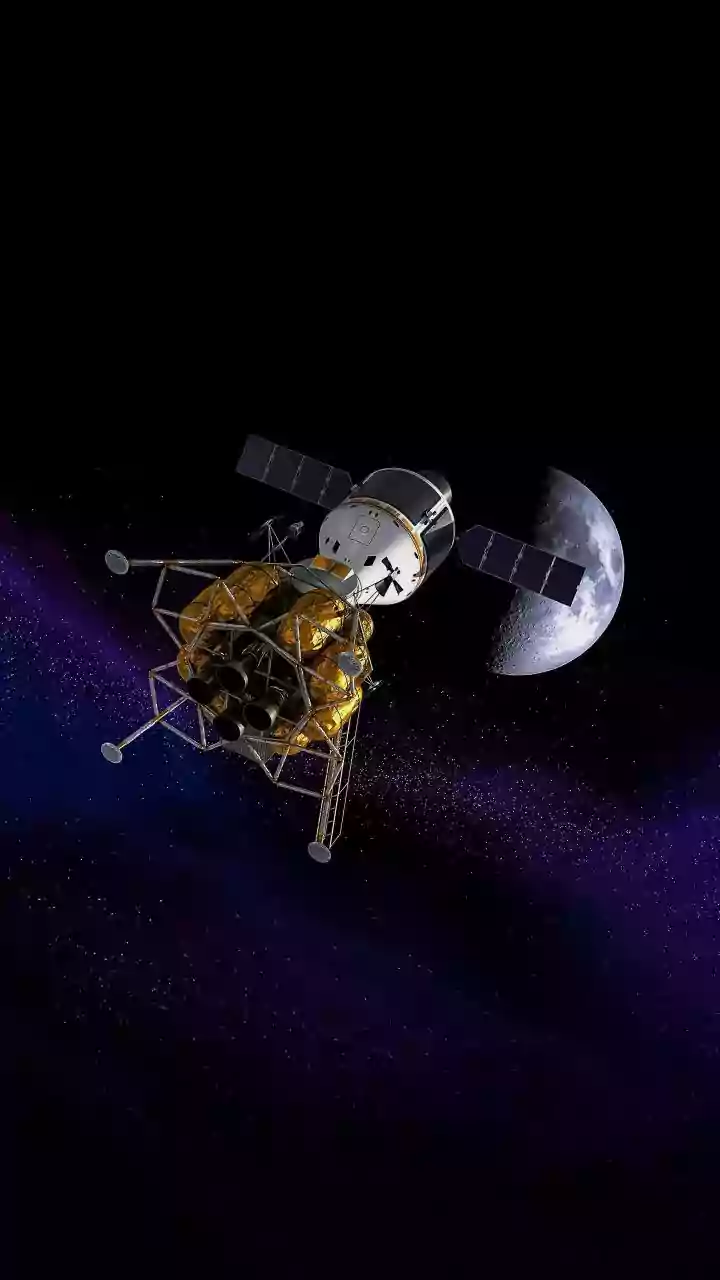
To investigate Europa's potential for life, NASA has dispatched the Europa Clipper spacecraft. Launched in October 2024 aboard a SpaceX Falcon Heavy rocket, this car-sized probe is now on a long and winding journey to the Jupiter system, where it is expected to arrive in April 2030. The mission won't orbit Europa directly, which would expose it to Jupiter's punishing radiation. Instead, it will enter a long, looping orbit around Jupiter and perform dozens of close flybys of Europa—nearly 50 in total. During each pass, it will swoop down to altitudes as low as 25 kilometres above the surface to gather precious data before soaring away to safety. This intricate orbital dance allows the spacecraft to scan almost the entire moon over its planned multi-year primary mission while limiting damage from the intense radiation environment.
A Toolkit for Detecting Habitability
Europa Clipper is not designed to find life itself, but rather to determine if the conditions for life exist. To do this, it carries a suite of nine advanced science instruments. Ice-penetrating radar, called REASON, will be used to measure the thickness of the ice shell and search for the ocean below. Spectrometers will analyze the composition of the ice, dust, and Europa’s thin atmosphere, looking for key chemical compounds, including salts and organic molecules. High-resolution cameras will map the surface in stunning detail, searching for geologic activity, while a thermal imager looks for warm spots where liquid water may be close to the surface. A magnetometer aims to confirm the ocean's existence, depth, and salinity by measuring the magnetic field generated within the conductive saltwater as Jupiter's own magnetic field sweeps past.
Sniffing for Signs of an Ocean
Two of the most exciting instruments are designed to directly sample material from Europa. Scientists have seen evidence of water vapor plumes erupting from the moon's surface. If Clipper can fly through one of these plumes, its MAss Spectrometer for Planetary EXploration (MASPEX) and SUrface Dust Analyzer (SUDA) can directly analyze its chemical makeup. This would provide an unprecedented glimpse into the composition of the subsurface ocean, all without needing to drill through the ice. These instruments are incredibly sensitive, capable of identifying the chemical fingerprints of complex molecules that could be potential biosignatures—substances that provide evidence of past or present life. Finding a mix of certain chemicals could point to biological processes happening in the dark ocean below.
A Perilous and Patient Journey
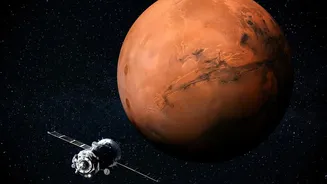
The mission is not without immense challenges. Jupiter’s magnetic field traps a donut-shaped belt of intense radiation, creating one of the harshest environments in the solar system. To protect the spacecraft's sensitive electronics, its most vital components are enclosed in a heavily shielded vault made of aluminum and titanium. The vast distance also presents a problem. With communication delays of about an hour each way, the spacecraft must be highly autonomous, capable of making its own decisions and observations during its rapid flybys. The nearly six-year cruise to Jupiter requires its own precision navigation, including gravity-assist flybys of Mars in 2025 and Earth in December 2026 to build up the necessary speed to reach its destination. After its work is done, the mission is currently planned to end in 2034 with a controlled impact into Jupiter's largest moon, Ganymede.