


An Observatory on the Roof of the World
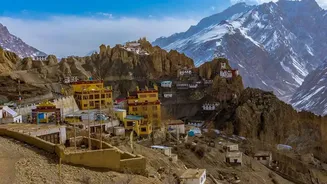
Perched at a dizzying altitude of around 14,500 feet, Langza is one of India's highest villages. This extreme elevation, combined with its remote location in the cold desert of Spiti Valley, creates the perfect conditions for stargazing. The air is thin,
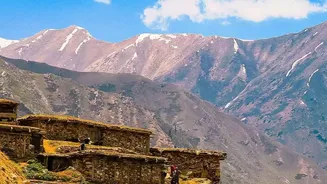
dry, and free from the atmospheric and light pollution that plagues lower-lying areas. This results in a level of clarity that transforms the night sky into a high-definition spectacle. Here, the universe feels not just visible, but intimately close. The village itself, a small cluster of about 30-50 traditional Tibetan-style mud houses, exists in quiet harmony with its stark, majestic surroundings.
A Celestial Spectacle for the Naked Eye
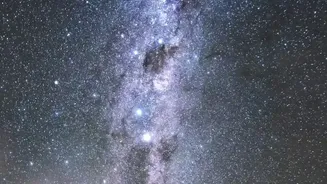
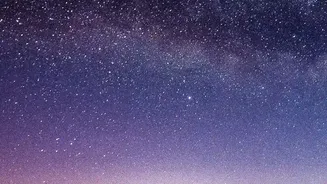
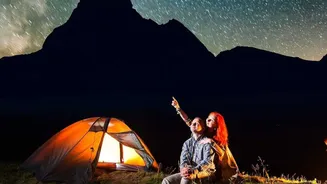
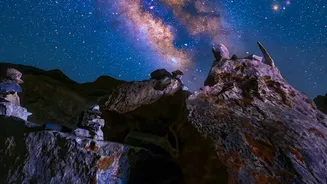
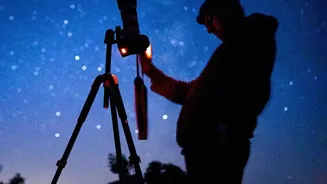
On a clear, moonless night in Langza, the show begins. The Milky Way galaxy stretches across the entire expanse of the sky, a shimmering river of stars so bright it can cast a faint shadow on the ground. It's a sight many have never witnessed with their naked eyes. Constellations pop with brilliant clarity, shooting stars frequently streak across the darkness, and planets can be spotted on their celestial paths. The experience is a profound reminder of our place in the cosmos. For astrophotographers, it's a dream location, particularly with the village's iconic Buddha statue providing a stunning foreground for celestial portraits.
More Than Just Stars
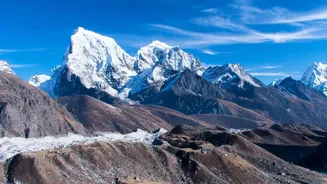
While the night sky is the main draw, Langza's daytime charm is equally compelling. The village is famously known as the 'Fossil Village of India'. Millions of years ago, the entire region was submerged under the Tethys Sea. Today, the surrounding hills are rich with the fossilised remains of ancient marine life, primarily spiral-shaped ammonites. A giant, golden statue of the Maitreya Buddha sits serenely overlooking the valley, its gaze fixed towards the Chau Chau Kang Nilda peak. This modern statue, along with a thousand-year-old monastery, adds a deep spiritual dimension to the otherworldly landscape.
The Journey to the Heavens
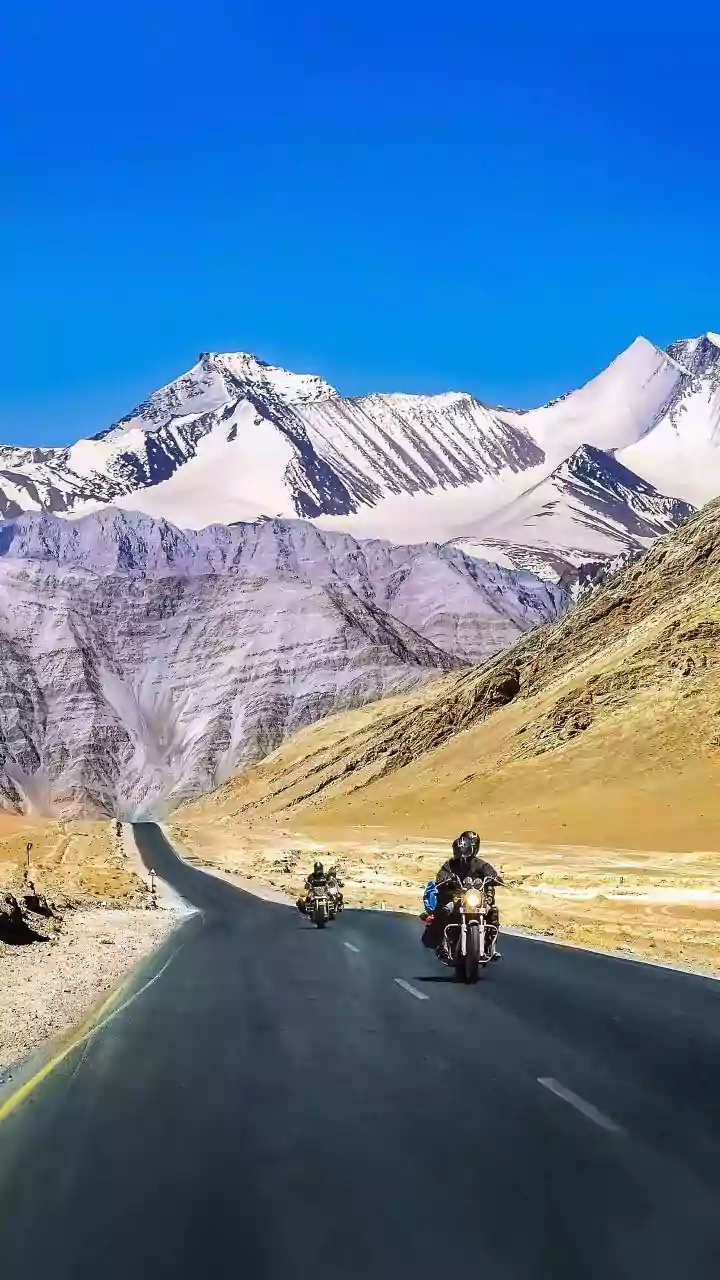
Reaching Langza is an adventure in itself. The village is about 16 kilometres from Kaza, the main administrative town in Spiti Valley. Travellers can hire a local taxi, often as part of a popular circuit that includes the nearby high-altitude villages of Hikkim and Komic. The roads are challenging and primarily accessible from late May to early October. The best time for stargazing is from May to September, with the post-monsoon period in September and October offering the clearest skies after the dust has settled. Due to the extreme altitude, proper acclimatization is crucial. It is highly recommended to spend at least a couple of nights in Kaza to allow your body to adjust before ascending further.
A Community Under the Cosmos
The experience of visiting Langza is made complete by its people. Accommodation is primarily in the form of homestays, offering visitors an authentic glimpse into the resilient life and warm hospitality of the Spitian people. Sharing a meal, listening to local stories, and simply observing the daily rhythms of this high-altitude community connects the cosmic wonder of the night sky with a deep-rooted human culture. Recognizing the potential, initiatives have begun to train local youth as astronomy guides, integrating astro-tourism with community empowerment and creating new livelihood opportunities.