




What's Driving the Change?
There isn't one single event, but a powerful combination of factors. Firstly, the Food Safety and Standards Authority of India (FSSAI) has been tightening regulations. Recent updates focus on safety standards for a wide range of foods, including edible
oils. This includes expanding checks for contaminants and updating permissible limits for toxins in oils and oilseeds. Secondly, there is a growing public conversation around health, with an emphasis on moving away from highly processed foods. Consumers are increasingly questioning the industrial processes behind refined oils and looking for purer alternatives. This shift is partly a return to traditional practices, where cold-pressed oils like mustard, coconut, and groundnut were staples long before refined oils became dominant.
Decoding the Label: A Practical Guide
The front of the bottle is for marketing; the truth is on the back. Words like 'Pure' and 'Natural' have no strict regulatory definition for oils and can be misleading. A refined oil can be called 'pure' simply because it contains only oil after everything else has been stripped away. Instead, focus on these FSSAI-mandated details: the ingredients list, manufacturing date, and the FSSAI license number itself. The most crucial information, however, is the extraction method.
Cold-Pressed vs. Refined: What's the Difference?
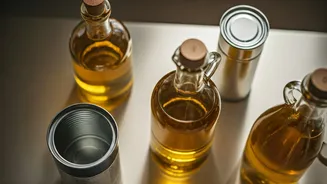
This is the core of the current debate. Cold-pressed oils (also known as 'kachi ghani' or wood-pressed) are extracted through mechanical pressing at low temperatures, without chemicals. This gentle process helps retain the oil's natural nutrients, antioxidants, flavour, and aroma. Refined oils, on the other hand, are often extracted using chemical solvents like hexane and then subjected to high heat, bleaching, and deodorising. This process increases yield and shelf life but strips away many of the beneficial compounds, resulting in a neutral, colourless oil with minimal nutritional benefits.
Blended Oils: The Best of Both Worlds?
Another category gaining traction is blended oils, where two or more oils are combined. The idea is to create a product with a more balanced fatty acid profile (like the ratio of Omega-3 to Omega-6), a higher smoke point, and enhanced nutritional benefits from different sources. For instance, studies suggest that appropriate blends, like rice bran with safflower oil, can have positive effects on plasma lipids and inflammation. FSSAI regulates these multi-source edible oils, which must not be sold in packages exceeding 15 litres. While they offer convenience and a balanced profile, it's still vital to read the label to understand which oils are in the blend and in what proportions.
Making the Right Choice for Your Kitchen
Choosing the 'best' oil isn't about finding one perfect bottle. It’s about matching the oil to the cooking method. Indian cooking involves a range of temperatures, from tempering to deep frying. Oils with a high smoke point, like ghee, mustard oil, and groundnut oil, are better suited for high-heat cooking as they are more stable. Cold-pressed oils with lower smoke points are ideal for drizzling, salad dressings, or low-heat sautéing. Many nutrition experts suggest rotating between different types of healthy oils to get a wider range of fatty acids and nutrients. Ultimately, the growing scrutiny over labels is a positive step. It empowers you to move beyond marketing claims and make informed decisions based on processing, nutrition, and how you cook.