
The Tipping Point for Action
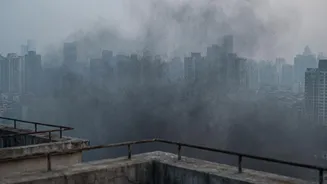
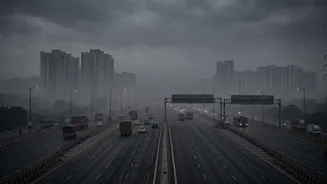
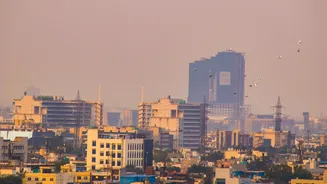
The decision to implement the first stage of GRAP was made by the Commission for Air Quality Management (CAQM) on Wednesday, October 21. The trigger was a sharp spike in Delhi's Air Quality Index (AQI), which jumped from 179 ('moderate') on October 20
to 244 ('poor') the following day. Forecasts from the India Meteorological Department (IMD) and the Indian Institute of Tropical Meteorology (IITM) predicted that the air quality was likely to remain in the 'poor' category for the coming days, necessitating immediate preventive measures. This proactive step aims to curb pollution before it reaches more dangerous levels.
What is the Graded Response Action Plan?
Think of GRAP as an emergency rulebook for fighting Delhi-NCR's air pollution. First approved by the Supreme Court in 2016 and notified in 2017, it's a set of incremental measures that get activated as the air quality deteriorates. The plan is divided into four stages based on the severity of the AQI. Stage I is for 'Poor' air (AQI 201-300), Stage II for 'Very Poor' (AQI 301-400), Stage III for 'Severe' (AQI 401-450), and Stage IV for 'Severe+' (AQI above 450). The core idea is to have a pre-planned, coordinated response from various agencies across Delhi, Haryana, Uttar Pradesh, and Rajasthan, rather than scrambling when a crisis hits.
What Changes Under Stage 1?
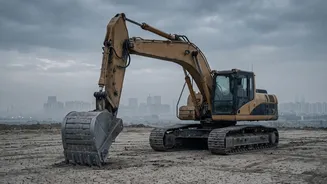
The activation of Stage 1 brings a host of restrictions aimed at tackling key pollution sources. Authorities will intensify dust control measures, including mechanized sweeping and regular water sprinkling on roads. There is a strict ban on all open burning of waste. For residents and businesses, this means a prohibition on the use of coal and firewood in tandoors at hotels and eateries. The use of diesel generator sets is also restricted, with exemptions only for emergency and essential services. Furthermore, there is a renewed crackdown on visibly polluting vehicles and enforcement of Pollution Under Control (PUC) certificate norms. Construction and demolition activities on sites larger than 500 square metres must adhere to strict dust mitigation plans to continue operating.
The Usual Suspects: Weather and Stubble
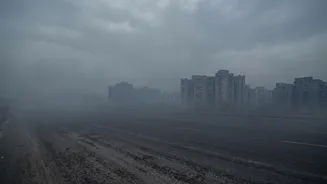
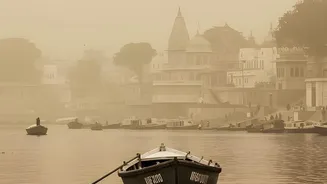
The timing of this air quality decline is no coincidence. As winter approaches, meteorological conditions in North India change. Cooler, denser air traps pollutants close to the ground, a phenomenon known as temperature inversion, preventing them from dispersing. This is compounded by a seasonal increase in farm fires, or stubble burning, in the neighbouring states of Punjab and Haryana, where farmers clear their fields for the next crop cycle. Smoke from these fires travels towards Delhi-NCR and gets trapped in the atmosphere. These external factors combine with Delhi's own baseline pollution from vehicles, industry, and construction dust to create a toxic mix that sends the AQI soaring.
What Happens Next?
With Stage 1 now in effect, all eyes are on the AQI. The CAQM will continuously monitor air quality levels and weather forecasts. If the pollution worsens and the AQI enters the 'Very Poor' category (301-400), Stage 2 of GRAP will be invoked. This would bring even stricter measures, such as further restrictions on diesel generators and increased parking fees to discourage private vehicle use. The measures are incremental, meaning the rules from Stage 1 remain in force when a higher stage is activated. For now, authorities are focused on stringent enforcement of the current stage, hoping to stabilise the air quality and prevent the need for more drastic interventions that impact daily life more severely.