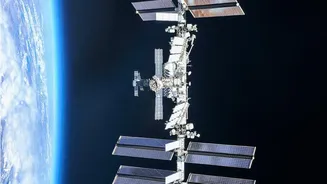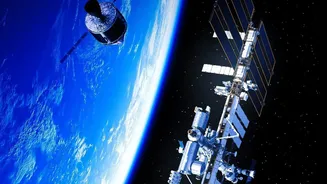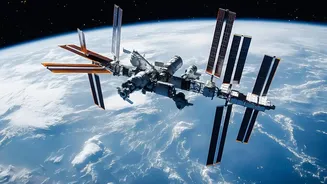

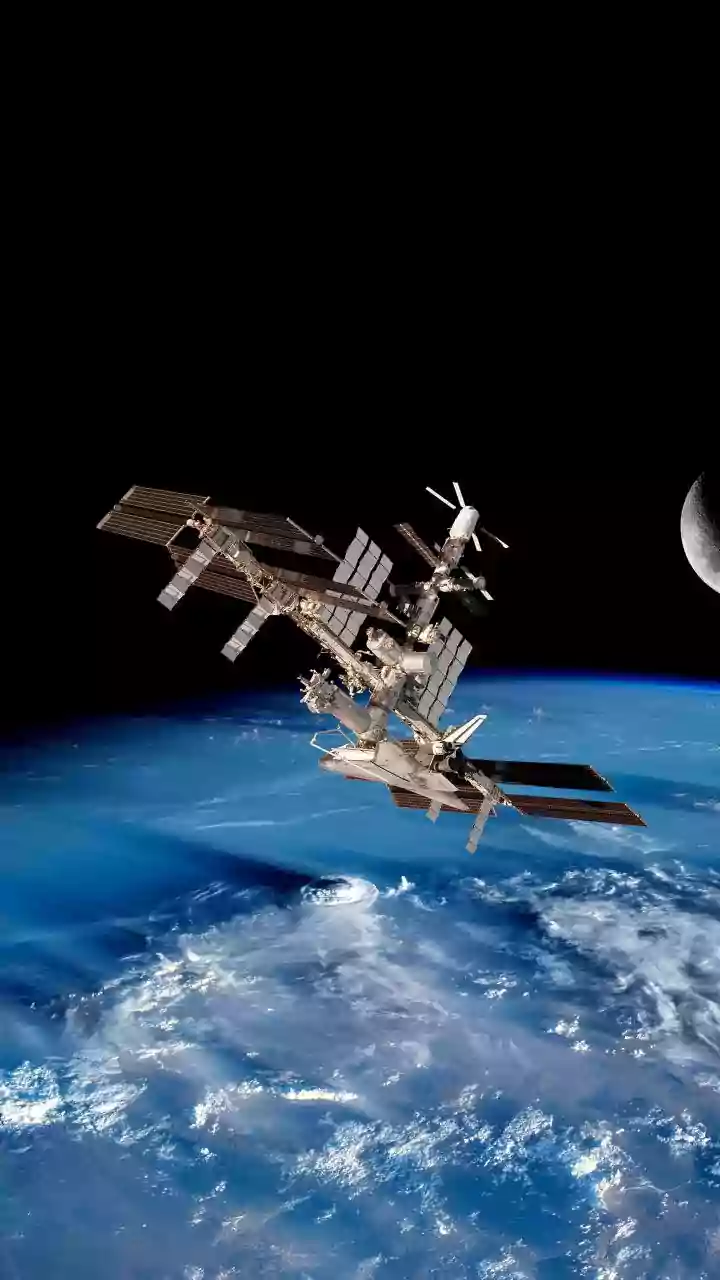


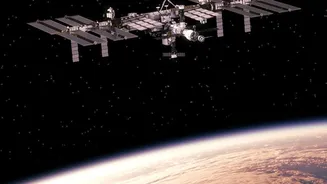
The International Space Station is constantly falling toward Earth, yet it never gets any closer. This isn't a magic trick; it's a beautiful, high-speed balancing act between two powerful forces that keep the station perpetually orbiting our planet.
Gravity Is Still In Charge
First,
let's clear up a common misconception: there isn't 'zero gravity' where the International Space Station (ISS) lives. The station orbits at an altitude of about 250 miles, where Earth's gravitational pull is still about 90% as strong as it is on the surface. If you could build a ladder that high, you'd feel only slightly lighter at the top. So, if gravity is still firmly in command, why don't astronauts and the station itself come plummeting back to Earth? The secret isn't escaping gravity's pull, but harnessing it with another critical ingredient: incredible speed.
The 17,500 MPH Sideways Shove
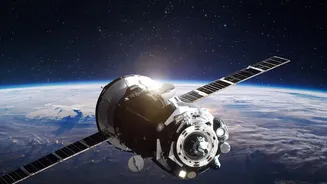
Imagine throwing a baseball. It travels forward, but gravity immediately starts pulling it down, causing it to arc toward the ground. Now, imagine throwing that baseball so hard that by the time it travels a mile forward, the Earth's curved surface has dropped away by the same amount it has fallen. It would never hit the ground. This is the core principle behind an orbit. The ISS is essentially doing the same thing, but at a mind-boggling speed. To stay in orbit, it must travel at roughly 17,500 miles per hour, or about 5 miles per second. At that velocity, the station is constantly falling toward Earth, but its immense forward momentum means it continuously 'misses' the ground as the planet curves away beneath it. This creates a stable path, an orbit, where falling and moving sideways are in perfect equilibrium.
A Perpetual State of Freefall
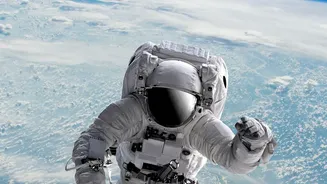
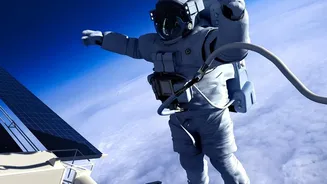
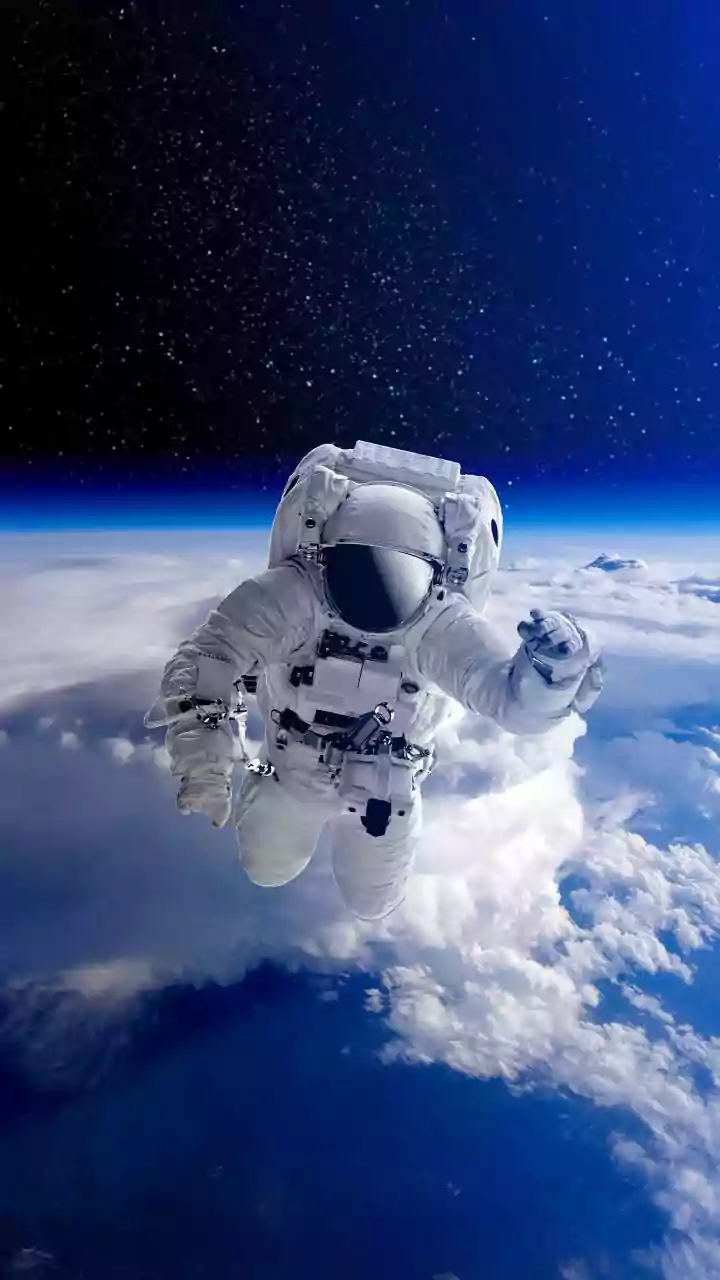
This brings us to why astronauts appear weightless. It's not because they are without weight, but because they are in a constant state of freefall. The station, the crew, and every object inside are all falling around the Earth together at the same rate. Think of a theme park's freefall tower ride. For the few seconds you are dropping, you feel weightless because the ride, your body, and the loose change in your pocket are all accelerating downward together. The ISS is the ultimate version of that ride; it just never lands. Because everything is falling in unison, astronauts float relative to the inside of the station, creating the illusion of a zero-gravity environment that scientists call microgravity.
The Unavoidable Drag Problem
An orbit at 17,500 mph would be perfect and perpetual if it happened in a true vacuum. But even 250 miles up, Earth's atmosphere doesn't just stop; it gets incredibly thin. In this upper layer, called the thermosphere, there are still enough stray air molecules to create a tiny amount of atmospheric drag on the massive station. This constant, subtle friction acts like a brake, slowing the ISS down ever so slightly. As it slows, gravity begins to win the tug-of-war, and the station's altitude slowly decays, sometimes by as much as 100 meters per day. If left uncorrected, this orbital decay would eventually cause the station to re_enter the atmosphere and burn up.
Pushing Back Against the Fall
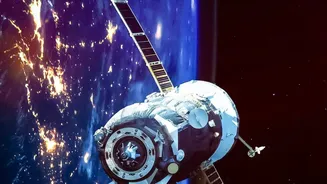
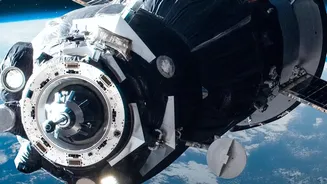
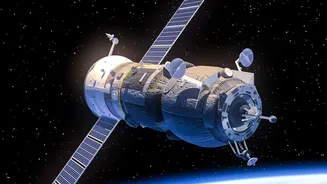
To counteract this slow but steady decay, the ISS needs periodic boosts to get back up to speed and altitude. These 'reboosts' are performed by firing the engines on the station's Russian service module or on docked visiting spacecraft, like the Progress cargo ships. The thrusters fire in the direction of travel, pushing the station forward and increasing its velocity. This added speed causes it to climb back into a higher, more stable orbit, resetting the clock on its slow fall. These maneuvers are a routine and essential part of station operations, ensuring that its delicate dance with gravity can continue for years to come.