






The Menace of Mystery Meatloaf
There’s a reason “mystery meat” is a punchline, and meatloaf is often its prime suspect. In correctional facilities, it's a cost-effective way to serve protein, but it often materializes as a grey, spongy block with a questionable texture. In one South
Carolina prison, inmates refer to a version of Salisbury steak as "moonrock" because it tastes like nothing. This isn’t far from the civilian experience, where a bad meatloaf can be dense, dry, and taste vaguely of disappointment and ketchup. The name itself doesn't help, as “loaf” has a decidedly unappetizing connotation unless it’s attached to bread. When a dish is known for its ability to be both bone-dry and unpleasantly moist at the same time, it’s a strong candidate for culinary parole. The fact that it's a staple in institutions where food is often used as a tool of control rather than nourishment should tell us everything we need to know.
The Sadness of Boiled Vegetables
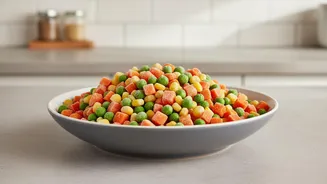
Nothing says “giving up” quite like a heap of boiled, colorless vegetables. In prisons, vegetables are often canned, overcooked, or spoiled, served as a mushy afterthought to meet a bare nutritional quota. This approach strips them of flavor, texture, and joy. Sound familiar? It’s the same crime committed by countless home cooks and restaurants. Vegetables are capable of such wonderful things—roasting brings out their sweetness, and a quick sauté keeps their vibrant crunch. But boiling them into submission is a culinary crime. An inmate in California once cried upon seeing a fresh strawberry for the first time in 17 years, a testament to how much fresh, properly prepared produce is missed. If the sight of a single piece of fruit can evoke that much emotion, it’s a clear sign that the limp, watery pile of carrots and peas on our plates is an offense that should be permanently dropped.
The Unidentifiable Casserole
Casseroles are born of convenience, but they often devolve into a chaotic mess of mismatched ingredients suspended in a congealed sauce. In the prison system, a similar concoction known as Nutraloaf is sometimes served to inmates who misbehave. It's a blended mix of previous meals, baked into a bland, nutritionally complete but deeply unappetizing block. While your aunt’s tuna noodle casserole might not be a disciplinary tool, the resemblance can be uncanny. Both often feature overcooked pasta, a gloopy sauce, and a texture that ranges from mushy to crunchy in all the wrong places. In US prisons, meals are often made using a "blast-chill" method—cooked in huge batches, then cooled and reheated, which can contribute to that homogenous, indistinct quality. When a dish can be described as a “sour-smelling heap,” whether in a prison or a potluck, it’s a sign that it’s time to retire the recipe.
The Dry, Boneless Chicken Breast
The boneless, skinless chicken breast promises lean protein but often delivers a dry, flavorless experience that’s as punishing as any sentence. Baked or boiled chicken is a common feature on prison menus. While intended to be nourishing, reports of undercooked or poorly prepared chicken are widespread, turning a simple protein into a hazard. Outside prison walls, this cut of meat is a default for the health-conscious, but it is notoriously difficult to cook well. More often than not, it ends up tough and requiring a gallon of water to wash down. In both settings, it represents a failure of imagination—a food chosen for function over form, with little regard for the pleasure of eating. Life is too short for chicken that has the texture of cardboard. If it's a staple on trays where food is described as a 'gastronomic cruelty,' maybe we should rethink its place on our own tables.