






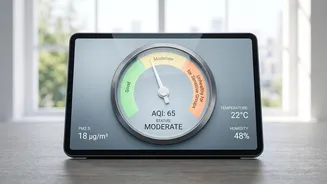
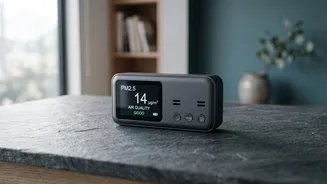

Many of us check the Air Quality Index (AQI) on our phones, but the single number and colour code don't tell the whole story. To truly understand your exposure, it's crucial to look deeper at the specific pollutants that make up that score.
Beyond the Single AQI Number
The Air Quality
Index is a simplified tool designed to communicate overall air pollution. In India, it's calculated based on the levels of eight major pollutants, including PM2.5, PM10, and Nitrogen Dioxide (NO2). The final AQI number you see is determined by the pollutant with the highest concentration at that moment, meaning the general score can sometimes mask the high presence of other harmful substances. While an AQI of 150 is 'Unhealthy for Sensitive Groups', the health advice changes depending on whether that score is driven by dust particles or traffic emissions. That's why learning to navigate to the 'details' or 'pollutants' section of your app is the first step toward making more informed decisions about your health.
The Menace of Particulate Matter (PM)
Particulate matter, or PM, refers to tiny solid and liquid particles suspended in the air. The numbers that follow, 10 and 2.5, refer to their size in micrometres. PM10 are inhalable coarse particles, like dust, pollen, or mold spores. They can irritate your eyes, nose, and throat. PM2.5, however, is far more dangerous. These fine particles are so small they can bypass the body's natural defences, lodging deep in your lungs and even entering your bloodstream. Long-term exposure to PM2.5 is linked to serious health issues, including respiratory diseases, cardiovascular problems, and reduced lung function, particularly in children and the elderly. Sources include vehicle exhaust, industrial emissions, construction dust, and smoke from crop burning or wildfires.
Nitrogen Dioxide: The Invisible Threat
Nitrogen Dioxide (NO2) is a reddish-brown gas that primarily forms from the burning of fossil fuels. Its main sources are vehicle emissions, power plants, and industrial processes, making it a significant problem in urban areas, especially near busy roads. Breathing air with high concentrations of NO2 can irritate airways, worsen coughs, and aggravate respiratory conditions like asthma. Over time, exposure can contribute to the development of asthma and increase susceptibility to respiratory infections. NO2 also plays a role in forming other pollutants like ground-level ozone (smog) and fine particulate matter, compounding its impact on air quality.
Finding the Data in Your App
Most popular air quality apps in India, including the government's Sameer app, IQAir AirVisual, and others, provide detailed pollutant breakdowns. Typically, after you select your location, the main screen will show the overall AQI. Look for a button or tab labelled 'Details', 'More Info', or something similar. This screen should display the real-time concentrations for individual pollutants like PM2.5, PM10, and NO2. These are usually measured in micrograms per cubic metre (µg/m³). Some apps, like Plume Labs and IQAir, also offer forecasts, helping you plan activities for the hours or days ahead based on predicted pollutant levels.
What Do the Numbers Mean?
Understanding the raw numbers is key. India’s Central Pollution Control Board (CPCB) has set its own 24-hour standards: 60 µg/m³ for PM2.5 and 80 µg/m³ for NO2. However, the World Health Organization (WHO) has much stricter guidelines, recommending an annual average of just 5 µg/m³ for PM2.5 and 10 µg/m³ for NO2, underscoring that there's really no 'safe' level of pollution. When checking your app, compare the µg/m³ reading to these benchmarks. If PM2.5 levels are above 60, the air quality is poor by national standards, and it's wise to take precautions. For NO2, consistently high levels, especially near traffic, are a cause for concern.
Taking Action to Protect Yourself
Armed with this detailed data, you can take specific actions. If PM2.5 levels are high,' it's best to avoid strenuous outdoor exercise,' keep windows closed,' and use an air purifier with a HEPA filter indoors.' Wearing a wellfitted N95 mask can also help filter out fine particles when you have to be outside.' If NO2 is the dominant pollutant,' try to avoid spending time near high traffic areas,' especially during peak hours.' On days with poor air quality,' sensitive groups—including children,' the elderly,' and people with heart or lung conditions—should be especially cautious and limit their exposure as much as possible.'