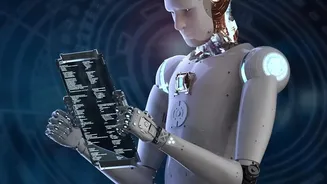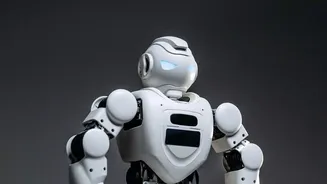






The Promise of a Human-Like Workforce
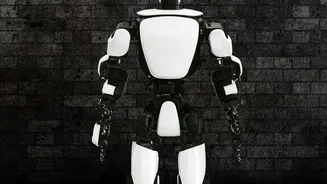
For years, humanoid robots were the stuff of science fiction and carefully controlled demos. Now, they are clocking in for their first real-world shifts. Companies like BMW and Mercedes-Benz are actively piloting robots such as Figure 01 and Apptronik's
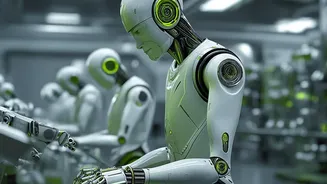
Apollo in their manufacturing facilities. The goal is to automate physically demanding, repetitive, or unsafe tasks—think moving parts to an assembly line or inspecting components. The primary advantage of a humanoid form is its ability to operate in spaces designed for people, theoretically avoiding the need for expensive facility redesigns that other forms of automation often require. These robots are being developed to fill persistent labour gaps in manufacturing and logistics, where hundreds of thousands of jobs often go unfilled.
The Reality of the Price Tag
Despite rapid progress, the initial investment remains a significant barrier. While prices are falling, a commercial-grade humanoid robot can still cost anywhere from $30,000 to over $150,000 per unit. However, the sticker price is only the beginning. Businesses must consider the Total Cost of Ownership (TCO), which includes software integration, infrastructure upgrades like charging stations, and staff training. These additional implementation costs can add another $18,000 to $80,000 on top of the initial hardware purchase. To make the investment more accessible, many robotics companies are offering a 'Robots-as-a-Service' (RaaS) model, where businesses pay a monthly fee of $2,000 to $5,000 per robot, shifting the expense from a large capital outlay to a more manageable operating cost.
The Critical Question of Reliability
Even more critical than cost is the question of reliability. A robot that is impressive in a demo is useless if it cannot perform its duties consistently through a full shift. Business leaders need to know the 'mean time between failures' (MTBF) and the overall uptime they can expect. If a robot on a production line fails, it can halt operations, costing a company far more than the robot's hourly rate. Current limitations like battery life, which can range from 90 minutes to just a few hours of active use, also pose a challenge for multi-shift industrial operations. While some models feature fast-charging or hot-swappable batteries to enable near-continuous operation, achieving the 95%–99% uptime common with traditional automation remains a key hurdle.
Integration: More Than Just Plug-and-Play
Deploying a humanoid robot is not as simple as dropping it onto the factory floor. These machines must be integrated into existing, complex workflows. This involves connecting the robot's software with the facility's management systems, retraining human workers to collaborate safely and effectively with their new robotic colleagues, and redesigning some processes. There are also significant safety standards that must be met, which adds another layer of complexity and cost. The most successful early deployments, like those at GXO Logistics where Agility Robotics' 'Digit' has moved over 100,000 totes, have focused on simple, repetitive material-handling tasks in highly structured environments to minimise these integration challenges.
The Early Adopter's Gamble
Companies like BMW, Mercedes-Benz, and Amazon are not just buying robots; they are investing in learning. These pilot programs are designed to identify the best use cases and understand the true ROI. For example, at BMW's plant in Spartanburg, South Carolina, Figure robots have moved from simple pick-and place tasks to more complex logistics sequencing. The goal is to see if the flexibility of a humanoid—a single platform that could potentially perform multiple different jobs—can deliver a compelling return compared to established, single task automation. The data gathered from these early deployments on performance, reliability, and cost per task will ultimately determine how quickly the technology moves from a niche solution to a mainstream industrial tool.