




A New Space Age for Indian Careers
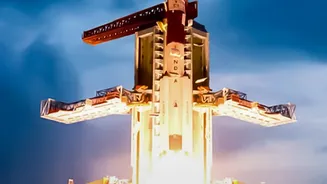
Not long ago, a career in space in India meant one thing: aiming for a coveted position at the Indian Space Research Organisation (ISRO). Today, the landscape is dramatically different. Following landmark policy changes in 2020 that opened the sector
to private enterprise, India is now home to over 400 space-tech startups. Companies like Skyroot Aerospace, Agnikul Cosmos, and Pixxel are not just experimenting; they are launching rockets, deploying satellite constellations, and creating thousands of new jobs. The Indian space economy, currently valued at over $8 billion, is projected to surge to $44 billion by 2033. This isn't a distant dream; it's a rapidly expanding industry actively seeking skilled talent. For graduates across India, this translates into a historic opportunity to build rockets, analyse satellite data, and contribute to missions of national importance, both within and outside the government ecosystem.
Core Engineering Disciplines
The bedrock of any space program remains strong engineering. A bachelor's degree (B.E. or B.Tech) is the standard entry point. Aerospace, Mechanical, and Electronics & Communications engineering are the most direct routes. Aerospace engineers work on vehicle design, aerodynamics, and propulsion. Mechanical engineers are crucial for designing and manufacturing the physical structures of rockets and satellites, from engine components to deployment mechanisms. Electronics and communications specialists design the vital avionics, control systems, and communication hardware that function as the spacecraft's nervous system. A strong foundation in Physics, Chemistry, and Mathematics (PCM) from the 12th standard is non-negotiable for these streams.
Software, Data, and AI
Modern space exploration is as much about code as it is about rockets. There is a massive demand for graduates with skills in software development, data science, and Artificial Intelligence (AI). Programming languages like Python, C++, and MATLAB are essential for everything from flight software and ground control systems to data analysis from satellites. Companies like Pixxel, which operates a constellation of hyperspectral imaging satellites, and SatSure, which provides satellite-based decision intelligence, are fundamentally data companies. They hire professionals who can build AI and machine learning models to interpret vast amounts of satellite imagery for applications in agriculture, climate monitoring, and urban planning. Roles like Geospatial Data Analyst and Satellite Image Processing Scientist are becoming increasingly common and critical.
Specialised Technical Frontiers
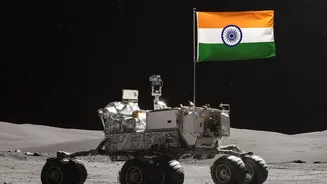
As the sector matures, it requires deeper specialisation. Robotics and automation engineers are needed to develop planetary rovers and automate complex manufacturing processes. Experts in Guidance, Navigation, and Control (GNC) design the algorithms that keep rockets and satellites on their precise trajectories, essentially acting as the brains of a mission. Furthermore, there is a growing need for professionals in advanced materials science to develop lighter and stronger composites, and in propulsion, particularly in emerging areas like semi-cryogenic and electric propulsion systems. These roles often require postgraduate qualifications (M.Tech or PhD) and a deep understanding of subjects like orbital mechanics and astrodynamics.
The Private Sector Edge
While ISRO remains the pinnacle of space research in India, private startups offer a different kind of career trajectory. Companies like Dhruva Space, Skyroot, and Agnikul are known for their fast-paced environments where engineers can take on significant ownership of projects from day one. These startups are hiring for a wide array of roles, including satellite systems engineers, FPGA engineers, and even bid managers and visual designers, showcasing the sector's diversity. The talent pool is also broadening, with companies drawing experts from adjacent industries like automotive engineering, electronics, and data analytics. While an IIT degree is valuable, these companies prioritize demonstrated technical ability, hands-on project experience, and a genuine passion for solving complex problems.
Essential Non-Technical Skills
Technical knowledge alone isn't enough to succeed. The space industry operates on complex, long-term projects that require immense collaboration. Strong communication and teamwork skills are therefore crucial for working in multidisciplinary teams. Problem-solving and critical thinking abilities are paramount, as engineers and scientists constantly face unprecedented challenges that demand innovative solutions. Attention to detail is another vital trait, as even the smallest error can have mission-critical consequences. Gaining practical experience through internships, participating in university-level satellite projects, and contributing to open-source initiatives can provide a significant advantage and demonstrate these soft skills to potential employers.