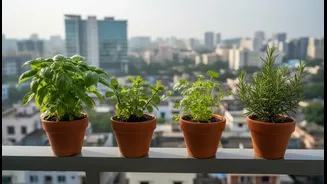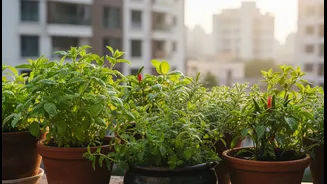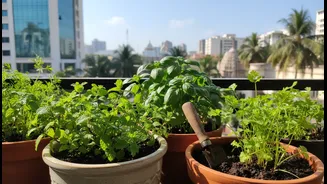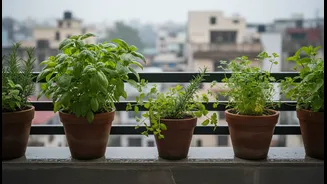




Assess Your Balcony's Potential
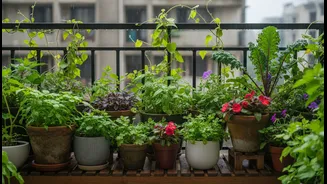
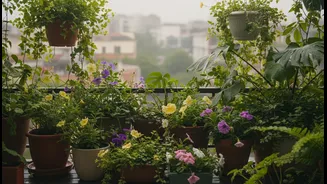
Before you buy a single pot, take a day to observe your balcony. How many hours of direct sunlight does it get? Most common herbs need at least four to six hours of sun to thrive. A south or west-facing balcony is ideal for sun-loving herbs, while an east-facing
one with gentle morning light works well for herbs like mint and coriander. Also, consider the space. Are you working with a narrow ledge or a wider area where you can place larger containers? This initial assessment is the most crucial step and will guide all your plant choices.
Five Essential Herbs for Bengaluru
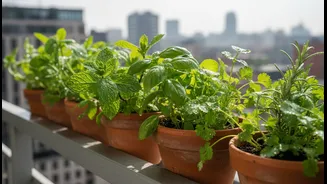
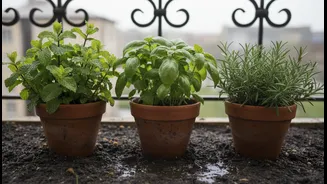
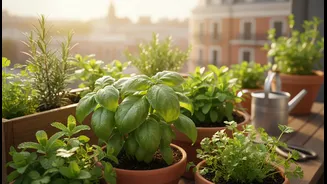
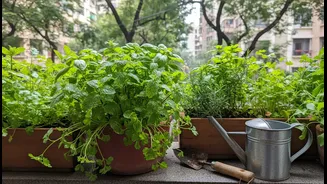
For beginners, it's best to start with a few easy, high-reward herbs that are frequently used in Indian kitchens. Tulsi (Holy Basil) is a must-have, revered for both its culinary and medicinal properties; it thrives in pots with moderate sunlight and regular watering. Mint (Pudina) is another beginner-friendly choice that grows vigorously; in fact, it's best to keep it in its own pot to prevent it from taking over. Coriander (Dhania) is perfect for garnishes and chutneys and can be grown in cycles as it tends to bolt in extreme heat. Curry Leaves (Kadi Patta) are essential for South Indian cooking; this plant starts slow but becomes a long-term companion. Finally, Lemongrass offers a refreshing, citrusy aroma for teas and soups and grows tall, adding a nice visual element.
Choosing Pots and Soil
The right home for your herbs is as important as the plants themselves. Ensure every container has drainage holes at the bottom to prevent waterlogging, which can lead to root rot. Terracotta pots are excellent for herbs that prefer drier conditions, while glazed ceramic or plastic pots retain moisture better for thirsty plants. When it comes to soil, avoid using heavy garden soil, which compacts easily in pots. Instead, opt for a light, well-draining potting mix. A simple and effective blend is one part garden soil, one part cocopeat, and one part compost. This provides nutrients, aids drainage, and retains adequate moisture.
The Art of Watering
Overwatering is one of the most common mistakes made by first-time plant parents. A good rule of thumb is to stick your finger about an inch into the soil. If it feels dry, it's time to water. If it's still moist, wait another day. Water the plants thoroughly until you see water draining from the bottom holes, but don't let the pot sit in a saucer full of water. It's generally best to water in the early morning or late evening to reduce evaporation. Herbs like mint prefer consistently moist soil, while others like Tulsi need the soil to dry out slightly between waterings.
Harvesting for Healthy Growth
Don't be afraid to use your herbs. Regular harvesting actually encourages the plant to become bushier and more productive. When you prune, snip the stems just above a set of leaves. This will often cause the plant to sprout two new stems from that point, leading to a fuller plant. For herbs like Tulsi and basil, it's also important to pinch off any flower buds that appear. This process, known as 'deadheading', prevents the plant from putting its energy into making seeds and encourages it to produce more of the flavourful leaves you want for your kitchen.