


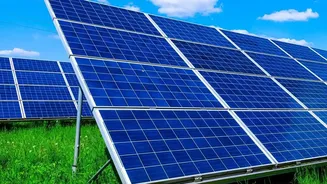
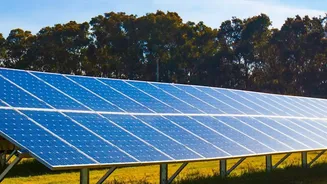
As India pushes for renewable energy, a critical question arises: where do we put the solar farms without sacrificing valuable agricultural land? An innovative solution, agrivoltaics, offers a way to do both, turning farmland into a dual-income source.
What is Agrivoltaics?
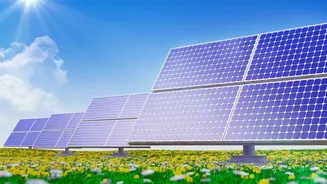
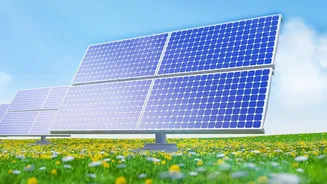
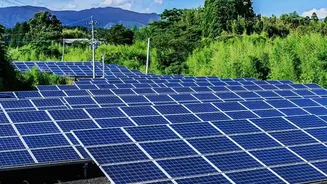
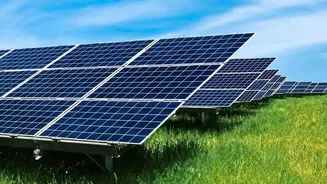
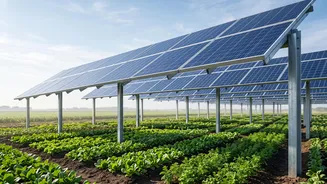
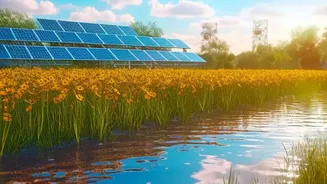
Agrivoltaics, also known as agri-PV, is the practice of using the same piece of land for both solar power generation and agriculture simultaneously. Instead of covering entire fields, solar panels are installed on elevated structures, several metres high, allowing enough sunlight to filter through and creating space for crops to be cultivated underneath. This dual-use approach directly addresses the conflict between the need for clean energy and the need for food security, transforming a single plot of land into a highly productive, multi-revenue asset. It’s a simple yet powerful concept: harvest the sun for both energy and food.
The Surprising Science of Shade
The idea of growing crops under the shade of solar panels might seem counterintuitive, but for many vegetables, it’s a significant advantage, especially in India’s hot and arid regions. The partial shade provided by the panels creates a cooler microclimate, protecting plants from the scorching midday sun and reducing heat stress. This protection helps the soil retain more moisture by lowering evaporation, leading to significant water savings—in some cases by over 30%. For certain shade-tolerant or heat-sensitive crops like leafy greens, herbs, tomatoes, onions, and potatoes, this moderated environment can lead to better quality produce and, in some instances, even higher yields compared to open-field farming.
A 'Third Crop' for Indian Farmers
For India’s farmers, agrivoltaics presents a powerful opportunity to diversify and stabilise their income. Agriculture in India often relies on unpredictable weather and volatile market prices. Agrivoltaics introduces a reliable ‘third crop’: electricity. By selling solar power to the grid, farmers can generate a steady, year-round revenue stream that is independent of seasonal yields. Early pilot projects have shown dramatic results. One study at the Central Arid Zone Research Institute (CAZRI) in Jodhpur found that the system could generate significant income from electricity sales in addition to earnings from crops. This dual income can de-risk farming, particularly for India’s small and marginal farmers who make up over 85% of the farming community.
Pioneering Projects and Suitable Crops
India is already exploring the potential of agrivoltaics through various pilot projects. The research station at CAZRI, Jodhpur, has been a frontrunner, successfully growing crops like mung bean, cluster bean, cumin, and aloe vera between and under solar arrays. Their work has demonstrated that crop selection is key. Low-height crops that tolerate partial shade are most suitable. Studies have identified leafy vegetables like spinach and cabbage, root vegetables like carrots and potatoes, and spices like turmeric and ginger as excellent candidates. While crops needing intense sunlight like paddy and sugarcane are less suitable, the potential for fruits, vegetables, and millets is vast. Some projects have even seen success with grapes in Maharashtra and tomatoes in Gujarat.
The Road Ahead: Challenges and Policy
Despite its immense potential, the widespread adoption of agrivoltaics in India faces hurdles. The primary challenge is the high initial cost; the elevated structures required for agri-PV can make projects 15–30% more expensive than conventional solar farms. Access to affordable finance is a major barrier for small farmers. Recognising these challenges, the Indian government is actively developing a supportive policy framework. A programme to promote agrivoltaics is planned under the next phase of the PM–KUSUM scheme, with an initial target of $5$ GW. This policy aims to standardise designs, ensure fair contracts for farmers, and create a clear roadmap for resolving issues, paving the way for scaling up this promising technology across the nation.