





Beyond the Rover's Reach
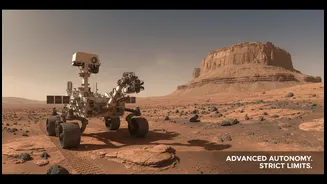
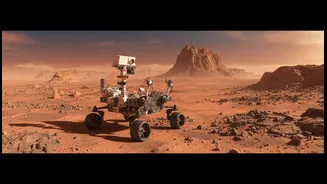
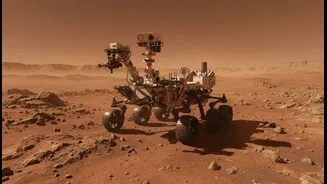
NASA’s rovers, like the celebrated Curiosity and Perseverance, are marvels of engineering. They have fundamentally changed our understanding of Mars, confirming its watery past and scouting for signs of ancient life. However, these rolling laboratories
are fundamentally limited by their design. They require relatively flat, stable ground to operate, restricting them to crater floors and plains. The most compelling scientific targets—the sheer cliffs of Valles Marineris, the mysterious entrances to subterranean lava tubes, and the icy slopes of polar caps—remain tantalizingly out of reach. These are locations where geological history is written in exposed rock layers and where ice, and potentially life, could be sheltered from the harsh surface radiation. Reaching them requires a radical new approach to robotic exploration.
A New Toolkit of Robotic Explorers
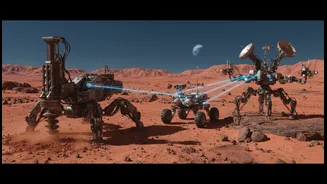
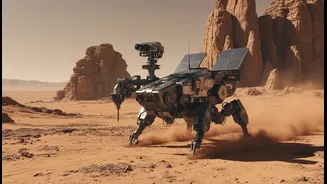
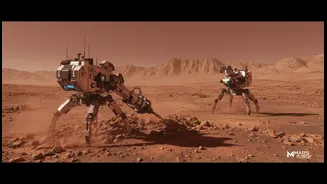
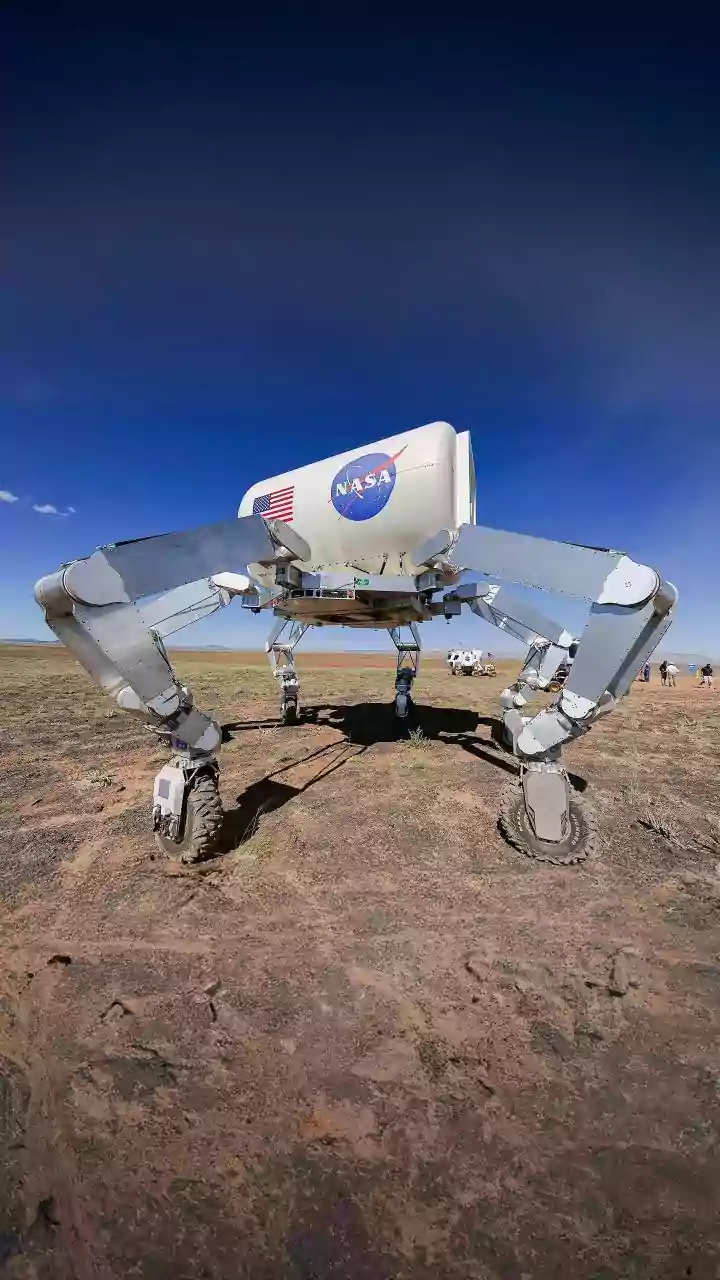
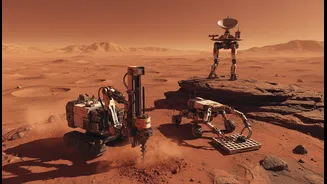
To conquer these extreme environments, engineers are moving beyond the wheel. Inspired by nature and driven by necessity, a diverse family of new robots is in development. Concepts include transforming rovers, spider-like climbers, autonomous robot dogs, and even swarms of collaborating drones. In July 2026, NASA's STRIDE initiative awarded contracts to seven companies to develop these advanced mobility systems, signaling a major investment in this next wave of exploration. These designs prioritize agility, resilience, and autonomy, enabling them to rappel, crawl, climb, and even jump where no machine has gone before.
Journey to the Martian Underworld
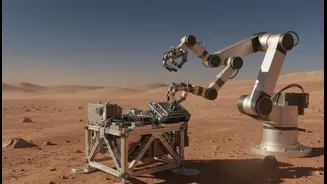
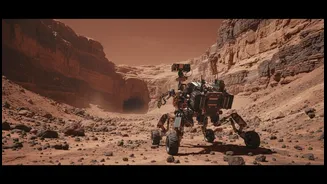
One of the most exciting targets for these new robots are Martian lava tubes. These subterranean caves, formed by ancient volcanic activity, are seen as prime locations to search for preserved biosignatures or current microbial life, as they offer natural shielding from the planet's intense radiation. Prototypes like Stanford University's ReachBot are designed specifically for this task. ReachBot uses long, extendable booms with grippers to pull itself through tight spaces and across uneven cave floors, much like a spider. Other concepts include four-legged 'Mars Dogs,' such as Au-Spot and Spirit, which use AI to navigate treacherous terrain autonomously, and swarms of 'dandelion drones' that could be released from a larger robot to map vast cave networks.
Scaling the Impossible
The vast canyon system of Valles Marineris, with cliffs miles deep, presents another formidable challenge. To access the geological stories locked in these canyon walls, NASA’s Jet Propulsion Laboratory has developed DuAxel. This clever vehicle is essentially two rovers in one. It travels long distances on four wheels, but upon reaching a steep slope, it can anchor its rear half and detach its front half—a two-wheeled, tethered axle named Axel—which then rappels down the cliff face to collect data and samples. This allows scientists to investigate geological layers that are inaccessible to conventional rovers, which are typically limited to slopes of less than 30 degrees. Other rock-climbing concepts, like the four-limbed LEMUR, use hundreds of tiny hooks on their fingers to scale vertical rock faces.
Pioneers for Human Exploration
These next-generation robots are more than just scientific tools; they are essential scouts for future human missions. By venturing into lava tubes, they can assess their potential as ready-made habitats for astronauts, offering protection from radiation and extreme temperature swings. Aerial scouts, like the proposed SkyFall helicopter trio, can build on the success of the Ingenuity helicopter to map terrain and search for subsurface water ice, a critical resource for drinking water and rocket fuel. Projects like LASSIE aim to develop robot dogs that could one day walk alongside astronauts, acting as safety scouts on hazardous terrain. These robotic pioneers are tasked with mapping the unknown, identifying resources, and mitigating risks, paving the way for a safer and more effective human presence on Mars.