


A Complete Workout in a Single Flow
Surya Namaskar is more than just a series of stretches; it is a dynamic and comprehensive exercise that targets nearly every major muscle group. The sequence is a unique combination of strength training, cardiovascular conditioning, and flexibility work.
When performed at a steady pace, it elevates the heart rate, providing a cardio workout that improves circulation and endurance. The continuous flow between poses builds muscular strength in the arms, shoulders, core, and legs, while the deep stretches enhance spinal mobility and release tension in the hips and hamstrings.
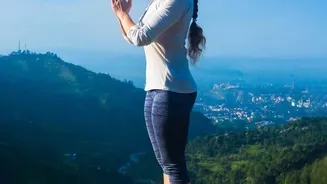
Step 1: Pranamasana (Prayer Pose)
The sequence begins in this grounding pose. Standing tall with your feet together, you bring your palms to meet at your chest. This initial step is about centering yourself, setting an intention for your practice, and establishing a calm, even breath. It helps create mental focus before the physical movement begins.
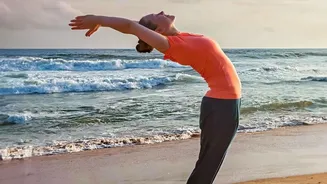
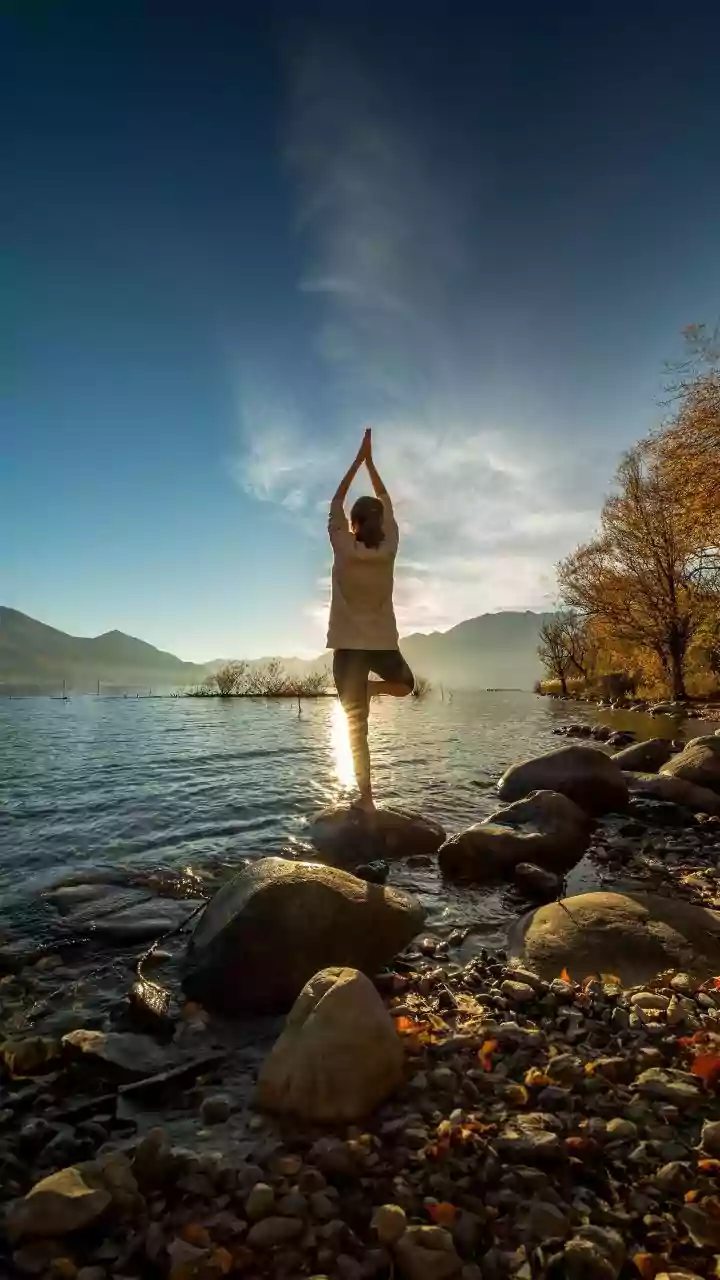
Step 2: Hasta Uttanasana (Raised Arms Pose)
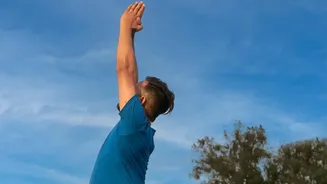
From Prayer Pose, you inhale and sweep your arms upward, creating a gentle arch in your back. This pose stretches the entire front of the body, from the abdomen to the chest and throat. It works to lengthen the spine, open up the shoulders, and improve lung capacity by expanding the rib cage.
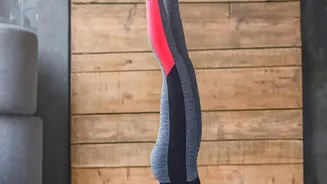
Step 3: Hastapadasana (Hand to Foot Pose)
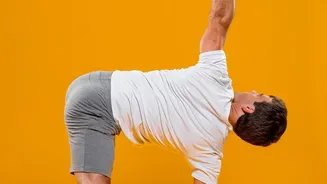
As you exhale, you fold forward from the hips, bringing your hands towards your feet. This deep forward bend provides an intense stretch for the hamstrings, calves, and hips. It also increases blood flow to the brain, which can help calm the mind and relieve stress.
Step 4: Ashwa Sanchalanasana (Equestrian Pose)
Inhaling, you step one leg back into a low lunge, dropping the knee to the floor and looking forward. This pose provides a deep stretch for the hip flexors and quadriceps of the back leg while strengthening the front leg. It challenges your balance and opens up the chest.
Step 5: Dandasana (Stick Pose)
Next, you step the front leg back to meet the other, holding your body in a straight line from head to heels, similar to a plank. This pose is a powerful core strengthener, engaging the abdominal muscles. It also builds significant strength in the arms, shoulders, and wrists.
Step 6: Ashtanga Namaskara (Eight-Limbed Salutation)
From Stick Pose, you exhale and lower your knees, chest, and chin to the floor. In this unique posture, eight parts of the body touch the ground: feet, knees, hands, chest, and chin. It strengthens the chest, arms, and shoulders while preparing the body for the subsequent backbend.
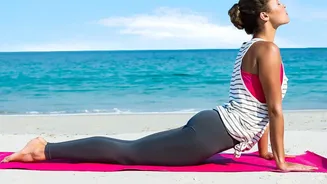
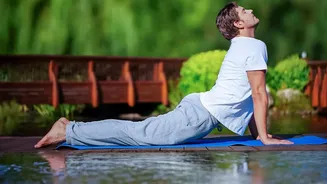
Step 7: Bhujangasana (Cobra Pose)
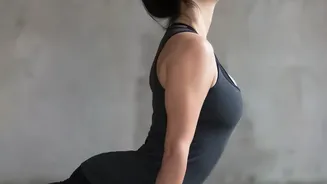
Inhaling, you slide forward and lift your chest off the floor, arching your back into Cobra Pose. This is an excellent pose for increasing spinal flexibility and strengthening the back muscles. It also opens the chest and shoulders, helping to counteract the effects of slouching.
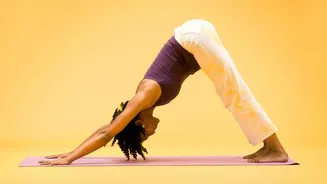
Step 8: Adho Mukha Svanasana (Downward-Facing Dog)
Exhaling, you lift your hips up and back, forming an inverted 'V' shape with your body. This iconic yoga pose provides a full-body stretch, particularly for the hamstrings, calves, and spine. It also builds strength in the arms and shoulders.
Steps 9 to 12: The Journey Back
The second half of the sequence mirrors the first, bringing you back to a standing position. You return to Ashwa Sanchalanasana (Equestrian Pose) with the opposite leg forward, followed by Hastapadasana (Hand to Foot Pose). Then, you inhale back up to Hasta Uttanasana (Raised Arms Pose) before exhaling to complete the cycle in Pranamasana (Prayer Pose). This symmetrical completion ensures that both sides of the body are worked and stretched evenly.