


The Danger Zone: A Bacterial Playground
The core of all food safety advice boils down to avoiding the 'Temperature Danger Zone'. This is the temperature range between 40°F (4°C) and 140°F (60°C) where bacteria can multiply at an alarming rate. In fact, some bacteria can double their numbers
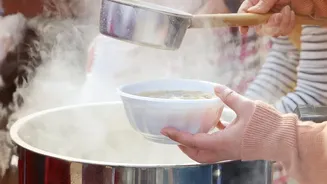
in as little as 20 minutes within this zone. When you leave a large, hot pot of food on the counter, it spends a long time slowly passing through this zone, creating a perfect environment for harmful bacteria like Salmonella and E. coli to thrive, which can lead to foodborne illness. The goal is to move your food through this danger zone and into the safety of the refrigerator as quickly as possible. The maximum recommended time for food to be left at room temperature is just two hours.
Why a Hot Pot in the Fridge Is a Bad Idea
A common kitchen myth is that you shouldn't put hot food in the refrigerator. While modern refrigerators can handle it, placing a large, steaming pot inside is still a bad strategy for food safety. A big pot of dense food, like a rich gravy or thick dal, acts like an insulator. It cools extremely slowly from the outside in, meaning the centre of the pot can remain in the dangerous temperature zone for many hours, even inside the fridge. Furthermore, the heat radiating from the large pot can raise the ambient temperature inside your refrigerator, potentially warming up other foods like milk, cheese, and meats, and putting them at risk as well. The solution isn't to just leave the pot on the counter for hours; it's to cool it smartly and quickly before it goes in.
Golden Rule 1: Divide and Conquer with Shallow Portions
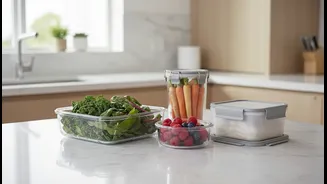
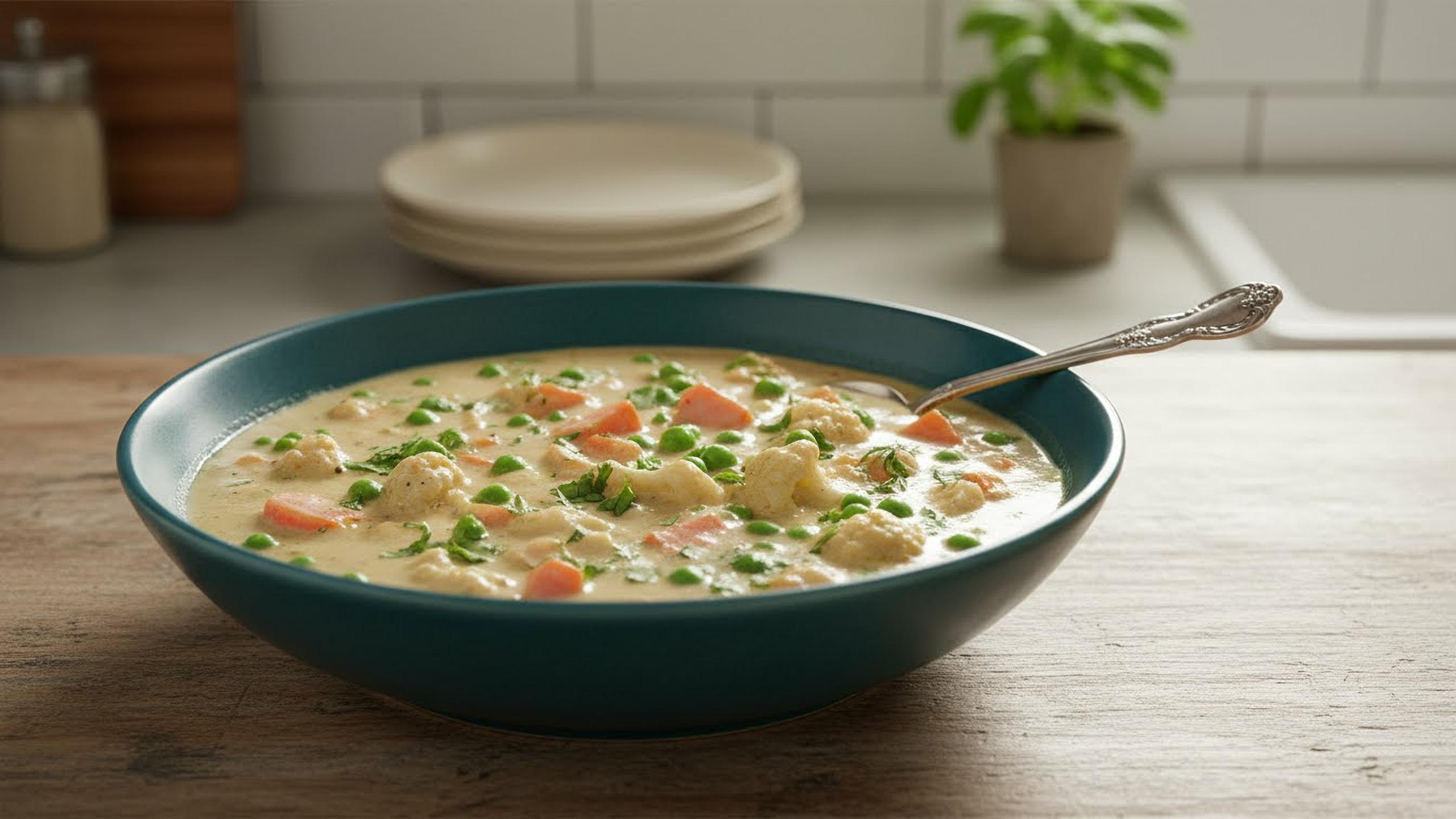
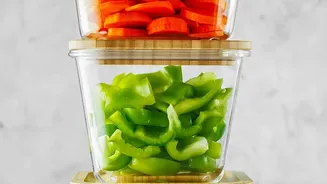
This is the most critical step for rapid cooling. Instead of trying to cool one massive pot, divide the contents into several smaller, shallow containers. Think wide and flat, not deep and narrow. Spreading a curry or sabzi out on a wide tray or in several shallow glass containers dramatically increases the surface area exposed to cooler air. This allows heat to escape much more quickly and evenly. For a large batch of soup or sambar, this method is essential. A deep pot might take many hours to cool, but the same soup in shallow pans can pass through the danger zone much faster. This single step is the most effective way to ensure your food becomes safe for refrigeration in the shortest amount of time.
Golden Rule 2: Actively Cool It Down
The phrase 'cooling before refrigeration' doesn't mean leaving food to sit on the counter until it's cold. It refers to active cooling methods to speed up the process before storage. Once you've divided your leftovers into shallow containers, you can accelerate the cooling even further. A simple and effective method is an ice bath. Place your smaller containers into a larger pan or sink filled with ice and water. Stirring the food during this process helps release heat from the centre. For liquids like dal, you can even use an 'ice paddle'—a frozen bottle of water—to stir and cool from within. If you don't have time for an ice bath, simply letting the shallow containers rest on a wire cooling rack for about 20-30 minutes allows air to circulate all around, which is far more effective than leaving them in a solid pot.
The Two-Hour, Two-Step Countdown
Food safety experts often refer to a two-stage cooling process that must be completed within a total of six hours. The most critical part is the first stage: food must cool from 140°F (60°C) down to 70°F (21°C) within two hours. This is the period of fastest bacterial growth. The remaining four hours can then be used to bring the food from 70°F (21°C) down to the refrigerator temperature of 40°F (4°C) or below. By dividing food into shallow portions and using active cooling methods, you can easily meet the crucial two-hour window for the first stage. Once cooled, store the containers in the fridge, leaving the lids slightly ajar until the food is fully cold to prevent condensation, then seal them tightly. Properly stored leftovers should be consumed within three to four days.