



An Ambitious Return to Venus
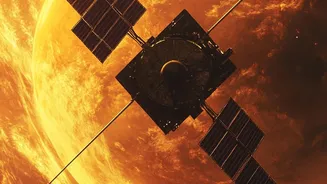
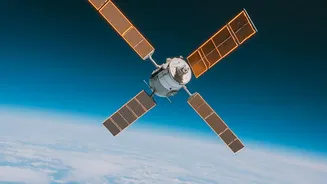
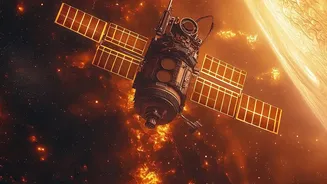
DAVINCI, short for Deep Atmosphere Venus Investigation of Noble gases, Chemistry, and Imaging, represents America's first probe to enter Venus's atmosphere in over four decades. The mission consists of two primary components: a spacecraft that will orbit
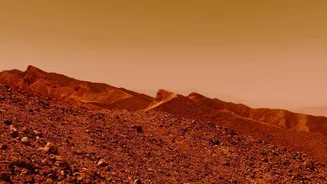
the planet and a sophisticated descent probe designed to dive through its toxic clouds. The orbiter will perform flybys, mapping the surface and tracking cloud movements, but the main event is the probe's solitary journey. Its goal is to sample the atmospheric composition, measure temperature and pressure, and take the first high-resolution images of a unique mountainous terrain known as a 'tessera'. This data is crucial for understanding how Venus, a planet once potentially similar to Earth, evolved into a scorching world with a runaway greenhouse effect.
A Hellish Plunge into Pressure and Heat
The descent will be anything but gentle. Venus's atmosphere is an extreme environment, with surface pressures over 90 times greater than Earth's—equivalent to being nearly a kilometer deep in our ocean. Temperatures at the surface soar to 470 degrees Celsius (900 degrees Fahrenheit), hot enough to melt lead. As the probe descends, it will pass through thick clouds of sulfuric acid. Encased in a protective titanium sphere, the probe is built to withstand these conditions, but only for a limited time. The entire 63-minute fall is a race against the clock and the elements, as the probe gathers and transmits data before it is inevitably crushed or cooked by the planet it came to study.
The One-Shot Automated Sequence
There is no joystick for this mission. Due to the vast distance, real-time control from Earth is impossible. The probe's entire descent is governed by a pre-programmed sequence of commands. This automated ballet must execute flawlessly. From the moment it separates from the main spacecraft, the probe must deploy its heatshield, release its parachutes at the correct altitudes, manage its descent through unpredictable winds, activate its scientific instruments, and continuously transmit its findings to the orbiting spacecraft above. A single flaw in the software code or a mistimed command in the sequence could render the entire mission a failure. The challenge is magnified by the mountainous landing zone, where variations in terrain altitude can complicate the final moments of the descent. There are no second chances.
Learning from a History of Hard Landings
Humanity has tried to conquer Venus before, with mixed results that underscore the difficulty. The Soviet Union's Venera program in the 1970s and 80s successfully landed several probes, with Venera 13 surviving for a record 127 minutes and sending back the first color photos from the surface. However, many other missions, both Soviet and American, failed before or shortly after arrival. The American Pioneer Venus Multiprobe mission in 1978 provided valuable atmospheric data, but technology has advanced significantly since then. DAVINCI builds on these past experiences, incorporating modern materials, computing, and instrumentation to tackle questions that previous missions were not equipped to answer, armed with the hard-won knowledge of just how hostile Venus can be.
The Priceless Scientific Payoff
The risks are immense, but the potential rewards are revolutionary. DAVINCI's atmospheric measurements will provide definitive answers about the planet's composition, particularly the noble gases that hold the key to its formation and history. By analyzing the lower atmosphere, scientists hope to determine how much water Venus once had and what happened to it—a critical piece of the puzzle for understanding habitability on rocky planets, including our own. Furthermore, the images of the Alpha Regio tessera will give us our first close-up look at what may be an ancient Venusian continent, providing insights into the planet's geology and tectonic history. Success would not just be a technological triumph; it would rewrite our understanding of our nearest planetary neighbor.