
A New Eye on the Cosmos
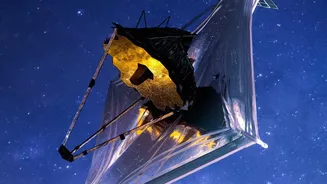
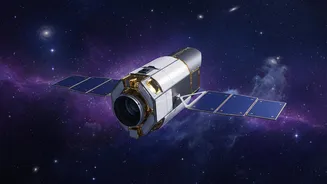
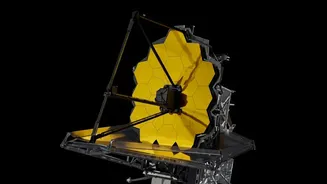
Imagine being able to see a forest and the individual leaves on the trees at the same time. That's the power of the Nancy Grace Roman Space Telescope. While missions like the Hubble and James Webb telescopes provide incredible, zoomed-in images of specific
cosmic objects, Roman is built for breadth. Its Wide Field Instrument has a field of view 100 times larger than Hubble's, allowing it to survey vast stretches of the sky with the same sharp, high-resolution quality. Over its five-year primary mission, Roman will generate an unprecedented map of the infrared universe, gathering data that will fuel astronomical discoveries for decades. It's not a replacement for its sibling observatories but a powerful complement, designed to find the cosmic 'needles in the haystack' for Webb and Hubble to investigate further. The telescope is heading to its operational orbit at the second Sun-Earth Lagrange point (L2), a gravitationally stable spot about 1.5 million kilometers from Earth where it will have an unobstructed view of the cosmos.
Unraveling the Mystery of Dark Energy
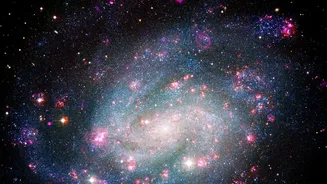
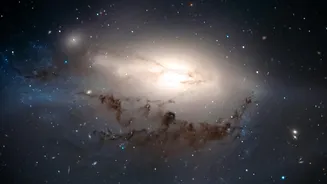
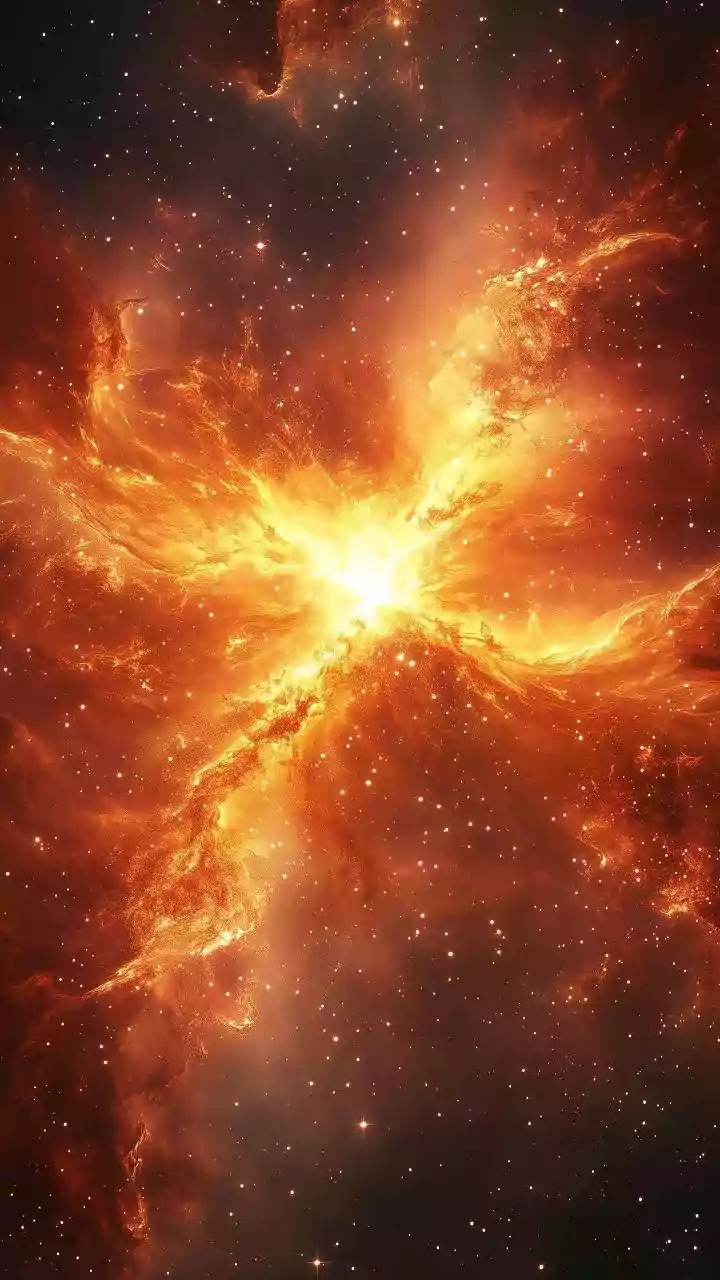
One of Roman's primary objectives is to tackle one of the most profound puzzles in physics: dark energy. This mysterious force is believed to make up about 68% of the universe and is responsible for its accelerating expansion. Roman will investigate dark energy using three distinct methods. It will conduct a massive survey of galaxies to study a phenomenon called weak gravitational lensing, where the gravity of foreground matter subtly distorts the light from distant galaxies. By mapping these tiny distortions, astronomers can chart the distribution of all matter, including invisible dark matter, and see how dark energy has influenced the growth of cosmic structures over time. The telescope will also measure the distances to thousands of exploding stars, known as Type Ia supernovae, which act as standard candles to trace the history of cosmic expansion. Finally, it will map the large-scale clustering of galaxies, looking for the faint imprint of sound waves from the early universe, known as Baryon Acoustic Oscillations, to measure how the universe's expansion has changed.
A Census of Distant Worlds
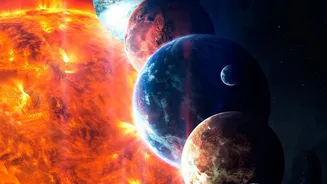
Beyond cosmology, Roman is poised to revolutionize the search for planets outside our solar system, or exoplanets. While previous methods like the transit technique have been most effective at finding large planets orbiting very close to their stars, Roman will employ a different strategy called gravitational microlensing. This technique relies on a prediction from Einstein's theory of general relativity. When a star with a planet passes in front of a more distant star, its gravity acts like a lens, briefly magnifying the background star's light. If the foreground star has a planet, the planet's own gravity creates a secondary, smaller spike in the brightness. From its perch in space, Roman will stare at the dense starfields toward the center of our Milky Way, monitoring hundreds of millions of stars for these fleeting signals. This method is sensitive enough to find planets with masses as low as Mars and will uncover planets in orbits farther from their stars, including analogs to the planets in our own solar system and even free-floating 'rogue' planets that don't orbit a star at all.
Testing New Technologies
In addition to its main survey camera, Roman carries a groundbreaking technology demonstration: the Coronagraph Instrument. A coronagraph is designed to block the overwhelming glare from a star, allowing astronomers to directly image the much fainter planets orbiting it. The Roman Coronagraph will be the first active, high-contrast coronagraph to fly in space, using deformable mirrors to actively correct for tiny imperfections and scattered starlight in real-time. This instrument is expected to achieve a performance 100 to 1,000 times better than existing space-based coronagraphs. While primarily a technology demonstrator for future missions like the planned Habitable Worlds Observatory, it will be capable of directly imaging and analyzing the light from large, Jupiter-like planets around nearby stars. Its success will pave the way for future telescopes that could one day take direct pictures of Earth-like planets.