








The Daily Digital Deluge
Most days end the same way they begin: with a screen. We finish our work emails, scroll through social media, and binge-watch a series to “relax.” Yet, this constant digital stimulation often leaves us feeling more wired than rested. The blue light disrupts
our sleep cycles, and the endless flow of information keeps our minds in a state of low-grade alert. Our nervous systems rarely get a chance to fully switch off. This modern reality has created a deep need for practices that don't just distract us, but genuinely restore us. The perfect antidote isn’t another app or gadget, but something far more elemental.
Hatha Yoga: The Gentle Foundation
When people think of yoga, they might picture fast-paced, sweat-inducing workouts. Hatha yoga is different. It is the foundational practice from which many modern styles evolved, and its focus is on a slower, more deliberate approach. A typical Hatha session involves holding basic postures (asanas) for several breaths, with a strong emphasis on controlled breathing (pranayama) and mindfulness. This isn't about pushing your physical limits; it's about exploring them gently. By linking breath to movement, Hatha yoga helps quiet the mental chatter, release physical tension stored in the muscles, and activate the parasympathetic nervous system—the body's natural “rest and digest” mode. It’s an ideal practice for the end of the day, helping to shed the accumulated stress from work and life.
Nature's Restorative Embrace
For centuries, we’ve instinctively known that a walk in the woods or a moment by the sea can clear the head. Today, science is confirming this intuition. The practice of 'forest bathing' or 'ecotherapy' is backed by studies showing that spending time in natural environments can significantly reduce cortisol (the primary stress hormone), lower blood pressure, and improve mood. The Japanese concept of 'Shinrin-yoku' highlights the sensory experience: the smell of damp earth, the sound of rustling leaves, the sight of sunlight filtering through trees. Our brains are wired to find these patterns soothing. Being in nature allows for 'soft fascination,' a state where our attention is held effortlessly, allowing our directed-focus mental energy to recharge.
A Powerful Synergy of Stillness and Scenery
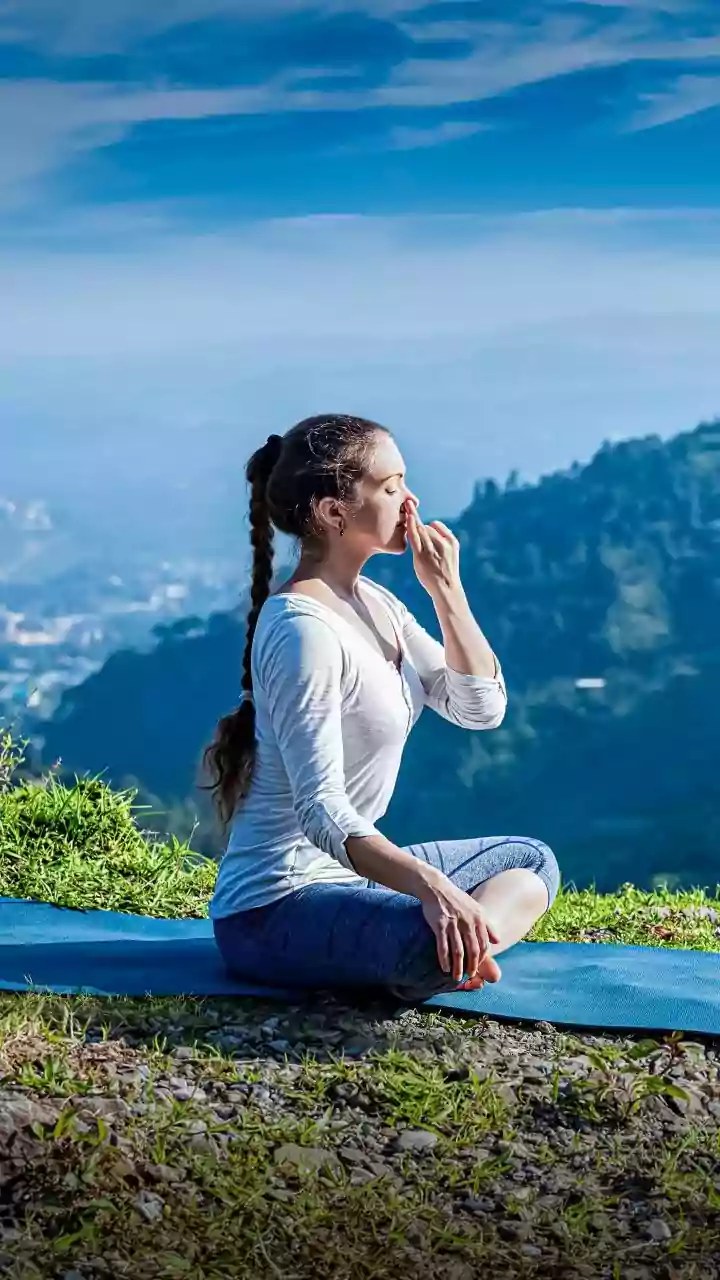
Combining Hatha yoga with a natural setting is where the real magic happens. This practice creates a powerful synergy that amplifies the benefits of each element. The mindful awareness cultivated in Hatha becomes a lens through which to experience nature more deeply. You’re not just in a park; you’re feeling the texture of the grass or mat beneath your feet during Tadasana (Mountain Pose). You’re not just breathing; you’re inhaling the fresh, oxygen-rich air filled with the scent of flowers or pine. The sound of a distant bird becomes the soundtrack to your meditation, rather than a distraction. This multi-sensory experience grounds you firmly in the present moment, making it nearly impossible for your mind to wander back to your overflowing inbox or to-do list. The steady, calming presence of nature provides the perfect container for the internal work of yoga.
Create Your Evening Ritual
You don’t need a pristine forest or a secluded beach to start. A quiet corner of a local park, your own backyard, or even a balcony with a few potted plants can become your sanctuary. As the sun begins to set, roll out your mat. Start with a few moments of quiet breathing, simply noticing the air around you. Move through a gentle sequence of poses. Simple, grounding postures like Cat-Cow for spinal mobility, Child's Pose for release, and a gentle seated forward fold to stretch the hamstrings are perfect. Avoid complex or overly strenuous poses. The goal is to unwind, not to work out. End your practice by lying in Savasana (Corpse Pose), letting your body feel heavy and supported by the earth as you watch the sky change colour. Even 15-20 minutes can be transformative.