




The Hidden Cost of Sitting
For millions of professionals, the workday is defined by a chair. While seemingly harmless, this prolonged sitting puts the body under significant stress, a condition sometimes called 'sedentary strain'. This isn't just about feeling a bit stiff; it’s
a cumulative pressure that affects your entire system. When you sit for hours, your metabolism slows down, and the body’s ability to regulate blood sugar can become less effective, increasing the risk of developing insulin resistance over time. Physically, the toll is more immediate. Poor posture while sitting leads to chronic lower back pain, tight hips, and the all-too-common 'tech neck', a strain on the neck and shoulders from looking at screens. This sustained pressure on your spinal discs can even lead to premature degeneration and other long-term issues.
The Hourly Antidote
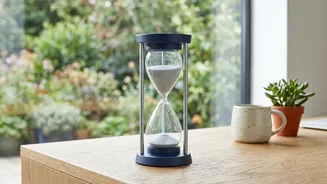
So, what’s the solution? While the advice to 'sit less, move more' is a good start, recent research provides a much clearer target. Studies have identified a sweet spot for desk workers: taking a five-minute movement break every hour. Researchers found this frequency provides the best balance between improving wellbeing and maintaining work performance. More frequent breaks were harder to maintain, while less frequent ones offered smaller benefits. This hourly habit works because it consistently interrupts the negative cycle of sedentary behaviour. It gets your blood flowing again, awakens dormant muscles, and gives your spine and joints a much-needed reset before strain can build into pain or injury.
Simple Moves to Get Started
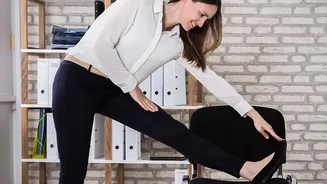
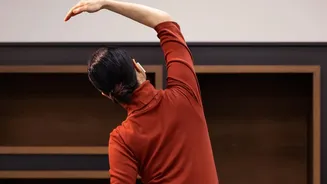
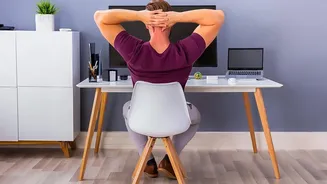
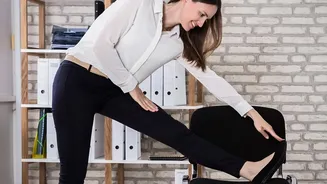
A 'movement break' doesn’t have to mean a full workout. The goal is simply to change your posture and get your muscles working. Here are a few easy exercises you can do right at your workspace:Shoulder Rolls: Sit or stand tall. Lift your shoulders up towards your ears, then roll them back and down. Repeat 10 times to release tension in your upper back and neck.Torso Twists: While seated, place your feet flat on the floor. Gently twist your upper body to one side, holding for a few seconds. Return to the center and repeat on the other side. This helps with spinal mobility.Seated Leg Extensions: Sit at the edge of your chair. Extend one leg straight out in front of you and hold for a few seconds, feeling the quadriceps engage. Lower it and repeat with the other leg. Do this 10 times for each leg to boost circulation.Stand and Stretch: The simplest move of all. Just stand up, reach your arms overhead for a full-body stretch, and then maybe walk to get a glass of water. Even this small action makes a big difference.
Boost Your Brain, Not Just Your Body
The advantages of hourly movement breaks go far beyond preventing physical pain. They are also a powerful tool for enhancing mental performance and job satisfaction. Studies show that employees who incorporate these short breaks report lower levels of fatigue, better moods, and a higher sense of engagement with their work. That afternoon slump many of us feel after lunch? A quick walk or a few stretches can re-energise you more effectively than another cup of coffee. By stepping away from your screen for just a few minutes, you give your brain a chance to reset, which can lead to improved focus and attention when you return to your tasks. Counter to the common worry that breaks hurt output, research suggests they can actually make you more productive.
How to Make Movement a Habit
Knowing the benefits is one thing; putting them into practice is another. The key to success is making movement an automatic part of your workday. Start by setting a recurring timer or calendar reminder to go off every hour. When the alarm sounds, don’t ignore it. Stand up immediately. Pair the habit with an existing routine, like deciding to stretch every time you finish a specific task or before you make a phone call. Getting colleagues involved can also help. Suggest a group stretch or a quick walk around the office floor—turning a solo habit into a team activity makes it more enjoyable and easier to stick with. Start small, stay consistent, and remember that even two minutes of movement is far better than none.