



A Tale of Two Orange All-Stars
At first glance, sweet potatoes and butternut squash seem interchangeable. Both offer a comforting, slightly sweet flavour and a vibrant orange hue, signalling a wealth of nutrients. However, they belong to different botanical families. The sweet potato is
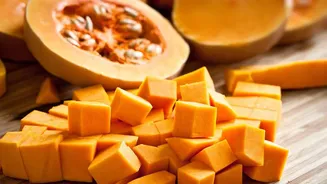
a tuberous root vegetable, growing underground like a carrot. Butternut squash, despite its savoury use, is technically a fruit, growing on a vine. This fundamental difference contributes to their distinct nutritional profiles, from calorie count to their all-important fibre content.
The Fibre Face-Off: A Surprising Tie
When it comes to the central question of dietary fibre, the results are surprisingly close. A one-cup serving of cooked butternut squash or a cup of baked sweet potato both provide around 6 to 7 grams of fibre. This amounts to roughly a quarter of the daily recommended intake for many adults. More importantly, both vegetables contain a healthy mix of soluble and insoluble fibre. Insoluble fibre adds bulk and helps material move through the digestive system, promoting regularity. Soluble fibre dissolves in water to form a gel-like substance, which can help slow digestion, manage blood sugar levels, and lower cholesterol. While the total amounts are similar, sweet potatoes have a slightly more balanced ratio of the two types.
Calories and Carbohydrates: A Clear Winner
Here, the two diverge significantly. Butternut squash is the lighter option by a wide margin. A cup of cooked butternut squash contains about 82 calories and 22 grams of carbohydrates. In contrast, the same amount of baked sweet potato contains around 180 calories and 41 grams of carbohydrates. Butternut squash's lower calorie and carbohydrate load comes from its higher water content. This makes it an excellent choice for those looking to manage their weight or reduce their carbohydrate intake without sacrificing volume on their plate.
The Vitamin and Mineral Verdict
Both vegetables are nutritional powerhouses, but they excel in different areas. Sweet potato is the undisputed champion of vitamin A. One cup provides a staggering amount of beta-carotene, which the body converts to vitamin A, crucial for eye health and immune function. While butternut squash is also an excellent source of vitamin A, it can't quite match the sweet potato's levels. However, the sweet potato also takes the lead on potassium, a mineral vital for regulating blood pressure, with significantly more per serving than butternut squash. Both are also good sources of vitamin C, which supports the immune system.
Glycemic Index and Blood Sugar Impact
For those monitoring their blood sugar, the way you cook these vegetables matters immensely. Butternut squash has a relatively stable glycemic index (GI) of around 51, which is considered low to medium. Sweet potatoes are more variable. A boiled sweet potato has a low GI of around 46, but baking or roasting can cause its GI to climb significantly, sometimes over 90. This is because the dry heat converts starches into sugars more readily. Therefore, for a more predictable and moderate impact on blood sugar, butternut squash or boiled sweet potato are the safer bets.
In the Kitchen: Flavour and Function
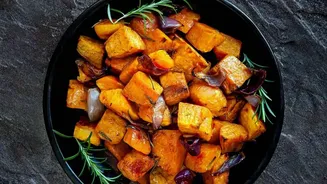
While their nutritional profiles guide health choices, their behaviour in the kitchen determines the final dish. Sweet potatoes have a denser, starchier texture and a more pronounced sweetness. They hold up well to roasting, mashing into a creamy side, or being cut into fries. Butternut squash is more watery and has a milder, nuttier flavour. Its texture makes it ideal for silky smooth soups, and it can be roasted until tender, but it won't become as fluffy as a sweet potato. Choosing between them often comes down to the desired texture and flavour intensity of your recipe.