



When winter descends on the Himalayas, it transforms the landscape into a realm of stark, silent beauty. For travellers seeking a truly unique adventure, the frozen expanses of Pangong Tso and Tsomgo Lake offer an unforgettable spectacle.
The Allure of the Frozen Lakes
Imagine a vast
sheet of ice, shifting in shades of blue and white under a crisp winter sun, surrounded by snow-dusted mountains. This is the magic of Pangong Tso in Ladakh and Tsomgo Lake in Sikkim during winter. While summer brings crowds to their turquoise waters, winter offers a more serene, raw, and profound experience. From December to February, both lakes freeze over, turning into otherworldly landscapes that reward the adventurous traveller with unparalleled solitude and dramatic scenery. Visiting them requires careful planning, but the payoff is a front-row seat to one of nature’s most spectacular seasonal transformations.
Pangong Tso: Ladakh's Icy Expanse
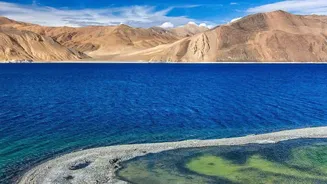
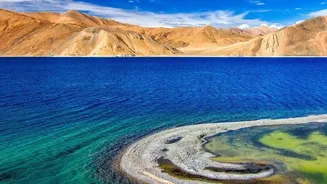
Located at an altitude of over 4,225 metres, Pangong Tso is a high-altitude saltwater lake that extends from India into China. The journey from Leh, the capital of Ladakh, is an adventure in itself, typically taking five to six hours and crossing the formidable Chang La pass at 5,360 metres. In winter, the landscape is a study in monochrome, with the barren mountains providing a stark contrast to the frozen lake. The lake becomes a solid sheet of ice, thick enough in some parts for activities like ice skating or even driving on, though this should only be done with extreme caution and official guidance. Accommodation is sparse, with most tourist camps closing for the season, leaving only a few basic homestays operational in nearby villages like Spangmik.
Tsomgo Lake: Sikkim's Glacial Gem
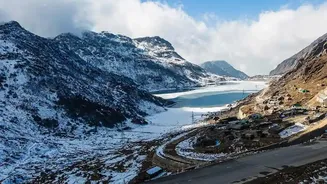
Tsomgo Lake, also known as Changu Lake, is more accessible than Pangong. Situated at about 12,400 feet, it is a roughly two-hour drive from Gangtok, the capital of Sikkim. This makes it a popular day trip for those wanting a taste of high-altitude winter wonder without the multi-day commitment required for Pangong. The area around Tsomgo is often draped in heavy snow, and the lake itself freezes over, creating a postcard-perfect scene. Visitors can enjoy the sight of colourfully adorned yaks against the white backdrop and even take a cable car for panoramic views. The road, however, can be treacherous, with black ice and sudden snowfall sometimes leading to closures. It's crucial to travel with experienced local drivers.
Permits and Essential Paperwork
Due to their proximity to international borders, both lakes lie in restricted areas and require special permits for all visitors. For Pangong Lake, Indian tourists need an Inner Line Permit (ILP), which can be obtained online through the official Leh administration portal. Foreign nationals require a Protected Area Permit (PAP), arranged through a registered travel agent in Leh, and must travel in a group of at least two. Similarly, for Tsomgo Lake in Sikkim, all tourists need a permit, which is typically arranged by registered tour operators in Gangtok a day in advance. Always carry multiple photocopies of your permits and original photo identification.
Acclimatisation and Health
High altitude is the single most significant challenge. Leh is at 3,500 metres, and Pangong is even higher. To prevent Acute Mountain Sickness (AMS), it is mandatory to acclimatise in Leh for at least 48 hours upon arrival before heading to higher altitudes. This means complete rest, staying hydrated by drinking 3-4 litres of water daily, and avoiding alcohol. Tsomgo Lake is at a lower altitude, but it is still advisable to spend at least one night in Gangtok before visiting. Symptoms like headaches, dizziness, and breathlessness should not be ignored; the only cure for severe AMS is to descend to a lower altitude immediately.
Packing for Extreme Cold
Winter temperatures in Ladakh can plummet to -25°C or lower, while Sikkim also sees sub-zero conditions. Layering is key. Your packing list must include thermal base layers, fleece or wool mid-layers, and a heavy-duty, windproof down jacket. Insulated, waterproof boots with good grip are non-negotiable for walking on snow and ice. Also essential are woollen socks, gloves, a balaclava or warm cap, and sunglasses to protect against the intense glare from the snow. Don't forget sunscreen and lip balm, as the high-altitude sun can be harsh even in winter.