







What Are Sodium-Metal Batteries?
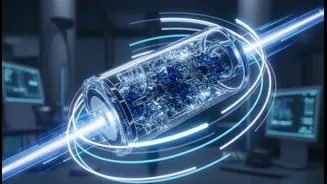
At its core, a sodium-metal battery (SMB) is a rechargeable battery that uses sodium ions as its charge carriers. While similar in principle to the more common sodium-ion batteries, SMBs use a pure metallic sodium anode. This is a key distinction from
both sodium-ion and lithium-ion batteries, which typically use graphite or carbon-based anodes. The primary appeal is simple: sodium is one of the most abundant elements on Earth, making it significantly cheaper and easier to source than lithium, which is geographically concentrated and has volatile pricing. This potential for lower cost makes sodium-based technologies incredibly attractive for large-scale applications.
The Four-Minute Charging Breakthrough
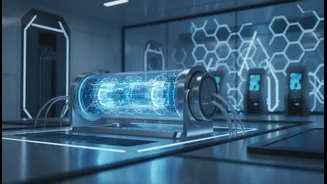
The most exciting recent development in SMB technology is the demonstration of ultra-fast charging. Researchers in China recently announced a new SMB design that could theoretically be fully charged in just four minutes. This remarkable speed, recorded as a 15C rate in a lab setting, is a significant leap beyond what most current commercial batteries can achieve. The breakthrough hinges on a newly developed quasi-solid gel electrolyte. This gel solves one of the biggest historical problems for SMBs: the formation of dendrites. Dendrites are spiky, metallic structures that can grow inside the battery during charging, eventually causing a short circuit. The new gel creates a more stable internal structure, allowing sodium ions to move evenly and preventing these damaging growths, enabling both speed and safety.
More Than Just Speed
While rapid charging grabs headlines, the advantages of sodium-based batteries don't stop there. Safety is a major factor; sodium batteries are less prone to thermal runaway (catching fire) than their lithium-ion counterparts. They can also be safely discharged to zero volts, which simplifies transportation and storage. Furthermore, they demonstrate excellent performance in a wider range of temperatures, particularly in the cold. Some sodium-ion batteries maintain over 90% of their capacity at -20°C, a condition where lithium-ion performance often degrades significantly. This makes them a more reliable option for use in diverse climates.
The Road to Real-World Use
Despite the exciting lab results, you won't find a sodium-metal battery in your EV just yet. The primary challenge is scaling the technology from small experimental cells to large, reliable battery packs suitable for commercial use. While one study showed a four-minute charge time, this was in a small cell; a larger prototype did not match this speed or lifespan. Researchers are still working to improve cycle life—the number of times a battery can be charged and discharged before degrading—and overall energy density. Sodium batteries are currently heavier and larger than lithium-ion batteries with the same energy storage, a drawback for vehicles where weight and space are critical. However, companies like CATL are already bringing first-generation sodium-ion batteries to mass production for smaller EVs in China, suggesting the path to commercialization is accelerating.
EVs and Grid Storage: The Killer Apps
The two most promising applications are exactly where lithium-ion faces its biggest strains: EVs and grid-scale energy storage. For EVs, particularly commuter cars or public transport, the lower energy density is less of a concern if it's offset by ultra-fast charging that dramatically reduces downtime. Imagine a five-minute stop to add significant range. For grid storage, where massive batteries are needed to stabilize power from renewable sources like wind and solar, weight and size are secondary to cost and safety. Sodium's abundance and lower cost make it an ideal candidate for these large, stationary installations, helping to build a more resilient and affordable green energy infrastructure without competing for the limited lithium supply needed for high-performance electronics and long-range EVs.