







The Old, Broken Workflow
For years, product managers have been professional note-wranglers. An idea strikes during a commute, a brilliant piece of user feedback comes up in a casual chat, or a stakeholder has a 'quick thought' after a meeting. The process was always the same:
capture it quickly in a voice memo, a messy note app, or on a physical sticky note. The real work came later. You’d have to sit down, listen back, decipher your own rushed thoughts, and manually create a ticket in Jira, Asana, or whatever tool your team uses. This manual transfer is a major point of friction. Ideas get lost, context is forgotten, and the backlog becomes a graveyard of half-formed thoughts.
The New Reality: Idea to Action
Imagine a different world. You finish a call and record a quick voice memo: “Okay, so the user mentioned they can’t find the export button easily. Let’s explore adding a more prominent CTA on the dashboard. We should also check the analytics for the help page on exporting. Assign this as a low-priority user story for the next sprint planning.” Instead of that memo sitting in your phone, an AI-powered system transcribes it, understands the key actions, and automatically drafts a new user story in your product backlog. It might even tag the relevant team members and link to the analytics dashboard. This isn't science fiction; it's the new workflow that intelligent tools are making possible.
How the Technology Works
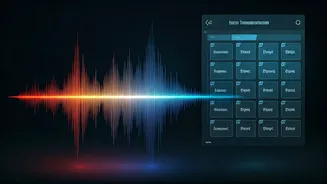
The magic is a three-step process powered by artificial intelligence. First, advanced Speech-to-Text (STT) engines convert your spoken words into accurate, readable text. This is far more sophisticated than the basic dictation tools of the past. Second, Natural Language Processing (NLP) models analyse the transcribed text. They are trained to identify intent, entities, and actions. The AI can distinguish between a simple observation and a direct command like “create a ticket” or “assign to Priya.” It identifies keywords associated with product management, like “bug,” “user story,” “sprint,” or “feature request.” Third, Application Programming Interfaces (APIs) connect these AI services to your project management software. This integration is the final, crucial link that allows the AI to create, update, and manage items in your pipeline without you ever having to manually type them in.
Key Benefits for Product Teams
The most obvious benefit is speed. The time between a thought and an actionable task in the backlog is reduced from hours or days to mere minutes. This dramatically reduces the chance of good ideas being forgotten. But the advantages go deeper. It creates a cleaner, more organised pipeline because every entry is captured in a structured format from the start. It also preserves nuance; the full transcript of your thought is often attached to the ticket, giving developers and designers the rich context that a short, manually typed summary might miss. For busy PMs in India’s bustling tech ecosystem, this means less administrative overhead and more time spent on high-value work: strategy, user research, and team collaboration.
Tools Making This Possible
This transformation is being led by a new generation of AI meeting assistants and transcription services. Tools like Fireflies.ai and Otter.ai, initially known for transcribing meetings, now have powerful integrations with platforms like Jira, Asana, and Trello. You can configure them to automatically create tasks based on specific keywords or action items mentioned in any recorded conversation or uploaded audio file. Newer, more specialised apps are emerging that are built specifically for this purpose, offering even tighter integration with the product development lifecycle. The key is to find a tool that not only transcribes accurately but also offers robust and customisable integrations with the specific software your team already relies on.