



The Silent, Sandy Threat
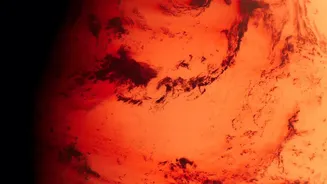
Mars may seem like a quiet, desolate world, but its thin atmosphere can whip up dust storms of terrifying scale. These aren't just small whirlwinds; they can grow into regional events and, every few years, a planet-encircling storm that covers the entire
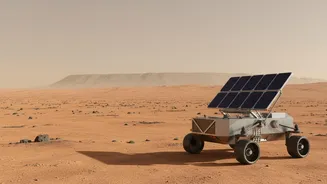
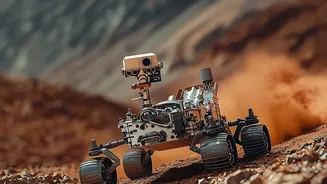
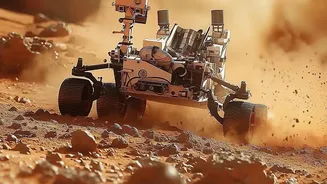
globe for weeks. For a solar-powered rover or lander on the surface, this is a life-threatening crisis. The fine, electrostatically-charged Martian dust sticks to everything, including the solar panels that serve as a machine's lifeline. As the dust accumulates, it blocks sunlight, reducing the power the spacecraft can generate. Worse still, a massive storm can darken the skies so much that it's like a perpetual twilight, causing power levels to plummet dramatically.
An Eye in the Martian Sky
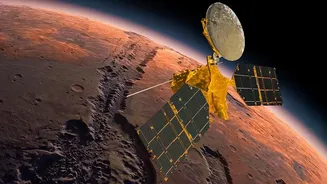
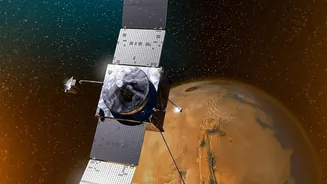
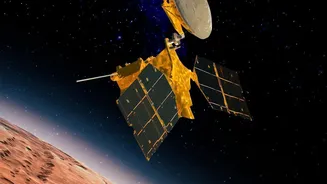
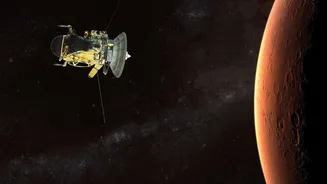
This is where orbital cameras become indispensable. A fleet of spacecraft circle Mars, acting as a planetary weather service. The most critical of these is NASA's Mars Reconnaissance Orbiter (MRO), equipped with the Mars Color Imager (MARCI). MARCI captures a daily global map of the planet, allowing scientists to spot dust storms as soon as they begin to form. By tracking the storm's growth and movement day by day, mission controllers on Earth get a crucial early warning. Other orbiters, like Mars Odyssey and MAVEN, contribute by measuring atmospheric temperatures and other variables, providing a more complete picture of the storm's behaviour. These temperature readings are key, as dust absorbs sunlight and heats the atmosphere, which helps scientists predict how the storm might evolve.
From Pictures to Predictions
The data from these orbiters is more than just a series of pictures; it's the foundation for Martian weather forecasting. When MRO spots a brewing storm, the information is relayed to the teams managing surface assets like landers and rovers. This gives them time to prepare. If a storm appears to be heading towards a solar-powered explorer, engineers can command it to conserve energy. This might involve halting scientific operations, stopping drives, and reducing communications to only the most essential functions. The goal is to enter a low-power hibernation or 'safe mode', ensuring the spacecraft has enough battery charge to survive the weeks of darkness until the skies clear. This predictive capability is the difference between a temporary shutdown and a permanent one.
A Tale of Two Missions
The importance of this orbital network is best illustrated by the fates of two NASA missions. In 2018, a planet-encircling dust storm engulfed Mars. The long-lived Opportunity rover, which had survived for nearly 15 years, was caught in the storm. Despite warnings, the sky darkened so severely that its solar panels could no longer charge the batteries. The rover went silent and, without power to run its survival heaters, likely froze in the harsh Martian cold, ending its historic mission. In contrast, the InSight lander faced multiple large dust storms during its mission. Thanks to early warnings from MRO, the InSight team was able to place the lander in safe mode, conserving just enough power to ride out the storm and resume operations once the dust settled. The ability to predict the storm's arrival and intensity made all the difference.
The Future of Martian Weather
As humanity sets its sights on sending astronauts to Mars, the ability to accurately forecast weather becomes even more critical. A global dust storm could pose significant risks to human habitats, equipment, and landing or take-off procedures. Scientists are now working on more advanced forecasting models, using years of orbiter data to identify patterns and even applying machine learning techniques. While predicting the precise birth of a major storm remains challenging, the continuous, vigilant watch kept by our orbital sentinels is the first and most important line of defense. These cameras are not just for taking beautiful pictures of the Red Planet; they are vital for the survival of our robotic emissaries and the safety of future human explorers.