




The Prime Real Estate of Space
To get the clearest possible images of distant galaxies, space telescopes need to be far from the heat and light of Earth. Many of our most advanced observatories, including the James Webb Space Telescope (JWST), are positioned at a special spot called
the second Lagrange point, or L2. Located about 1.5 million kilometers from Earth, L2 is a gravitational sweet spot where the pull of the Sun and Earth balance out, allowing a spacecraft to 'hover' in place with minimal fuel. This stable, cold, and dark environment is perfect for astronomy, but it comes with a major drawback: it is incredibly remote, far beyond the reach of human astronauts.
The Throwaway Model of Exploration
Historically, observatories sent to L2, including the groundbreaking JWST, were designed with a 'one-and-done' philosophy. They were launched with a set amount of fuel and no plan for repairs or upgrades. Once a critical component fails or the propellant runs out, their multi-billion-dollar mission is over. While JWST was built to be highly reliable, it was not designed to be serviced. Micrometeoroid impacts have already caused more wear than anticipated on its mirrors, highlighting the vulnerability of these irreplaceable assets. This approach is like buying a high-performance sports car and simply discarding it when the fuel tank is empty or it gets a flat tire. For assets that cost billions and take decades to develop, this is a fundamentally unsustainable strategy.
A Lesson From Hubble
The value of in-space maintenance was proven decades ago with the Hubble Space Telescope. Orbiting just a few hundred kilometers above Earth, Hubble was designed from the start to be serviced by astronauts on the Space Shuttle. Over five separate missions, astronauts repaired, replaced, and upgraded its instruments, gyroscopes, and computers. These interventions not only fixed initial flaws but dramatically extended Hubble's life and scientific capabilities, keeping it at the forefront of astronomy for over three decades. Hubble demonstrated that a serviceable observatory is a long-term, upgradable platform, not a disposable tool. But its low-Earth orbit made this possible, a luxury L2 observatories do not have.
Enter the Robots
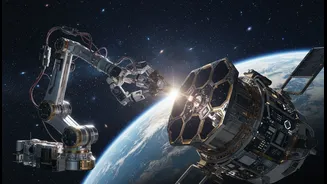
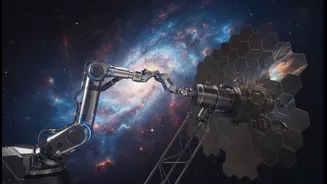
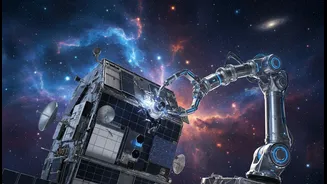
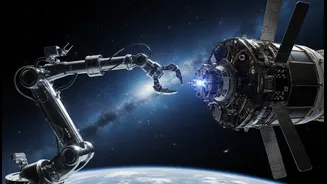
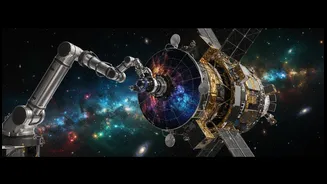
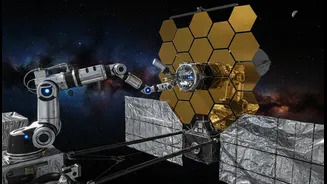
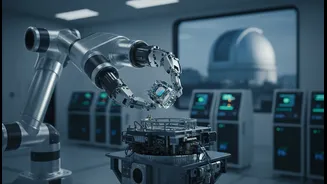
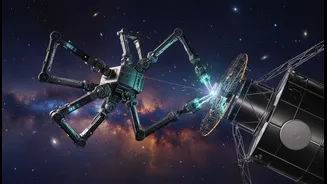
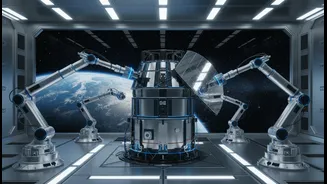
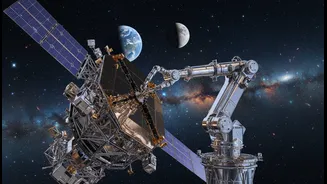
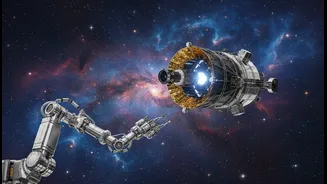
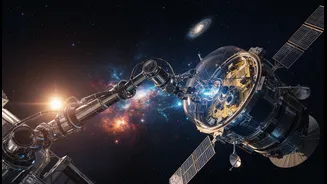
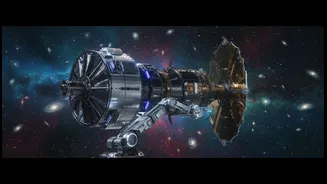
Since sending astronauts to L2 is not feasible with current technology, the 'smarter strategy' is robotics. A new era of on-orbit servicing, assembly, and maintenance (ISAM) is emerging, driven by both government agencies and a growing commercial sector. Companies are developing robotic 'space tugs' and servicing vehicles capable of performing complex tasks autonomously. These robotic mechanics could travel to L2 to refuel a telescope, replace aging science instruments with next-generation technology, or even repair damage. This move is already shaping the future. NASA has mandated that its next great observatory, the Habitable Worlds Observatory (HWO), slated for the 2040s, must be designed for robotic servicing from day one.
A New Business Case for Space
Designing for serviceability represents a major shift in the business of space exploration. It transforms space telescopes from expensive, finite projects into sustainable, long-term infrastructure. This strategy is expected to drive a burgeoning commercial industry focused on in-space servicing, which is projected to become a multi-billion dollar market. The technology is rapidly maturing, with multiple missions planned for 2026 to demonstrate robotic refueling and repair in geosynchronous orbit, a stepping stone for deeper space operations. By building observatories with standardized, modular components—like line-replaceable units—future robotic missions can efficiently swap out parts, ensuring our most powerful scientific instruments can continue their work for decades to come, providing a far greater return on investment.