







A Bridge Between Tradition and Tech
The recent inauguration of the Centre of Excellence for Handloom Technology (CoE-HT) at IIT Delhi represents a significant push to merge India's rich weaving heritage with cutting-edge innovation. Established with government investment, the centre’s mission
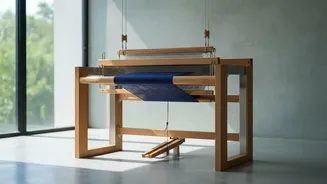
is to act as a national hub for developing advanced solutions for the handloom sector. The focus areas are ambitious and varied, including loom modernisation, applying artificial intelligence, enhancing sustainability, and fostering entrepreneurship among weaving communities. The goal is to address key challenges like productivity, market competitiveness, and technology adoption that have long plagued the industry. By bringing together academics, designers, technologists, and artisans, the initiative hopes to create a future-ready ecosystem that empowers weavers and boosts the global outreach of Indian handlooms.
The Economic Hurdle of Upgradation
While the promise of technology is alluring, the first and most significant barrier for millions of weavers is cost. The handloom sector is one of India's largest rural employment providers after agriculture, but many artisans operate on razor-thin margins. Government initiatives like the National Handloom Development Programme (NHDP) and the Weaver MUDRA scheme aim to provide financial assistance, offering concessional credit and support for technology upgrades. However, even subsidized modern looms can be an expensive investment for individual weavers, whose average monthly income often remains distressingly low. The intense price competition from power looms, which can mass-produce fabrics at a fraction of the cost, further squeezes weavers' earnings, making it difficult to invest in new equipment without falling into debt.
The Skill Gap and Generational Divide
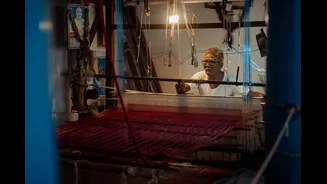
Introducing new technology is not a simple plug-and-play solution. It requires training and a willingness to adapt age-old practices. The handloom industry faces a growing generational divide, with younger people often showing little interest in pursuing a craft associated with low wages and laborious work. Many experienced weavers, who possess invaluable traditional knowledge, may resist innovations that alter their established workflows. While the IIT Delhi centre plans to train weavers and professionals, successfully upskilling a diverse and geographically dispersed workforce is a monumental task. Initiatives like Handloom e-Vidya, a digital learning platform, are designed to help bridge this gap, but their effectiveness depends on digital literacy and access, which remain inconsistent in many rural clusters.
Preserving the Artisan's Soul
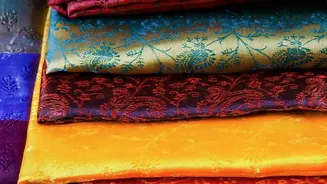
Perhaps the most profound limit to modernisation is a philosophical one: how much technology can be introduced before a handloom product loses its essence? The unique value of handwoven textiles lies in their imperfections, the slight variations, and the story of human skill embedded in every thread. This is what distinguishes a handloom saree from a uniform, machine-made power loom product. While technologies like Computer-Aided Design (CAD) can accelerate the design process, and AI can help analyse market trends, there's a fine line between assistance and replacement. The challenge is to use technology to reduce drudgery and improve efficiency without sacrificing the unique, artisanal character that makes handloom products a premium, sought-after commodity in a world tired of mass production.
Beyond the Loom: A Holistic Problem
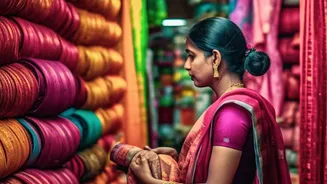
Modernising the loom itself is only one piece of a much larger puzzle. Many of the most pressing challenges for weavers lie outside the weaving shed. These include inconsistent access to affordable, high-quality raw materials like yarn and dyes, the rising cost of which directly impacts profitability. Furthermore, even the most beautifully crafted product is useless without effective market access. Weavers have historically been at the mercy of middlemen and disconnected from lucrative urban and international markets. While e-commerce platforms and digital marketing offer a path forward, they require skills and infrastructure that are not always available. True modernisation, therefore, must be holistic, addressing the entire supply chain from raw material sourcing to direct-to-consumer sales, rather than focusing solely on the loom.