
A New Set of Eyes on the Moon
NASA, in a collaboration with IBM, has launched a powerful new artificial intelligence model designed specifically to help scientists make sense of the lunar landscape. Known as the NASA-IBM Lunar Foundation Model, this tool is one of the first open-source
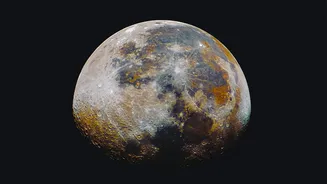
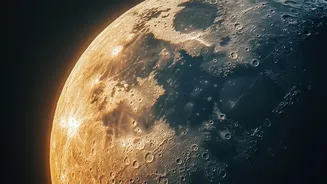
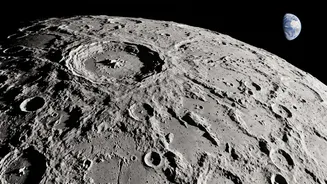
AI models built for lunar science. Its primary job is to analyse the immense trove of data collected over decades, particularly from NASA's Lunar Reconnaissance Orbiter (LRO), which has been mapping the Moon in incredible detail since 2009. Before, scientists had to manually sift through petabytes of information—a painstaking and time-consuming process. This AI acts as a tireless digital assistant, capable of spotting patterns and features across vast datasets that would be nearly impossible for a human to do alone.
Training an AI for Another World
To teach an AI to think like a planetary scientist, you need a lot of data. The Lunar Foundation Model was trained on roughly two million image tiles from the LRO mission, which has created a more detailed and complete map of the Moon than all other NASA planetary missions combined. This dataset includes incredibly high-resolution images, some capturing details as small as one meter across. It was also fed data from other missions, incorporating information on terrain, gravity, and elemental composition. The AI learns by being shown a piece of information, like a visible light image, and then predicting other hidden data layers, like elevation or temperature. By repeating this process millions of times, it learns the complex relationships between different geological features, lighting conditions, and surface properties.
More Than Just Craters
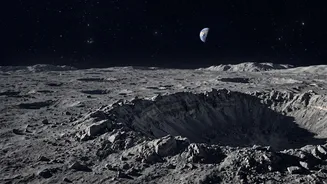
While mapping craters is a crucial task for dating the lunar surface and identifying landing hazards, the new AI's capabilities go much further. It is designed to be a versatile, multi-purpose tool that scientists can adapt for specific jobs. One of its most exciting applications is helping to find water ice, a resource vital for establishing a long-term human presence. The AI can analyse data from the Moon's permanently shadowed regions to predict where ice might be stable. It can also identify unusual volcanic features known as irregular mare patches, which challenge our understanding of the Moon's thermal history, as well as spot skylights, which are collapsed lava tubes that could one day serve as habitats for astronauts.
A Game-Changer for Artemis
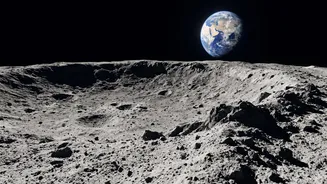
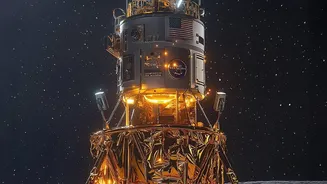
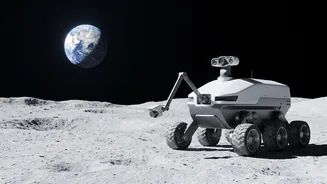
The development of this AI tool is directly tied to the goals of NASA's Artemis program, which aims to return humans to the Moon and establish a sustainable presence there. The success of these ambitious missions depends on our ability to navigate and operate safely on the lunar surface. The Lunar Foundation Model accelerates this goal by dramatically speeding up the process of creating detailed hazard maps. Identifying safe landing zones, planning routes for rovers, and locating potential resources are all tasks that this AI makes faster and more efficient. It can even detect new changes to the surface, such as craters from recent meteorite impacts. This provides mission planners with the most up-to-date information possible to ensure astronaut safety and maximize scientific returns.