




What is Hidden Hunger?
Hidden hunger, or micronutrient deficiency, is a chronic lack of essential vitamins and minerals like iron, zinc, and Vitamin A. It's termed 'hidden' because its effects are not immediately obvious like starvation, but they are profoundly damaging. Globally,
over two billion people are affected, and India bears a significant portion of this burden, with some studies suggesting over 80% of the population suffers from at least one micronutrient deficiency. This crisis particularly affects women and children, leading to weakened immune systems, impaired cognitive development in children, and reduced productivity in adults. It creates a devastating cycle where malnourished mothers give birth to children who are already at a disadvantage, perpetuating poor health across generations.
The Green Revolution's Unintended Legacy
To understand the roots of our dietary imbalance, we must look back at the Green Revolution of the 1960s. This agricultural transformation was a monumental success in averting famine by introducing high-yielding varieties (HYVs) of rice and wheat. Food grain production tripled, and India became self-sufficient. However, this success came at a cost. The intense focus on these two staple crops pushed out a vast diversity of traditional foods. The cultivation of nutrient-dense millets, pulses, and indigenous vegetables declined significantly as farmers shifted to the more profitable and government-supported rice and wheat monocultures. This shift, while solving the problem of calorie scarcity, inadvertently laid the groundwork for a new crisis of nutritional quality.
From Monoculture on the Farm to Monotony on the Plate
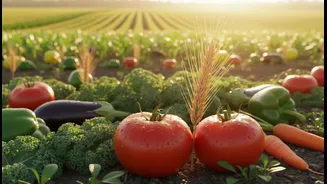
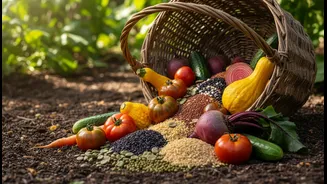
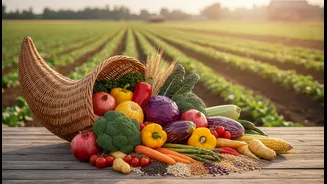
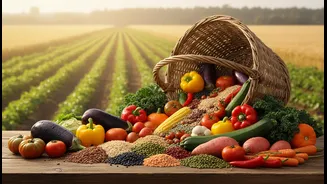
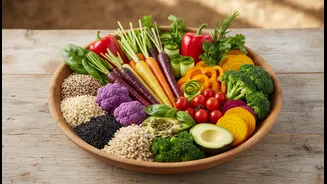
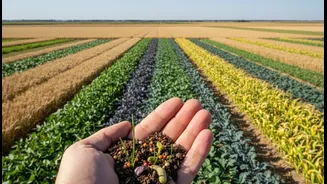
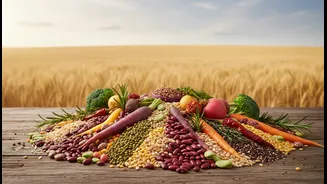
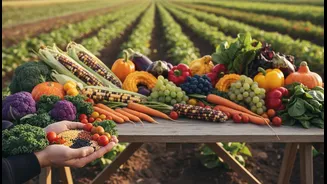
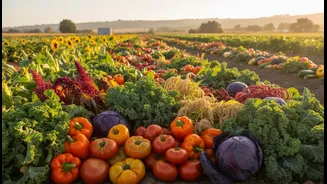
The connection between what is grown on farms and what families eat is direct. When agricultural landscapes become dominated by a few crops, the variety of foods available in local markets shrinks. Diets that once included a wide array of millets, legumes, and greens are now heavily reliant on rice and wheat. While these staples provide energy, they lack the broad spectrum of micronutrients found in a more varied diet. For many rural families who depend on their own farms for food, this link is even stronger; a lack of crop diversity on their land translates directly to a lack of dietary diversity at home. Studies have shown that a higher degree of crop diversification is strongly linked to a reduced probability of undernutrition. The result is a population that is fed, but not truly nourished.
Reviving Diversity for a Healthier Future
The path forward lies in re-diversifying both our farms and our plates. This requires a conscious shift in agricultural policy and consumer habits. The good news is that this change is already beginning. The Indian government has started promoting the cultivation of millets—now branded as 'Shree Anna'—pulses, and oilseeds through schemes like the National Food Security Mission. These crops are not only nutritionally superior but also more climate-resilient, requiring less water than rice and wheat. Millets are rich in iron, calcium, and fibre, making them a powerful tool against anaemia and other deficiencies. Initiatives like Odisha's Millet Mission, which integrates these grains into the Public Distribution System (PDS), demonstrate a scalable model for improving public health. By supporting farmers to grow a wider variety of crops, we can improve soil health, build resilience to climate change, and increase farmer incomes.