


What is the Graded Response Action Plan (GRAP)?
The Graded Response Action Plan, or GRAP, is an emergency response framework designed to combat air pollution in the Delhi-NCR region. Notified in 2017 following a Supreme Court order, it isn't a year-round strategy but a set of measures that are activated
when air quality deteriorates to a certain level. The plan is incremental, divided into four stages based on the Air Quality Index (AQI): Stage 1 ('Poor'), Stage 2 ('Very Poor'), Stage 3 ('Severe'), and Stage 4 ('Severe+'). The Commission for Air Quality Management (CAQM), a statutory body, decides when to invoke a particular stage based on current air quality and meteorological forecasts. The core idea is to act early and pre-emptively, rather than waiting for pollution to reach hazardous levels.
Why Was Stage 1 Activated Now?
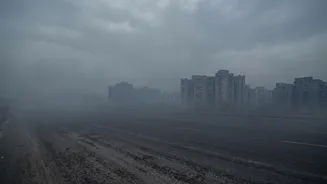
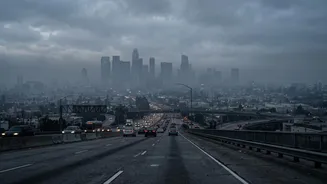
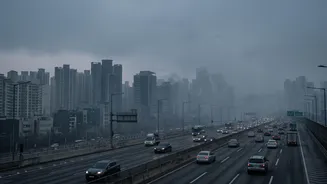
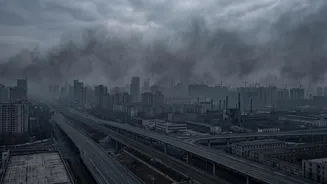
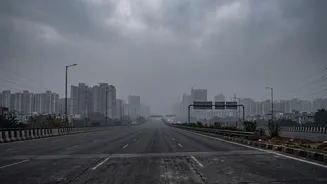
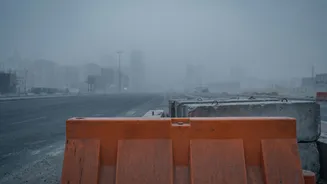
The implementation of GRAP Stage 1 on October 21, 2026, was a direct response to a marked decline in air quality. Delhi's 24-hour average AQI rose from 179 ('moderate') on October 20 to 244 ('poor') by the afternoon of October 21. This dip was the first time the capital's air had entered the 'poor' category this season, with a visible layer of haze blanketing the city, particularly after Dussehra celebrations. Forecasts from the India Meteorological Department (IMD) and the Indian Institute of Tropical Meteorology (IITM) predicted that the AQI would likely remain in the 'poor' range in the coming days, prompting the CAQM to enforce the first level of restrictions across the entire NCR.
Key Restrictions Under Stage 1
Stage 1 focuses on curbing key sources of particulate matter before they spiral out of control. A major rule is the strict enforcement of dust mitigation measures at all construction and demolition sites. Authorities are also tasked with ensuring regular mechanised sweeping and water sprinkling on roads to control dust. Open burning of garbage, leaves, and other waste is strictly banned, and surveillance at landfill sites will be intensified to prevent fires. For industries, there is a directive to adhere to emission norms and use only approved fuels. Further, a significant restriction bans the use of coal and firewood in tandoors at hotels, restaurants, and other eateries; they must switch to electricity or clean gas fuel.
How It Affects Your Travel and Commute
Residents will notice an increased focus on vehicular emissions. Under Stage 1, there is a mandate for strict enforcement of Pollution Under Control (PUC) norms, with intensified checks on roads for visibly polluting vehicles. One of the most significant transport-related measures restricts the entry of inter-state buses into Delhi unless they are electric, CNG-powered, or compliant with BS-VI diesel standards. While private vehicle movement isn't restricted under Stage 1, this is a clear signal for vehicle owners to ensure their PUC certificates are valid to avoid penalties, as the 'No PUC, No Fuel' rule is also part of the broader winter action plan.
What Comes Next If Pollution Worsens?
GRAP is designed to be progressive. If air quality continues to decline and enters the 'Very Poor' category (AQI 301-400), Stage 2 will be invoked. This would bring harsher measures, such as increasing parking fees to discourage private vehicle use and boosting the frequency of metro and bus services. If the situation deteriorates further into 'Severe' (AQI 401-450) and 'Severe+' (AQI above 450), stages III and IV would be implemented. These include drastic steps like banning BS-III petrol and BS-IV diesel four-wheelers, stopping most construction and demolition activities, and potentially implementing an 'odd-even' scheme for private cars. The goal of the current measures is to prevent the need for these more disruptive actions by controlling pollution at an early stage.