




The Classic Indian Train Journey
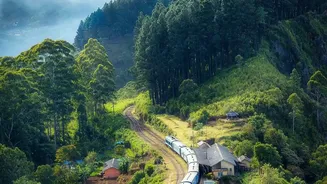
India has one of the largest railway networks in the world, making train travel a quintessential part of any trip. It’s more than just transport; it’s a cultural immersion. Sharing space with local families, buying chai from platform vendors, and watching
the diverse landscapes unfold from your window is an experience in itself. For long distances, like connecting North India with Kerala, overnight trains are a fantastic option, saving you a day of travel and the cost of a hotel room. The Gatimaan Express between Delhi and Agra, or the scenic Vande Bharat services, make city-hopping efficient and comfortable. It’s an authentic, cost-effective, and often deeply memorable way to see the country.
When the Tracks Don’t Go Far Enough
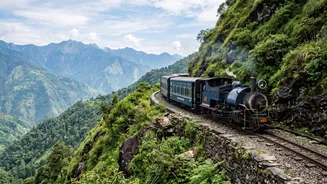
Despite its vastness, the Indian rail network doesn't reach everywhere. Many of the country's most breathtaking destinations, particularly hill stations, are inaccessible by train. To reach the tea plantations of Munnar in Kerala, the Himalayan vistas of Himachal Pradesh, or most of Sikkim, you will need to switch to road transport. The nearest major railway station, like New Jalpaiguri (NJP) for Sikkim, becomes a transfer hub where travellers hire cars or take buses for the final, often mountainous, leg of the journey. Similarly, accessing remote heritage sites or national parks often requires a vehicle for the last-mile connection.
For Last-Mile Flexibility and Freedom
The greatest advantage of road travel is flexibility. Hiring a private car and driver gives you complete control over your schedule. You can leave when you wish and make spontaneous stops. This is especially valuable in regions like Rajasthan, where fascinating temples, villages, and step-wells lie between major cities like Jodhpur and Udaipur. A drive from Agra to Jaipur allows for a stop at the magnificent Fatehpur Sikri, something a train journey would miss. This freedom to explore turns a simple transfer between two points into a rich, personalised discovery tour, allowing you to see a side of India that exists beyond the railway lines.
When the Drive is the Destination
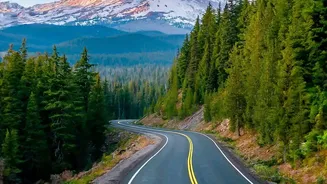
Sometimes, the road trip itself is the main event. Certain routes in India are legendary for their scenic beauty, offering experiences that a train or plane simply cannot. The coastal drive from Mumbai to Goa along NH-66 is a classic, taking you through the Western Ghats and past beautiful beaches. The journey from Kochi to Munnar winds through lush tea estates, while the East Coast Road from Chennai to Puducherry offers stunning views of the Bay of Bengal. For the truly adventurous, the high-altitude highways to Leh from Manali or Srinagar are bucket-list drives, offering dramatic Himalayan landscapes that are an attraction in their own right.
The Practicalities of Hiring a Car
Hiring a car with a driver in India is a common and surprisingly affordable practice, often seen as a necessity for comfortable travel rather than a luxury. For multi-day trips, the driver stays with you, handling navigation, parking, and tolls. Reputable companies offer an all-inclusive quote covering fuel, taxes, and the driver's accommodation and meals. Before booking, it's wise to get a written confirmation detailing the vehicle type, itinerary, and all included costs to avoid surprises. For two or three travellers, a sedan is usually sufficient, but for longer journeys or more luggage, a larger SUV like a Toyota Innova offers superior comfort. A good driver is more than just a chauffeur; they act as a local guide, translator, and problem-solver.