




A Tale of Two Indias
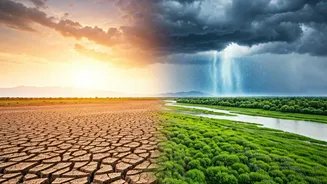
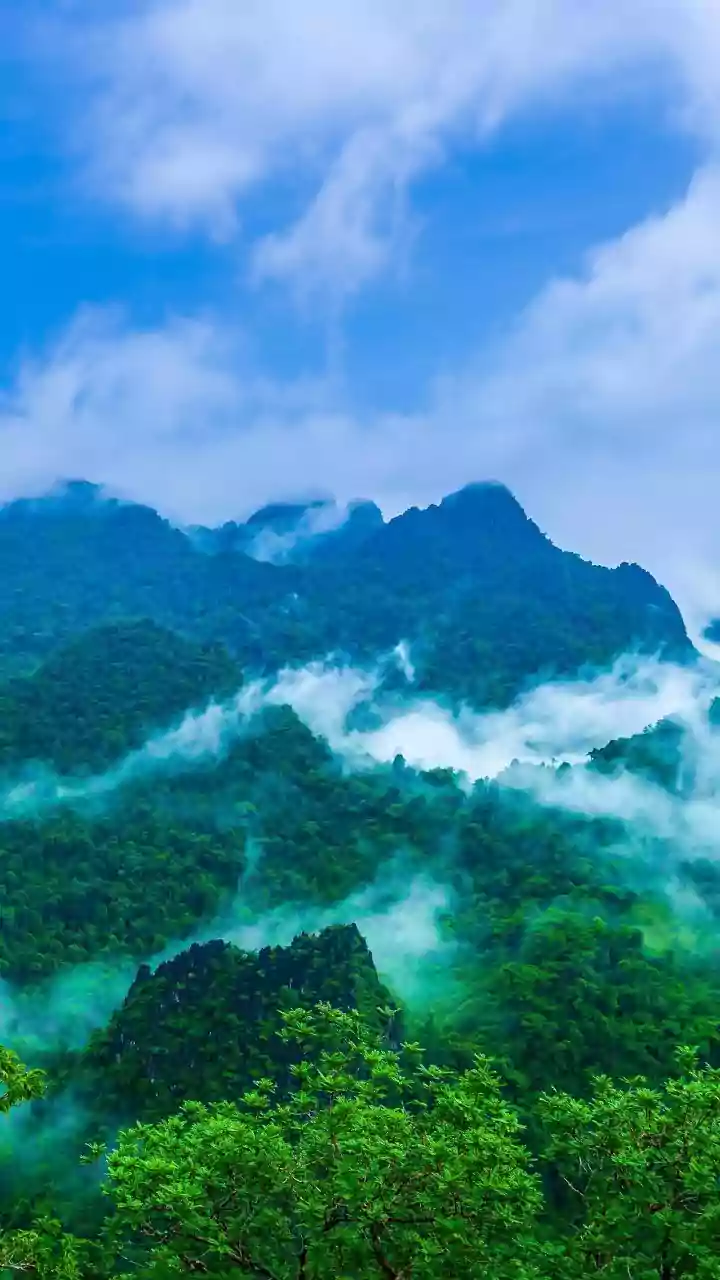
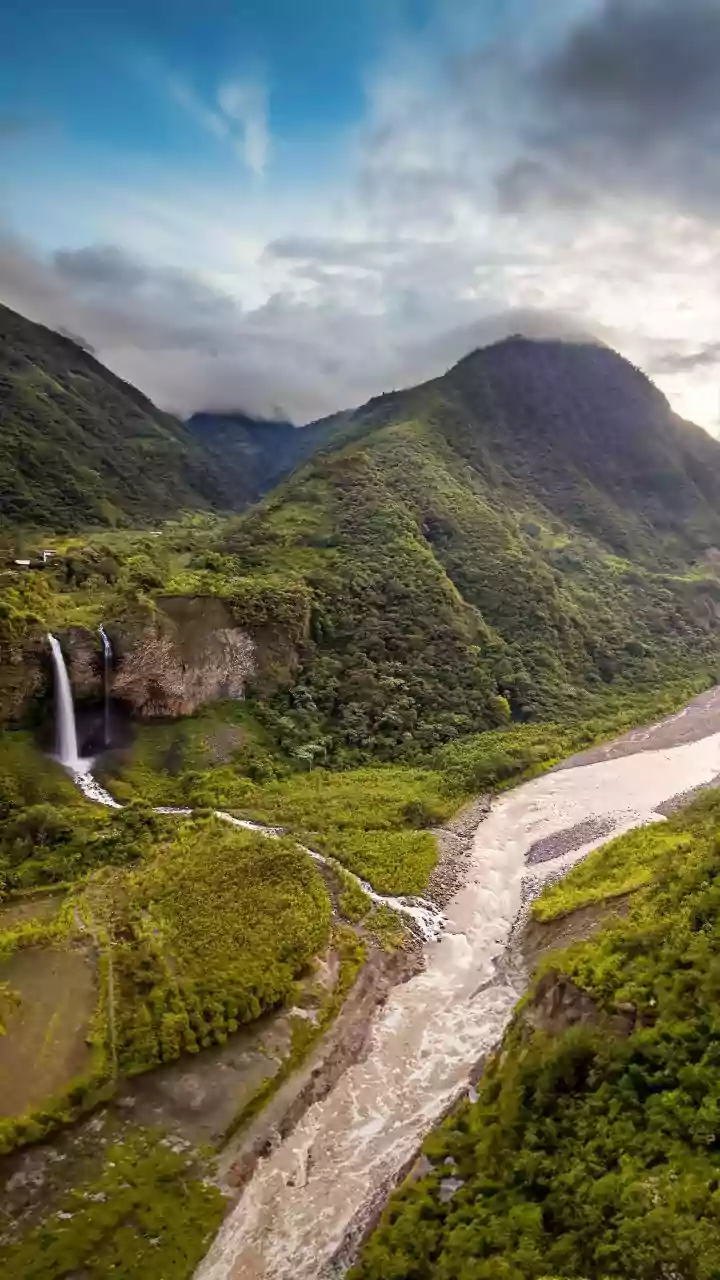
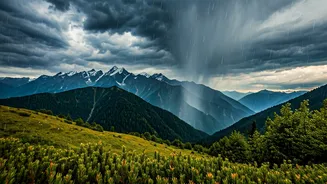
From June to September, much of India is awash in the life-giving rains of the southwest monsoon. Skies are grey, the air is thick with humidity, and greenery erupts everywhere. But travel north, past the towering peaks of the Himalayas, and you enter
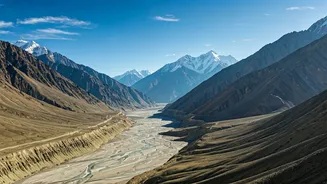
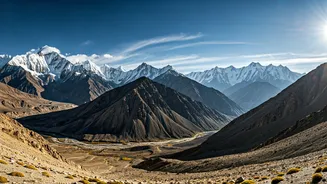
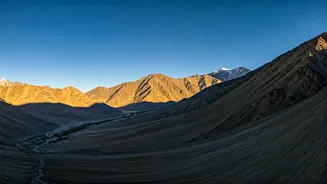
a different world. In Ladakh, the 'Land of High Passes', the sun shines brightly from a deep blue sky, clouds are a rare spectacle, and the landscape is a mesmerising canvas of barren mountains in shades of brown, purple, and grey. This stark contrast isn't a coincidence; it's the direct result of one of nature's most dramatic climatic processes: the rain shadow effect.
So, What Is a Rain Shadow?
Imagine a giant, wet sponge being carried by the wind. As this sponge is forced to rise over a tall mountain range, it gets squeezed. The rising air cools, and the moisture within it condenses to form clouds and then falls as rain or snow on the side of the mountain facing the wind (the windward side). By the time the air crests the mountain and descends on the other side (the leeward side), the sponge is essentially dry. This dry, descending air warms up, discouraging cloud formation and creating an arid or semi-arid region. This dry area 'in the shadow' of the mountain's rain-blocking effect is called a rain shadow.
The Monsoon's Epic Journey
To understand Ladakh's unique climate, we must follow the journey of the Indian monsoon. Originating over the Indian Ocean, moisture-laden winds travel northeast across the subcontinent. They bring heavy rainfall to coastal areas like Kerala and Mumbai, move up the Gangetic plains, and drench the hills of Northeast India. Their path is a predictable, annual pilgrimage that dictates the rhythm of life for millions. These winds are heading directly for the world's highest mountain range, setting the stage for a massive confrontation between meteorology and topography.
The Great Himalayan Wall
The Himalayas act as an imposing, impenetrable barrier to these monsoon winds. As the moisture-rich air arrives at the southern foothills of the range, it is forced to ascend rapidly. This orographic lift, as it's called, causes the air to cool and dump almost all its moisture on the southern slopes. This is why places like Himachal Pradesh and Uttarakhand receive torrential rainfall during the monsoon season. The Himalayas effectively 'milk' the clouds dry. The main Himalayan range, with peaks soaring over 8,000 metres, is so effective at this that very little moisture makes it across to the Tibetan Plateau and, crucially, to Ladakh, which lies on its leeward side.
Life in the Cold Desert
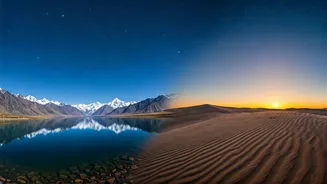
The result is that Ladakh becomes one of the driest places in India. It is a high-altitude cold desert, receiving an average annual rainfall of just about 100 millimetres—less than many deserts in Rajasthan. This lack of cloud cover and moisture means a few things. First, the skies are exceptionally clear for most of the year, making it a paradise for stargazers and photographers. Second, the sun's radiation is intense due to the high altitude and thin air. Third, temperatures can swing dramatically, with scorching sun during the day and frigid cold at night. The landscape is a direct reflection of this climate: vast, eroded, and sculpted by wind and ice, not water.
A Paradise Born of Aridity
While 'paradise' might seem an odd word for a desert, Ladakh's beauty is born from its aridity. The lack of rain means the geological wonders of the mountains are laid bare, unobscured by vegetation. The deep blue of the Pangong Tso and the turquoise of the Indus River stand in brilliant contrast to the stark mountainsides. The culture itself has adapted brilliantly. Settlements are clustered around glacial meltwater streams, creating startlingly green oases of barley fields and apricot orchards amidst the barren expanse. The rain shadow phenomenon, while creating a harsh environment, is precisely what gives Ladakh its otherworldly character and its status as a clear-sky paradise, offering a silent, sun-drenched sanctuary while the rest of the country listens to the rhythm of the rain.