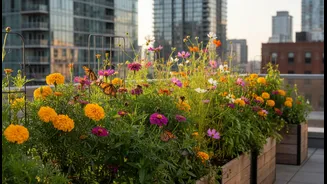









A Pop of Colour, A Touch of Life
Imagine a drab, forgotten patch of land under a flyover, typically littered and ignored. Now, picture it carpeted in a sea of bright genda phool. This is the transformation happening in cities like Delhi, Bengaluru, and Pune, where municipal bodies and citizen
groups are turning to marigolds to beautify public spaces. During the G20 Summit in Delhi, for instance, thousands of trees were adorned with marigold garlands, transforming key routes into welcoming, festive avenues. These initiatives go beyond simple decoration; they are a visual and emotional uplift for residents navigating the daily grind of urban life. The striking colour of marigolds provides a stark, joyful contrast to the grey of concrete, making once-overlooked corners destinations for a brief moment of peace and beauty.
Why the Humble Genda?
The choice of the marigold is no accident. It is a flower perfectly suited for the task, both practically and culturally. Horticulturists and city planners appreciate marigolds for their hardiness. They grow quickly, are resistant to heat, require minimal water, and can thrive in India's diverse climates. Their strong scent is also a natural pest repellent. But the marigold's true power lies in its deep cultural roots. In India, the genda is not just a flower; it's a symbol of auspiciousness, celebration, and positive energy. It is the flower of festivals like Diwali and Dussehra, of weddings, and of daily offerings in temples. Its saffron and yellow hues are seen as symbols of surrender and devotion in Hinduism. By planting marigolds in public spaces, cities tap into this shared cultural reservoir, turning a simple beautification project into something that feels uniquely Indian and deeply resonant.
More Than Just a Pretty Flower
These floral transformations are about more than just aesthetics; they are about building community. Many of these projects are driven by passionate citizen groups and local NGOs who organize plantation drives, bringing neighbours together for a common cause. These initiatives foster a sense of collective ownership and pride in one's surroundings. When residents actively participate in planting and caring for these flowerbeds, they become more invested in the upkeep of their locality. This engagement creates social bonds and strengthens neighbourhood ties, turning passive inhabitants into active community stewards. In Bengaluru, organizations like UrbanMali have pioneered the use of native and naturalised plants like marigolds in home and community gardens to foster local biodiversity and a sense of connection. It's a powerful reminder that creating a better city is a collaborative effort.
The Ripple Effect of a Single Bloom
The benefits of these pockets of green extend into the realms of mental and environmental health. Studies have repeatedly shown that exposure to green spaces, even small ones, can significantly reduce stress, anxiety, and depression. For city dwellers constantly assailed by noise and congestion, a glimpse of nature can be psychologically restorative. These green patches act as 'nature's lungs' on a micro-scale, helping to filter pollutants and cool the surrounding air. While a few marigolds won't solve a city's pollution crisis, they represent a vital first step. They signal a shift in mindset, acknowledging that the well-being of citizens is intrinsically linked to the health and beauty of their environment. Each successful project inspires another, creating a ripple effect that gradually transforms the urban landscape from a concrete jungle into a more liveable, breathable, and vibrant space for all.