

Earth: The Ultimate Blueprint for Life
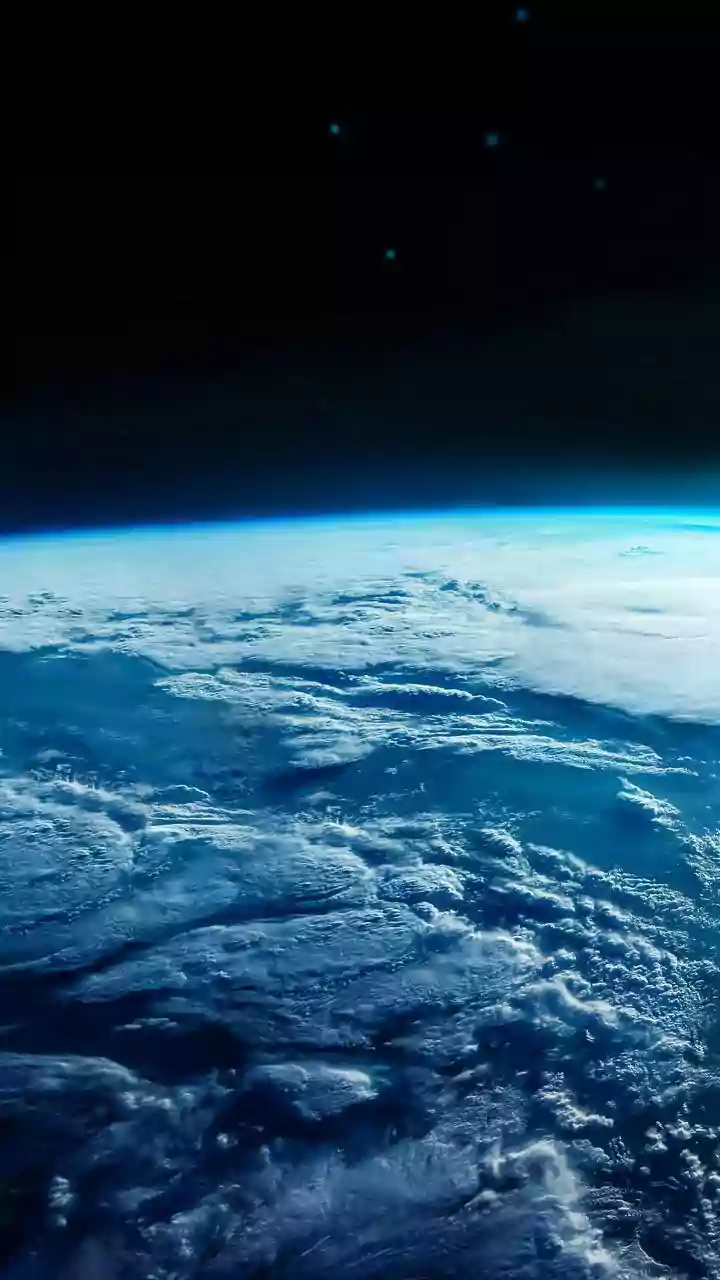
Imagine you’re searching for a specific type of car, but you’ve never seen one before. If someone gives you a detailed blueprint of that car, your search becomes infinitely easier. In the hunt for life on other planets, Earth is that blueprint. It is the only
place in the universe we know for certain hosts life, making it the perfect template. Scientists use our home planet as a control subject; by understanding what a living, breathing world looks like from afar, they know what to search for light-years away. A study by ETH Zurich even demonstrated this by treating Earth as a distant exoplanet, successfully identifying it as a habitable world based on its atmospheric data alone. This approach allows astronomers to refine their methods and technologies, ensuring they can recognise a habitable planet when they see one.
The Hunt for Atmospheric 'Biosignatures'
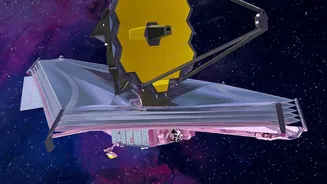
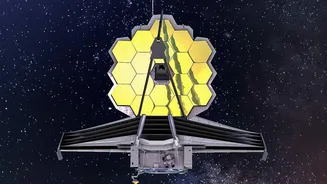
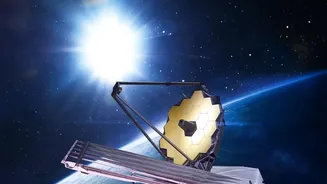
When we say scientists are 'looking' at an exoplanet's atmosphere, they're not seeing it with their eyes. Instead, they use powerful tools like the James Webb Space Telescope (JWST) to analyse the light from a planet's host star as it filters through that atmosphere. The gases present absorb certain wavelengths of light, leaving a chemical fingerprint. Scientists are searching for 'biosignatures'—gases that are likely produced by living organisms. On Earth, the most prominent biosignatures are oxygen (O₂), methane (CH₄), and ozone (O₃). Finding any one of these alone isn't proof of life. Methane can be produced by geological activity, and oxygen can be created through non-biological chemical reactions. However, finding a combination of gases that are in chemical disequilibrium, like oxygen and methane coexisting, is a much stronger hint. These gases normally destroy each other, so their continued presence suggests something is constantly replenishing them—and that 'something' could be life.
Learning from Earth's Deep Past
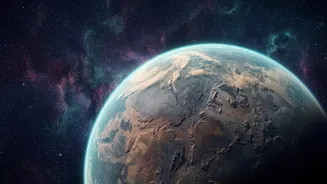
Modern Earth is just one version of a habitable planet. Our world has undergone dramatic transformations over its 4.5-billion-year history. For billions of years, Earth’s atmosphere had very little oxygen. Instead, it was rich in gases like methane, creating a hazy, orange world vastly different from the 'pale blue dot' we know today. By studying these different chapters of Earth’s past, scientists can create models for what a habitable planet might look like at various stages of its evolution. This is crucial because it broadens the search. An alien world might not look like modern Earth, but it could resemble Earth from two billion years ago. These 'alternative Earths' provide a library of potential biosignatures, helping astronomers identify planets that might be in the early stages of developing life. It also helps model how seasonal changes could affect a planet's atmosphere, which could be another detectable sign of a living world.
Avoiding Cosmic False Alarms
One of the biggest challenges in the search for life is the problem of false positives—detecting what looks like a biosignature that is actually produced by non-biological processes. For example, a planet's atmosphere could build up oxygen abiotically if intense radiation from its star splits carbon dioxide molecules. This is where studying Earth and its geology becomes critical. Our planet provides a detailed understanding of how non-living processes work and what chemical signatures they produce. This helps scientists create more robust models to distinguish a world with abiotic oxygen from one where it’s produced by photosynthesis. Researchers also have to account for other potential mix-ups. For instance, a planet and its moon, each with a different atmosphere, could together create a combined light signal that mimics a single, life-bearing world. Understanding our own planet-moon system helps guard against such misinterpretations, making the search more precise and reliable.