
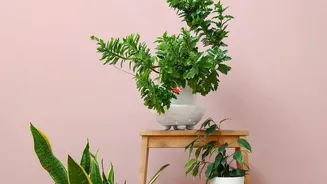
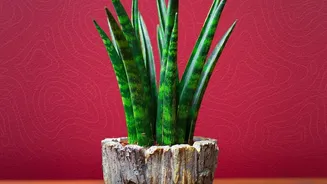

The Belief: Nature's Air Purifiers
The idea that indoor plants can scrub the air of toxins became widespread after a 1989 NASA study. Researchers, looking for ways to clean the air in sealed space stations, placed common houseplants in small, sealed plexiglass chambers with volatile organic
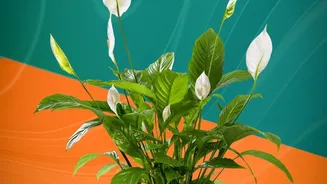
compounds (VOCs) like benzene and formaldehyde. The results were striking: some plants could remove up to 90% of these airborne pollutants within 24 hours. Understandably, this led to the popular belief that placing a few potted plants like a snake plant or a spider plant around your house would create a healthier living environment. This study inspired decades of articles and was a major driver of the houseplant boom.
The Reality Check: Lost in Translation
The problem is that our homes are not small, sealed plexiglass chambers. Subsequent research has highlighted the major limitation of that original study: scale. Your home has a much larger volume of air and, crucially, it isn't sealed. Air constantly exchanges with the outdoors through open windows, doors, and ventilation systems. One analysis concluded that to replicate the air-cleaning effects seen in the lab, you would need an impractically large number of plants — anywhere from 10 to 1,000 plants per square meter of floor space. So, for an average-sized living room, you'd effectively need to turn it into a dense jungle to make a meaningful difference to air quality, far more than the two plants per 100 square feet some early recommendations suggested.
What Modern Research Concludes
More recent reviews of the science have put the myth to rest. They conclude that in a typical home or office environment, the air-purifying effect of a few houseplants is statistically insignificant. The rate at which new pollutants enter the space and old air is exchanged with the outside far outpaces the slow work of a plant's leaves and soil microbes. Most experts now agree that if you are genuinely concerned about indoor air quality, your efforts are much better spent on proper ventilation — like opening a window — and using a high-quality air filtration system. While plants do have the ability to absorb VOCs, their contribution in a real-world setting is minimal.
But Don't Throw Out Your Plants
Just because they aren't air-purifying powerhouses doesn't mean indoor plants are useless. The focus has simply shifted to their other, more scientifically robust, benefits. Interacting with plants, and even just being around them, has been shown to have significant psychological and physiological advantages. Studies have demonstrated that having plants in your home or office can reduce stress, lower blood pressure and heart rate, improve concentration, and boost your overall mood. One study found that actively transplanting a plant was more effective at reducing stress than completing a task on a computer. These benefits are real, measurable, and a fantastic reason to fill your space with greenery.
A New Reason to Love Greenery
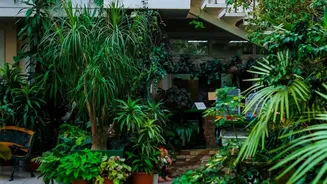
So, should you buy a houseplant to clean your air? Probably not. But should you buy one to make yourself feel happier, calmer, and more connected to nature? Absolutely. The joy of nurturing something and watching it grow, the simple pleasure of a splash of green in a room, and the proven stress-reducing qualities are the real magic of houseplants. Think of them less as a functional utility for air purification and more as a companion for your well-being. They make our indoor environments more beautiful and pleasant places to be, and science shows they genuinely make us feel better.