






What Exactly Is El Niño?
At its core, El Niño is a naturally occurring climate pattern, not a weather event. It’s the warm phase of the El Niño-Southern Oscillation (ENSO), a periodic fluctuation in sea surface temperature and the air pressure above the equatorial Pacific Ocean.
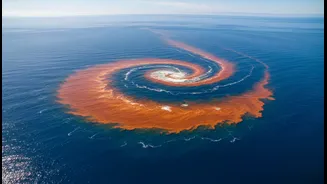
Under normal conditions, trade winds blow from east to west, pushing warm surface water towards Asia and Australia. During an El Niño, which typically occurs every two to seven years, these winds weaken. As a result, the massive pool of warm water shifts eastward, toward the coasts of South America. This change is so significant that it disrupts atmospheric circulation patterns across the globe, influencing temperature and rainfall far from the Pacific. Its counterpart, La Niña, involves the opposite: a cooling of the same ocean waters.
The Connection to India's Monsoon
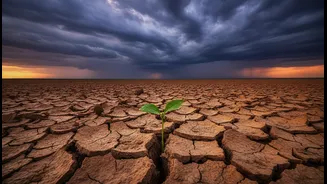
For India, El Niño is closely watched because of its potential to disrupt the southwest monsoon, the lifeblood of the country's agriculture-driven economy. Historically, a strong El Niño is often correlated with weaker monsoon rains and higher temperatures across the subcontinent. Several of India's most severe droughts, including those in 2002 and 2015, coincided with strong El Niño events. However, this link is not a simple cause-and-effect relationship. Some El Niño years have seen average or even above-average rainfall. Other powerful climate drivers, like the Indian Ocean Dipole (IOD), can either amplify or counteract El Niño's influence, making each monsoon season a complex puzzle. The relationship is strong, but it's a correlation, not a guarantee of drought.
The Challenge of Communicating Uncertainty
This is where the conversation gets tricky. Climate forecasts are, by their nature, probabilistic. When scientists say El Niño might lead to a weaker monsoon, they are talking about increased risk and likelihood, not a definite outcome. This nuance is often the first casualty when science is translated into news. Media outlets, driven by the need for clear, impactful headlines, can gravitate toward definitive and often alarming language. A forecast of a 60% chance of below-normal rain can quickly become a headline about impending drought. This isn't always malicious; communicating uncertainty is genuinely difficult. However, this 'false balance' or sensationalism can create a distorted public perception, turning a complex risk assessment into a binary story of disaster or relief.
Real-World Consequences of Misinformation
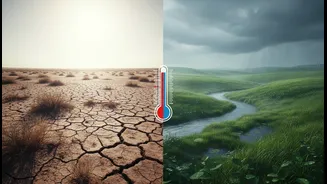
When the nuance of El Niño research is lost, the consequences are real. For farmers, dramatic headlines can cause significant anxiety and lead to planting decisions based on hype rather than a measured understanding of risk. For policymakers, an oversimplified narrative can lead to reactive measures instead of proactive planning for a range of possible outcomes. For example, recent analysis shows El Niño's impact isn't just about rainfall; it also leads to higher temperatures, which drive up electricity demand for cooling. This puts a different kind of stress on the national grid that requires careful planning, not just a focus on water scarcity. Paradoxically, a weaker overall monsoon can sometimes coincide with short, intense bursts of extreme rainfall, leading to floods in a season otherwise defined by dryness. A public primed only for drought is unprepared for this complex reality.
How to Be a Smarter News Consumer
Navigating the information landscape around El Niño means becoming a more critical reader. Firstly, pay attention to the source. Information from scientific bodies like the India Meteorological Department (IMD) or the World Meteorological Organization (WMO) will be more measured than a sensationalist headline. Secondly, look for the language of probability. Words like 'likely,' 'could,' 'potential,' and 'associated with' are signals of a careful scientific forecast, not signs of weakness. Beware of articles that speak in absolutes. Finally, remember that El Niño is just one piece of the climate puzzle. A good report will often contextualize its influence by mentioning other factors at play, providing a more complete and accurate picture of what might lie ahead for the season.