


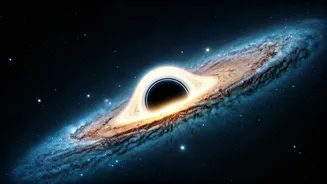
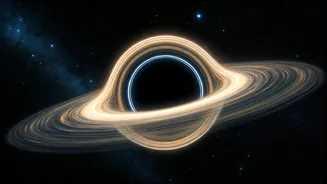


A Galaxy's Sudden Awakening
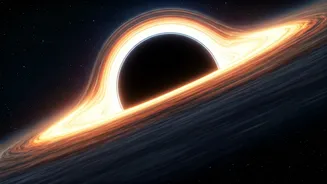
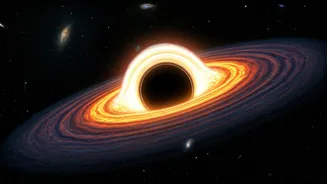
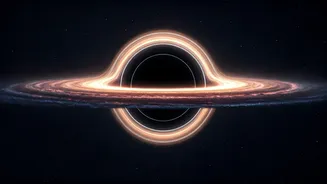
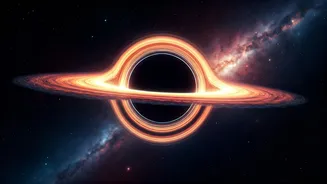
Imagine observing a distant galaxy, calm and inactive for years, only to see its center suddenly blaze with unprecedented brightness. That's exactly what happened with galaxy SDSS1335+0728, located about 300 million light-years away. In late 2019, astronomers
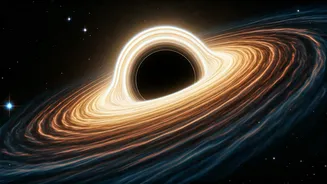
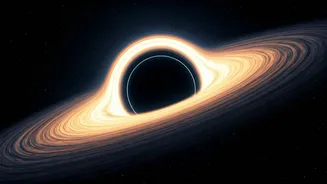
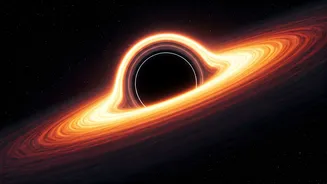
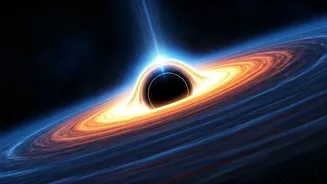
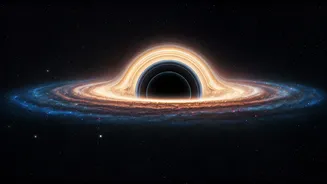
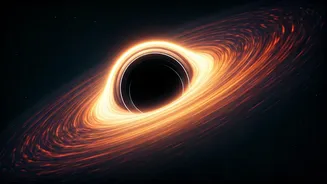
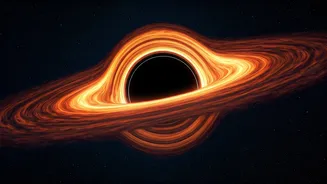
noticed the galaxy's core began to shine dramatically. Over the past few years, it has become four times brighter in ultraviolet light and is now emitting ten times more X-rays. This is not a fleeting event; the galaxy is still getting brighter. Most large galaxies, including our own Milky Way, have a supermassive black hole at their center, but they are typically dormant and difficult to see. This event marks the first time we have observed one waking up as it happens.
What Does 'Real-Time' Mean Here?
When astrophysicists say "real-time," they don't mean the event just happened. Since the galaxy is 300 million light-years away, the light from this awakening began its journey when dinosaurs roamed the Earth. The term "real-time" refers to the unprecedented opportunity to watch the entire process unfold continuously, rather than piecing it together from historical data or static images. For years, astronomers have studied active and quiet black holes, but they have never been able to observe the transition. This discovery provides a live feed of a black hole beginning to feed on the gas and dust in its surroundings, a process that can dramatically alter its host galaxy. This continuous observation allows scientists to test their theories about black hole growth and evolution against direct evidence as it streams in.
Rewriting the Cosmic Playbook
This discovery is astonishing because it challenges previous assumptions about how quickly black holes can change their state. The sustained and growing brightness rules out more common, short-lived cosmic flares, such as a star being torn apart by a black hole's gravity—an event known as a tidal disruption event, which typically lasts only a few hundred days. The awakening of SDSS1335+0728 has now continued for several years, suggesting a more fundamental change is occurring. Scientists believe they are witnessing the formation of an active galactic nucleus (AGN), where a black hole starts actively consuming material and becomes intensely luminous. Being able to study the "turn on" phase of an AGN is a holy grail for astrophysicists, as it holds clues to how these cosmic engines influence the formation and evolution of entire galaxies.
A New Era of Black Hole Science
This ongoing event opens up a new frontier for astrophysical research. By combining data from multiple telescopes, from ground-based observatories to space-based X-ray facilities, scientists can build a complete, multi-wavelength picture of the awakening. The data is already providing valuable information on how black holes grow and interact with their environment. This unexpected cosmic show allows researchers to test different models of black hole feeding mechanisms and a phenomenon known as quasi-periodic eruptions (QPEs). Furthermore, the dramatic changes are likely producing gravitational waves—ripples in spacetime—that future observatories might be able to detect, providing yet another way to solve the puzzling behavior of these massive objects.