


Decoding the Message From Your Plant's Roots
When you see roots making a great escape through the bottom of a pot, it’s your plant’s way of communicating. This happens for one of two main reasons. The most common cause is that the plant has become 'root-bound' (or pot-bound). This means its root system
has expanded so much that it has run out of space and has nowhere to go but out. The roots form a dense, tangled mass, pushing out what little soil remains. Less commonly, especially with bottom-watering, a few adventurous roots might simply be growing downwards in search of water and find their way out. In either case, it's a cue to check on your plant's underground health.
Is It Definitely Root-Bound?
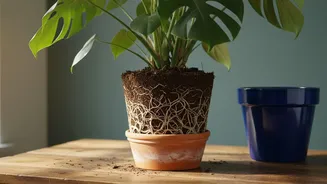
Not every escaping root signals a crisis. Some plants, like spider plants or peace lilies, can tolerate being slightly root-bound. To know for sure, you need to look at the entire root ball. Carefully turn the pot on its side and gently try to slide the plant out. You may need to tap the sides of the pot to loosen it. If you see a dense, tightly coiled web of roots with very little soil visible, your plant is definitely root-bound. Other signs can include stunted growth, yellowing leaves, or soil that dries out extremely quickly after watering because the pot is mostly roots, not soil.
Why Being Root-Bound Is a Problem
While some plants don't mind a snug fit, leaving a severely root-bound plant in its pot can lead to problems. The compacted roots can't absorb water and nutrients efficiently. This leads to a lack of nutrition and air, which can stunt the plant's growth, cause leaves to yellow and drop, and make the plant wilt more easily. Eventually, the constricted roots will continue to circle and entangle themselves, slowly strangling the plant and hindering its ability to thrive, even if you move it to the ground later without addressing the root ball.
A Simple Guide to Repotting
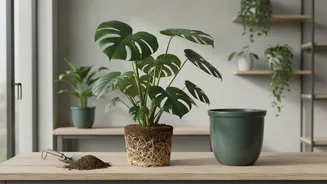
Repotting is the most common solution and gives your plant a new lease on life. Choose a new pot that is just 2-5 cm wider in diameter than the old one; going too big can lead to overwatering issues. Gently remove the plant from its old pot. Now, address the root ball. Gently 'massage' or tease the coiled roots apart with your fingers to encourage them to grow outwards into the new soil. If the roots are extremely dense, you can make a few shallow vertical cuts on the sides of the root ball with a clean knife to break the circling pattern. Place a layer of fresh potting mix in the new pot, position your plant, and fill in the gaps with more soil, pressing down gently. Water it thoroughly and let it drain.
What If It Is Not Root-Bound?
If you inspect the root ball and find plenty of soil and loose roots, then the few escapees are no cause for alarm. It's likely just a healthy root that grew downwards. In this case, you have a couple of options. You can simply leave it be, as it is a sign of a healthy, vigorous plant. Alternatively, you can carefully prune the root that is poking out with clean scissors, though this is a temporary fix if the plant is indeed running out of space. This situation is a good reminder to check your plants periodically, as it's often a precursor to becoming fully root-bound.