






The Confidence Trap
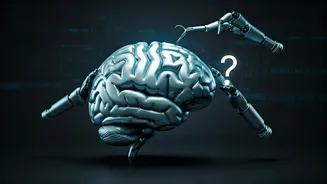
One of the biggest challenges with today's AI chatbots is how confident they sound, even when they are completely wrong. These systems are designed to produce fluent, grammatically correct, and contextually relevant text. This can make their answers seem
authoritative and trustworthy. However, this confidence is an illusion. The AI doesn't 'know' things in the human sense; it's a powerful pattern-matching machine that predicts the next most likely word in a sentence. This process can lead to outputs that are plausible but factually incorrect, a phenomenon often called 'hallucination'.
What Are 'AI Hallucinations'?
AI hallucinations are when a model generates false, fabricated, or unsupported information but presents it as fact. This can range from getting a date wrong to inventing entire academic studies or legal cases that don't exist. Studies have shown that even the most advanced models have significant hallucination rates, sometimes getting things wrong in more than 60% of queries in specific tests. These errors are not a simple bug to be fixed but a fundamental limitation of how current large language models (LLMs) work. They are trained on vast amounts of internet data, which itself contains biases, contradictions, and misinformation.
The Problem of Stale and Biased Data
Another key issue is that many AI models have a 'knowledge cutoff' date, meaning they aren't aware of events or information that have emerged since they were last trained. While some newer systems can browse the web for real-time information, this isn't always foolproof. Furthermore, the data used to train these models reflects the biases present on the internet. This can lead to AI answers that oversimplify complex topics, misrepresent debates, or present a single perspective as the absolute truth. Relying on this without verification can introduce serious factual errors and biases into your work, whether it's a school project or a business report.
A Simple Toolkit for Checking Sources
Treating AI as a starting point, not a final authority, is the best approach. Developing a habit of verification is a crucial skill. First, always ask the AI to provide its sources. If it provides links, click on them to ensure they are real and that they actually support the claims made. Be wary if the AI generates sources that lead to dead ends or unrelated content. Second, perform a quick cross-validation by posing the same question to another AI or a traditional search engine. Look for multiple, independent, and credible sources that confirm the information. Finally, apply critical thinking. If an answer seems too good to be true, surprisingly convenient, or aligns perfectly with a specific viewpoint, it warrants extra scrutiny.
Building a Habit of Healthy Scepticism
In the age of AI, our most valuable skill is no longer just finding information, but validating it. The risks of using unverified AI content are significant, ranging from academic penalties and spreading misinformation to reputational damage and poor decision-making in a business context. While AI can be a phenomenal tool for brainstorming, summarization, and first drafts, the final responsibility for accuracy rests with the human user. For students, professionals, and anyone using these tools, the message is clear: trust, but verify. The time spent checking a fact is a small price to pay to avoid the much larger cost of being wrong.