

The Sun’s Potent Threat
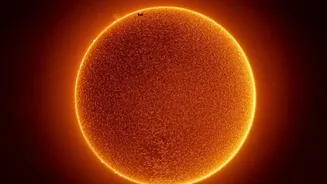
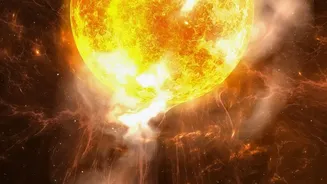
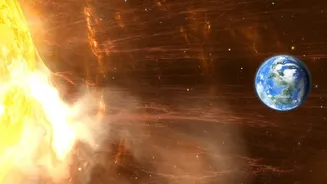
The Sun, our life-giving star, has a volatile side. It periodically unleashes Coronal Mass Ejections (CMEs), which are colossal eruptions of magnetised plasma and radiation hurled into space. Think of them as giant cannonballs of energy and particles
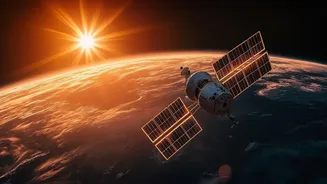
travelling at speeds up to 3,000 kilometres per second. While many miss us, an Earth-directed CME can have serious consequences. When these particles slam into our planet's magnetic shield, they can trigger powerful geomagnetic storms that disrupt modern life. These storms are not just a curiosity for scientists; they pose a tangible threat to the critical infrastructure we depend on daily.
Satellites in the Firing Line
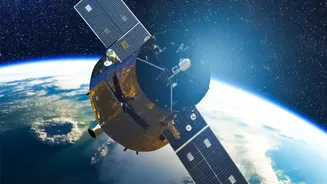
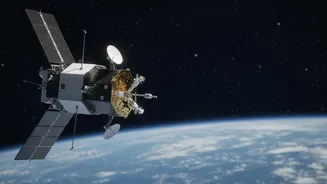
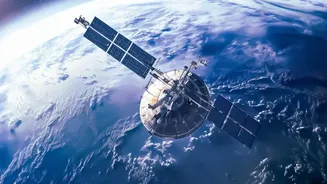
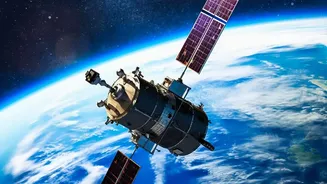
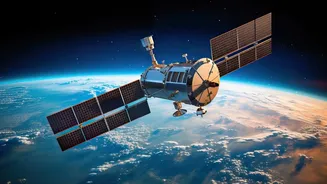
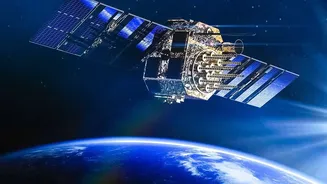
Most vulnerable to this solar onslaught are the thousands of satellites orbiting Earth, especially those in high geosynchronous orbits where many communications satellites operate. A CME can damage a satellite in several ways. High-energy particles can penetrate the spacecraft, damaging internal circuits and degrading solar panels. The surge of energy can also cause 'spacecraft charging,' where voltage builds up on the satellite’s surface and then discharges, creating an arc that can fry sensitive electronics. This not only risks the satellite's primary function but also its telemetry—the vital stream of data it sends back to Earth reporting its health, status, and position. Losing telemetry is like flying blind; operators don't know if the asset is healthy or where it is.
The Global Watchtower
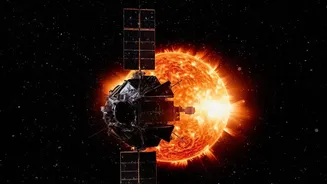
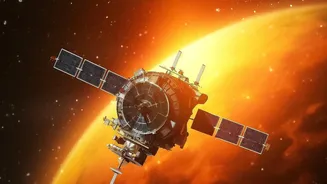
Predicting the arrival and intensity of a CME is the cornerstone of protecting these multi-million-dollar assets. Space weather forecasting begins with a network of solar observatories, both on the ground and in space. Missions like NASA's Solar Dynamics Observatory (SDO) and the joint NASA/ESA Solar and Heliospheric Observatory (SOHO) constantly watch the Sun, looking for the tell-tale signs of an eruption. India has also become a key player with its Aditya-L1 mission, stationed 1.5 million kilometres from Earth at Lagrange Point 1 (L1). This vantage point allows it to continuously monitor solar activities and provide crucial data on CMEs heading our way, acting as an advance warning system.
Modelling the Solar Wind
Once a CME is detected, the data is fed into sophisticated computer models. One of the most widely used is the WSA-Enlil model, operated by agencies like the US National Oceanic and Atmospheric Administration (NOAA). The 'WSA' part of the model uses observations of the Sun’s magnetic field to estimate the initial state of the solar wind. The 'Enlil' part—named after the Mesopotamian god of wind and storms—is a 3D simulation that propagates this ejection through interplanetary space. It calculates the CME’s path, speed, and density, providing a forecast of when it will arrive at Earth and how strong it might be. These models give operators a crucial lead time, typically between one to four days, to prepare.
From Forecast to Safeguard
With a credible forecast in hand, satellite operators don't just wait for the storm to hit. They take proactive steps to safeguard their assets. The most common action is to place a vulnerable satellite into 'safe mode'. This involves powering down non-essential systems, particularly sensitive scientific instruments and electronics, to minimise the risk of damage from electrical surges. Operators might also reorient the spacecraft to ensure its most hardened components face the incoming solar storm. By securing the hardware, they ensure the satellite can survive the event. Once the storm passes, the satellite can be powered back up, its systems checked, and its vital telemetry stream re-established, averting a potentially catastrophic loss.